ARGNet: Alternate Reality Gaming Network Your first choice for ARG news. 2012-02-06T14:30:50Z http://www.argn.com/feed/atom/ WordPress Michael Andersen <![CDATA[A Fond Farewell to “This Is Not A Game”]]> http://www.argn.com/?p=5901 2012-02-06T14:30:50Z 2012-02-06T14:30:50Z

This Is Not A Game. This seemingly simple mantra, coined by a collective of Microsoft Game Studios employees, has served as a rallying cry for alternate reality gaming fans and developers alike. And yet, it is also one of the most misunderstood aspects of the genre. As alternate reality games have evolved, so too has its nomenclature: puppetmasters have gradually given way to game developers and transmedia producers, and “this is not a game” itself has fallen into disuse. Perhaps it’s time to make the term’s retirement official.

Everything Starts with The Beast
The Beast was not the first alternate reality game: the term was coined months after the game’s conclusion, with the launch of Lockjaw. Similarly, promotional campaigns for The Last Broadcast and The Blair Witch Project introduced many of the storytelling elements that would later be embraced by the genre. What sets The Beast apart were its players, who referred to themselves as Cloudmakers.

Jay Bushman, a former Cloudmaker who now works at Fourth Wall Studios, compares The Beast to the Sex Pistols’ concert at Manchester’s Lesser Free Trade Hall on June 4, 1976. There were only around forty people in attendance that night, but something magical happened, and those few attendees went on to form Joy Division, The Smiths, The Fall, and The Buzzcocks, creating a renaissance for the genre. The Beast has sent similar ripples through the community as Cloudmakers and developers alike have gone on to found many of the companies and resources dedicated to the genre. And one of those ripples was the phrase “this is not a game.”

Birth of a Term
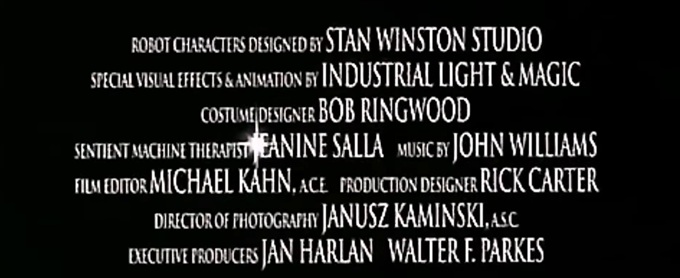
While The Beast was the name that eventually stuck as the name for Microsoft’s grand experiment in storytelling, that moniker was an internal working title created by the developers to recognize the 666 assets that went into the game’s initial launch. To the players discussing the game in the Cloudmakers Yahoo Group, it was simply called “The Game.” In June 2001, a new trailer for the film A.I.: Artificial Intelligence came out with red letters spelling out “THIS IS NOT A GAME.” Former Cloudmakers moderator Andrea Phillips reflected on seeing those words for the first time, explaining,

It wasn’t a game in the conventional sense. So when [this is not a game] came up in that trailer, it felt like [the developers had] been listening in on all that talk and laid down the law: This was…something…but a game was not it. We eventually started using it as a shorthand to remind one another that the game was going to act like a real thing as much as it could, when we were talking spec or trying to solve something. Nothing was out of the reach of possibility.

From the player perspective, the phrase “this is not a game” was viewed as further evidence that the game’s developers were closely monitoring its fans and as a signal that this was something new.

During his TEDxSeattle talk on the Evolution of Storytelling, The Beast co-creator Elan Lee echoed many of Phillips’ sentiments, explaining that

scattered throughout [The Beast], I kept inserting this phrase: this is not a game. And the reason that I kept putting it in, it seemed very important to me at the time to say as boldly as I could, “this is not a game, this is real, I’m going to tell you exactly what this is, what it isn’t, and how you as the audience should experience.”

The initial ideal was an attempt to provide contextual framing for a nascent form of storytelling. Six to Start CEO Adrian Hon, a former Cloudmakers moderater himself, viewed the phrase as having two complementary aspects. “This is not a game” was an acknowledgment that The Beast didn’t have any of the explicit trappings of a game. There were no instructions on how to play and no overt signals telling people where to start. It also came to represent the Microsoft team’s refusal to publicly acknowledge their involvement with the game, despite enterprising fans uncovering hints at that involvement through website registration data.  The term’s origins, however, were highly personal to The Beast itself.

Codification of the Term
As alternate reality games developed, the term took root and became viewed as a necessary element of alternate reality games. Jane McGonigal offered the “this is not a game” rhetoric as the defining factor of immersive games, noting that these games “do everything in their power to erase game boundaries — physical, temporal and social — and to obscure the metacommunications that might otherwise announce, ‘This is play.’”

While The Beast is the dominant origin story for alternate reality games, parallel streams have produced equally compelling modes of storytelling. One of the most prolific alternate reality gaming developers, Dave Szulborski, discovered the genre through Electronic Arts’ ill-fated Majestic campaign. Even Szulborski embraced “this is not a game” as being synonymous with alternate reality games. In his book on the subject, Szulborski defines alternate reality games as

a game of sorts, that takes place on the Internet, although it’s nothing at all like most Internet or video games you may have played in the past. In fact, one of the main goals of an ARG is to deny and disguise the fact that it is a game at all. This is what the community of immersive gaming fans and creators embrace as the main principle of Alternate reality Gaming and what has come to be called the TINAG philosophy, for This Is Not A Game.

An Often Misunderstood Term
At its heart, all the mantra “this is not a game” is calling for is the willful suspension of disbelief for the sake of a story. As The Beast co-creator Sean Stewart explained in his ARGFest keynote address, “a book has a frame…a box. Between the covers, disbelief is suspended. Outside the covers, disbelief is not suspended…an alternate reality game asks you to extend that bubble of suspension of disbelief into your actual life. That’s a very delicate membrane.”

Although a literal reading of the mantra denies this central truth, alternate reality games are still games. They merely ask players to extend their suspension of disbelief across media, in exchange for a more engrossing narrative. There’s an expectation with fiction that characters won’t openly confront their audiences with their fictionality, even in more interactive media like video games and theatrical performances. Similarly, there’s a responsibility on the part of participants not to force those characters to confront their fictional natures.

With The Beast, the team at Microsoft chose to facilitate that suspension of disbelief by deliberately neglecting to offer rules for their game and by keeping their identities secret throughout the experience. And while companies like 42 Entertainment still maintain that practice to great effect, it is a design choice that is not essential for alternate reality games. Indeed, as Adrian Hon explains, “a couple of years after The Beast, I began thinking that the term was being seriously misunderstood by designers, who thought it meant that any successful ARG must also adhere to the ‘TINAG’ rules [of not acknowledging its status as a game and refusing to publicly acknowledge involvement].”

Stich Media partner Evan Jones offers the clearest explanation of the underlying philosophy behind “this is not a game” in his TEDxHalifax talk, where he explains,

Alternate reality games really excited me because, at their core, was something I never saw before. The characters believed they were real. And because they believed they were real, they demanded interaction out here in the real world. So in order to participate in an alternate reality game, you had to believe they were real too. You had to play along so that your reality matched their alternate reality, or the story just wouldn’t happen.

Of course, along with that belief comes a responsibility on the part of the developers. Elan Lee summarizes that responsibility as the promise: “we will never make you feel stupid for believing us. We’re going to ask you to do insane things…and if you ever feel like you are stupid for believing us, we have utterly failed.” In The Beast, the team at Microsoft doggedly worked to earn that trust by following what came to be viewed as the “this is not a game” philosophy. However, many of the individuals behind the project went on to earn that trust through their personal and corporate reputations.

Time to Admit This Is A Game
As alternate reality games have evolved over the years, the term “this is not a game” has fallen into disuse, only to be dredged up by new players and aspiring game developers who stumble across the philosophy and view it as permission to embrace storytelling without rules or boundaries. It’s time to move on.

I’m not saying that all games should abandon the format established by The Beast: some of the most popular alternate reality games currently running, like Marble Hornets, have built upon The Beast‘s aesthetic admirably. However, I am arguing that it’s time to admit that an aesthetic choice is not a requirement: that games like Legends of Alcatraz that openly broadcast their sponsorship deserve an equal seat at the table and that alternate reality games have evolved to embrace a wider spectrum of gameplay types.

]]>
9
Mildred I Lewis http://liftingasweclimb.wordpress.com,www.foxlewisproject.com <![CDATA[Legends of Alcatraz Takes Fox’s New Series to The Rock]]> http://www.argn.com/?p=5876 2012-01-20T14:43:20Z 2012-01-20T14:42:58Z

Image courtesy of Geoff May at Wikibruce

On Monday, January 16, Alcatraz premiered on Fox. The time travelling drama focuses on the mysterious disappearance of 256 prisoners and 46 guards from Alcatraz in 1963. In 2012, the inmates suddenly begin to return. To kick off the premiere, Fox partnered with Ford to produce Legends of Alcatraz, an alternate reality game set to run throughout the show’s first season.

Approximately a week before the show’s premiere, a number of blogs including /Film, Collider, ComingSoon.net, The L.A. Times’ Hero Complex, Wikibruce, and 5.0 Mustang Magazine started receiving mysterious metal boxes containing a series of artifacts offering a glimpse into the world of Alcatraz. Circled letters on one of the pages, a magazine clipping, led to the LegendsofAlcatraz.com website. Ford’s promotion of the 2013 Mustang throughout the campaign so far is overt: one of the newspaper clippings received by bloggers promoted a Mustang commercial that aired during the series premiere, while the Legends of Alcatraz url redirects to a url prominently featuring Ford branding.

The first puzzle references the notorious 1950 Alcatraz Spaghetti Riot. Solving this puzzle, sends viewers to GPS coordinates for the first drop or live event, set to commence next weekend at Alcatraz between January 27th and 29th. Viewers are directed to the alcatrazlegends Twitter account for additional puzzles.

The Fox site explains the game this way:

Over the upcoming weeks, you will be challenged to examine Alcatraz in its past and present form. You will be tasked to solve perplexing anomalies and crack the many puzzles that surround this most infamous rock. The search will lead some of you to seek out clues in the city streets, and may even bring those who dare to the island itself.

In addition to the alternate reality game, Alcatraz has launched an aggressive marketing campaign with a featured appearance at last year’s ComicCon, comprehensive social media presence on Facebook, GetGlue, Google+, Twitter and Tumblr, and a robust viral campaign. The show has already referenced ancillary material like Dr. Diego Soto’s Alcatraz comics and book, Inmates of Alcatraz. Hopefully, the show will take a page from Heroes’ book and create a website that builds upon the story’s universe with rich, evolving content.

If Bad Robot’s signature devices of plot twists, time travel, the supernatural, gothic noir, and layers of mystery shape the game, it could be fascinating. However, there is a possibility that flaws inherent within the show may be reflected in the ARG.  Hunter Daniels at Collider argues that, “By the end of Lost’s first episode viewers had an emotional hook for almost every single member of the ensemble cast. Alcatraz doesn’t match this feat.” If the game can help to define and expand the mythology of the show, it could have an intriguing storytelling element rather than function as an aspect of the marketing campaign.

]]>
3
Michael Andersen <![CDATA[2011 Year in Review: The Final Chapter]]> http://www.argn.com/?p=5853 2012-01-19T18:44:51Z 2012-01-11T18:26:33Z
In 2011, I tried an experiment: rather than write a single article attempting to sum up the year in alternate reality games, I’d split the daunting task up into four parts and pen my thoughts as the year progressed. This is the final installment in that series, covering the final quarter of the year: if you’d rather begin at the beginning, feel free to do so.

Looking back at the year as a whole, 2011 was defined by the experimentation that took place in the realm of alternate reality games. While the puzzle-ridden romps through conspiracy theories that Ian Bogost so cleverly lambasted in his Cow ClickARG are still a staple of the industry, game developers are experimenting with new models of storytelling, gameplay, and revenue generation to create sustainable projects and business models alike.

Greater Definition in the Industry
Until recently, meetups for people involved in alternate reality games and transmedia storytelling centered around conferences, with gatherings at events like ARGFest, Power to the Pixel, DIY Days, Futures of Entertainment, and SXSW. This year, StoryWorld joined the list with a strong first conference that included its own alternate reality game, Zoetrap, that used a custom-built app for the conference to guide conference attendees through an occult mystery as seen through the cellphone of a missing person. While these events continue to bring fans and creators together, an alternate method of discussion has grown in prominence in recent months. Local meetup groups are increasingly springing up around the world to provide more frequent opportunities to discuss the state of the industry.

The New York and Los Angeles meetups in particular have transformed from informal get-togethers to entities in their own right, boasting hundreds of members: the New York meetup has incorporated as StoryCode, while the LA group launched a website aiming to provide resources and news for the community. However, groups have formed in cities including Toronto, Austin, Vancouver, Paris, and São Paulo.

The Silent Era for Films
It’s been a rough quarter for fans of transmedia properties. In May, signs of a full-fledged campaign for The Dark Knight Rises were promising, as an audio file on the film’s homepage contained a hidden message leading to the Twitter account thefirerises and a corresponding hashtag. Followers who used the hashtag had their profile picture inserted into a mosaic photograph of Bane. This strategy was akin to an early phase in Why So Serious, where players unlocked pixels in the Joker’s iconic Glasgow smile by submitting their email addresses. However, when a number of faux CIA documents were leaked to Empire and Wired.com’s Underwire blog, the payoff was the ability to transfer GPS coordinates over to the early access to the Operation Early Bird website for tickets to a six-minute preview of the film. Again, this move took a page from the Why So Serious playbook, as players during the Step Right Up phase of the campaign won tickets to an advance screening of the first few minutes of the film. But while The Dark Knight Rises is working from the same playbook, the substance is sorely lacking. The most compelling content to come out of the campaign so far has been the fan-produced Mumble Bane Twitter account, poking fun at the villain’s practically unintelligible dialogue.

The Hunger Games viral has also been off to a rough start. While the official viral started out competing with the fan-created game Panem October, the fan-created game came to an abrupt end, citing frustrations at similarities between the two games. So far, the official experience has consisted of a QR code-driven election to select players to serve in various official roles such as Mayor and Journalist for the District Facebook pages. A number of films are turning to blogs to provide light versions of their extended universes, such as Men in Black 3′s The Men in Black Suits Are Real.

The saving grace for the quarter was The Girl With the Dragon Tattoo, which launched Mouth Taped Shut, an artful campaign leading up to the film’s release by hiding pieces of artwork from the movie across the globe. With Larsson’s trilogy of books already released and a Swedish film adaptation already two years old, recovering artwork with deep sentimental value attached in the narrative provided an ideal way of showcasing Fincher’s vision for the film, particularly when paired with the Comes Forth in the Thaw microsite.

Even with Mouth Taped Shut, the trend in film promotions this year seems to have been maximizing buzz with the minimum of content. Super 8 aside, the promotional campaigns that went live this year were significantly scaled back when compared to previous iterations, even when it involved films in the same series. It should be interesting to see whether independent filmmakers capitalize on this apparent shift in priorities in the coming months, with projects like Billboard, an Uncommon Contest for Common People! providing that extended experience.

Big Trouble on Little Screens
Psych‘s Hashtag Killer game wrapped up in November with an impressive meta-puzzle that combined the clues Psych‘s Shawn and Gus had received from the game’s killer. While it’s too late to get written into the story as a murder victim, the game is still replayable using Social Samba’s platform at Liminal States has also received the alternate reality gaming treatment with YouWillBecome.Us, part of a self-described “alternate reality narrative” leading up to the book’s launch. Finally, Nicholas Read is trying a novel attempt at collaborative storytelling with his ebook series Endworlds, a fantasy adventure that offers fans an opportunity to write themselves into the story by tracking down locations referenced in the books: the first fans to locate each of the locations will be written in as characters in the sequel.

The Man with the Gold and Gum
And then, there’s Test Subjects Needed, the alternate reality game for Wrigley’s 5Gum brand. For almost half a year, the enigmatic chewing gum has led its players through a futuristic testing facility, solving a series of online flash games that gradually unlocked a narrative featuring Terry O’Quinn and Summer Glau, punctuated by city-wide hunts for intricate Icefly vials. After months of trying, players that dutifully chewed enough gum to get the necessary codes reached the Central Vault, and one final video presumably concluding the experience. And yet, it appears as though there might be more to come, as packs of 5Gum are appearing in stores with a new set of codes that won’t register on Test Subjects Needed‘s website. While this may merely be another foray into the realm of loyalty programs for the brand, Test Subjects Needed might have a little more life left in it after all.

On a smaller scale, the World Gold Council recently held a week-long social media puzzle hunt to help Miranda Rolentto find and reclaim her missing gold ring. Players that paid close attention to Miranda’s tweets were able to find flyers on the street and a Craigslist posting from the person who stumbled across the ring. All that remained was to peruse Miranda and her husband’s social media recollections of the weekend vacation to identify where the ring went missing as well as what the inscription on the ring said to win the prize.

Growth in the Grassroots
While it’s been a shaky year at times for traditional alternate reality games, the grassroots scene has flourished, with a number of exceptionally well-executed projects from established developers and newcomers alike. Perhaps the most impressive has been Reality, a game developed for the USC School of Cinematic Arts that inspired players participate in transmedia narratives and alternate reality games while creating them.

Robot Heart Stories, on the other hand, marked the return of Lance Weiler to the world of transmedia storytelling, letting children guide a robot back to his spaceship as part of an initiative to foster creativity. Like his experimental short film Pandemic 1.0, much of Robot Heart Stories was developed through donations of time and resources, supplemented by a fundraising campaign on IndieGoGo. Crowdfunding continues to serve as a supplemental source of funds for developers, with ZoeTrap also using IndieGoGo to lock down funds for the project’s trip to the StoryWorld Conference. While Yomi Ayeni turned to selling off part of his art collection after investing in his alternate reality game Breathe, his own foray into crowdfunding on IndieGoGo with the transmedia project Clockwork Watch landed the top spot on the site’s “Best of 2011″ list in the graphic novel category. With everything from Cold War alternate histories to replayable versions of past alternate reality games finding their way to crowdfunding sites, audience support for games continues to offset the expenses involved in creating games.

It looks like Nonchalance’s break after finishing the multi-year Jejune Institute will be short-lived, as the company has launched the website for their next experience, The Latitude. And Marble Hornets‘ foray into creating urban mythology with the Slender Man mythos continues to inspire alternate reality games, with My Dad’s Tapes offering its own take on the emerging market for interactive horror for the YouTube-generation.

The tail end of the year also saw the entrance of my new favorite puzzle trail, Phonopath. In late December, the game’s Twitter account started sending out personalized recordings to popular geek personalities, blogs, and audiophiles telling them to watch out. Hidden in those messages were instructions for when the cartoonish door sealing the website shut would open. Once it did, a series of increasingly difficult audio puzzles greeted players, offering a tutorial in everything from spectrogram puzzles and slow scan television transmissions to musical theory and audio editing tricks, all wrapped in a slick interface.

Game developers in the transmedia space are being increasingly open about their projects in development, so it’s possible to speak about a few projects coming down the road that have me excited for 2012. The Karada promises to present a fascinating case study, as some of the team behind Conspiracy for Good teams up with one of its most active players to take their audience on an immersive romp of multiversal mischief. Fourth Wall Studios is set to release everything from a zombie musical featuring Tyce Diorio’s choreography to the fantasy AR game Cathedral in the coming months. Zeroes to Heroes is bringing their Animism experience back for a second season, while the online series Guidestones hints at leading the web series community back into the fold of alternate reality games. And The Secret World, after years of alternate reality games and teasers dropping hints about its puzzle-strewn universe, will be taking alternate reality games into the world of MMORPGs.

Just as this Year in Review series offered a basic taste of the flurry of activity in alternate reality games we’ve seen in 2011, these announced projects offer a mere taste of things to come in 2012. If you think I’ve missed something (and believe me, I’m certain I have), feel free to let us know some of your favorites in the comments.

]]>
2
Nathan Maton <![CDATA[Reality: Transforming USC Film Students’ Freshman Year Into an Addictive Game]]> http://www.argn.com/?p=5833 2011-12-29T22:00:49Z 2011-12-29T19:38:00Z

Image courtesy of Ben Chance

By Nathan Maton and Rebecca Thomas

School changed this year for the majority of freshman at the USC School of Cinematic Arts. Driven, talented future media makers normally waited until their sophomore year to produce any major media through the program, but this year USC partnered with Ph.D. candidate Jeff Watson to produce Reality, an alternate reality game focused on media creation.

Reality, which just completed its first season, is one part trading card game, one part media creation tool, and one part web portal. Three hundred unique cards, color-coded by type and designed to fit together, were handed out to students who unraveled a series of clues leading to the game’s secret campus headquarters or tucked away for discovery as the game progressed. As students discovered other students who were playing, they made “deals” by trading or pooling cards that led to collaborative projects and then published their work to Reality’s web portal so other students could rate and review the projects. Winning projects earned interesting rewards, like meeting industry professionals, for the creators.

Designing Reality
When USC pulled together a team to design Reality, they had one goal in mind: to give incoming freshmen the opportunity to collaborate with other students and sharpen their skills before their sophomore year.  Watson was approached for the project because his dissertation is on transmedia interaction design. He put together a team with Simon Wiscombe, with Tracy Fullerton as an advisor.

Watson didn’t want students to feel like they had to join the game. Designed as an alternate reality game, Watson felt that students had to come to the game driven by their own curiosity for it to be truly successful, thus the typical ARG mysterious message that pulls players into the game world.  Here’s how students describe their initiation into the game:

“When I started playing the game, I was eating dinner with a friend and she got a call from another friend of mine asking her to come to Fluor Tower,” says Ben Chance, a Film & Television Production major and one of the most active players. “My friend asked if I could come because I was sitting there. There was a pause. After a moment, I was told I could come. We were told we were going to a secret meeting. We came into the room and there were 8 people there and they all had their cards on the floor. I remember telling my friend, ‘This semester just got a whole lot more interesting.’”

“I remember getting a text from my friend Miranda Due,” recalls Allison Tate-Cortese, another Film & Television Production major.  ”She had gotten an email from Reality (an email address she didn’t know). It had a cryptic message saying that if you can decode this email, it would tell you where to go for further instructions. It had a bunch of jumbled letters at the bottom. I was pretty shocked off the bat, it was out of the blue and came in a few days before class started.”

Team Formation
One interesting aspect of the slow uptake of the game (as intentionally hoped for) was the ability of those early adaptors to game the system.

“One of the things that helped get me into USC is that I’m a motivated person around challenges so when a challenge was presented to beat out other freshman students in the production of visual media it sounded like a lot of fun,” noted Chance.  ”We formed a group of ten people early on and that was unheard of, other groups were getting together in twos and threes.  One of my friends, Josh Rappaport, asked if I knew about the game and when I said yeah I’m in a group of 10 people he was shocked.  He only knew about 4 or 5 other people playing the game so when he heard about a group of 10 other people playing the game that was unheard of.”

These early adopters dubbed themselves Marra and created an “exclusivity contract” to ensure all members participating in a challenge would get credited for the project. It became impossible for other players to beat this collective force and created some real heat between freshmen. The prizes for the game included things like class recognition, exclusive meetings with top professionals like Robert Zemeckis and famous Hollywood producers: one student even walked away with an internship offer based on the meeting.

Eventually, a rival group formed called the Tribe. While we didn’t talk to a Tribe player, Tate-Cortese, one of Marra’s members, described the Tribe’s rationale as “there are more students outside of Mara than within so why don’t we compete with that and use our massive amount of people to compete.”  It worked.  Before the Tribe’s formation, Marra won five weeks in a row. Once The Tribe started working together, they won five weeks in a row.

After this rivalry, a resolution emerged as a “forbidden deal.” “About week eight [of the rivalry] maybe, there were three Mara members working on a deal,” Chance explained. “Across the hall, all the Tribe members invited us into a meeting and we observed them and talked to them about what we wanted.  One of the members threw out the idea of doing  a ‘super project.’” The idea stuck.  Chance got intrigued about a Romeo and Juliet style deal and they shot a cross-team deal, uniting the teams for the first time.

Prototyping Challenges
While gameplay of this nature is emergent, it is worth examining why the designers made the decisions to include elements like forced collaboration that led to this type of group deal making.

“Our initial design didn’t have cards at all,” noted Watson.  ”It was much more like something like SF0 a collaborative production game played through a web portal, full stop.”  Fullerton, Watson’s advisor on the project, pressed for more. As she explained,

From the beginning, the primary goal of the project was to get students talking, working, and forming lasting social bonds amongst the various divisions of the school . . . . The fact is that some students are more online-focused than others, and we didn’t want to make something that privileged that way of interacting.  A face-to-face mechanic, that prompted casual discussion and ramped up to collaboration was what was needed.

Watson had been toying with an interlocking card game system for years, and that became the basis for the revised design. The initial deck design featured media artifact cards as well as action cards that would direct the making, but that still wasn’t flexible enough for what the team wanted. Finally, the team designed a deck carefully balanced between four types of cards: Maker, Property, Special, and People. The cards were flexible enough to provide the type of random prompt generation the design team wanted while still remaining portable enough to facilitate the face-to-face interactions necessary to the game’s success. After the team developed the game’s mechanics on a collaborative wiki and creating a set of test cards, Wiscombe helped refine the experience and translate it into a fleshed-out deck of cards.

Watson gave one example of the reasoning behind the team’s card design decisions.  They wanted everyone to start with fairly different cards so they could discover, trade, and share new cards by talking to other players.  ”If everyone had the same 10 cards in their starter pack, players wouldn’t be curious about what other players had in their packs . . . so we looked at the approximate size of what we expected would be our start-up player base — we designed for around 200 players — and then did the math from there.”

The team got to know their target audience extremely well, and adjusted the design accordingly. As Watson explains,

There’s a temptation in designing games for institutional interventions that says you should make your game maximally scalable such that other institutions can easily port it into their programs. In my experience, designing for scale from the start depersonalizes and flattens games. Our mandate was to make something that would intrigue, galvanize, and mobilize our players, and we felt that the best way to do this was to create a genuinely tailor-made experience, something that couldn’t happen anywhere else and that was precisely tuned to this particular player population. That was our priority.”

Despite the team’s focus on crafting a project particular to the USC School of Cinematic Arts, their game produced quite a few mechanics that could be readily transferable, including the way the cards link to a web-based collaborative production game.

Of course, design processes are never ideal.  The beginning of the semester quickly approached and the team needed to playtest the system with limited time. They were able to bring in members of a local pervasive gaming group to help test the mechanics and make sure they were headed in the right direction. In the end, the inaugural season of Reality proved to be its real playtest beyond figuring out the mechanics.

Design Philosophy
At its heart, Watson made something quite different from many ARGs.  Even with a background in making traditional story-driven ARGs, he finds the mantra, “It’s all about the story” to be counter-productive.  ”Design your ARG experiences so that they function procedurally — that is, create an actual game that drives participation and play among your audience such that the play itself generates the experience,” Watson argues.  ”In our case, we had a lot of eager young media-makers to work with, and so we were able to leverage their creative and performative motivations in order to generate the overall experience.”  This seems like a much needed perspective change, focusing on the mechanic and using the story as an impetus for gameplay.  Watson allowed the players to tell their own more meaningful story about personal ambition and competition and collaboration.

What’s Next
It sounds like Reality will return again if student sentiment is any signal.  The two students we spoke with both admitted that Reality was their favorite part of their freshman fall semester.  They are sad to see it go, and are excited to be a part of the next iteration (even if it is just talking to next year’s freshman about the experience).  Beyond the sheer fun, Tate-Cortese found the game to be an exceptional learning experience. “I think the game was brilliant because it created an incredible space for experimentation and growth.  It was brilliant because you felt safe because you can try things that were outside of your comfort zone, but you didn’t have to worry about a grade accompanied with it.”  She wants to be a director, but got to experiment in all of the different roles in a production.

“Everyone I spoke to in the upper classes wishes they had this experience,” Tate-Cortese said. “It speaks to the future of education and film production, and it just really proves that they are cutting edge and at the forefront of film production and education.” It also allowed for several students outside of SCA to participate in the production process and Chance thinks they are even better equipped to be SCA students (many of them want to transfer) than the SCA students who didn’t participate in Reality.

Interested in learning more about the projects the students created as a result of Reality? Check out the game’s online archive of deals, where students shared their work, explaining the rationale behind each project. Highlights include a special effects-ridden science fiction trailer, a satiric dramatization of students’ experiences with the project, and a game of live-action Minesweeper at IndieCade. A stealth version of the game played out at DIY Days resulted in two additional video productions. Henry Jenkins wrote two blog posts explaining and contextualizing the game within the education space, while the Workbook Project’s Transmedia Talk podcast featured an interview with Watson.

]]>
1
Michael Andersen <![CDATA[World Gold Council Takes Lost Ring Hunt to Twitter]]> http://www.argn.com/?p=5823 2011-12-25T21:10:02Z 2011-12-25T21:10:02Z

On Miranda’s recent vacation to New York City, she lost her gold wedding band in Times Square. And she’s so desperate to recover the band, she’s offering a $5,000 reward for information leading to its safe return. Miranda is encouraging good samaritans across the country to turn to Twitter to help her in her search.

Miranda’s lost ring is part of the Lost Ring Hunt, an interactive contest sponsored by the World Gold Council. Starting tomorrow, a billboard in Times Square will display Miranda’s desperate plea, kicking off an adventure that will have both New Yorkers and online participants interacting with the characters to uncover clues leading to the ring’s location. And while the missing ring might not be real, the reward most certainly is: the first person to submit the proper response to the email address disclosed though the story will win a $5,000 cash prize and a trip for 2 days and 1 night in New York City to participate in a promotional shoot for the campaign.

Interested in following along? Keep an eye on the game’s Twitter account, LostGoldRing, as well as the Gold Ring Hunt tab on the World Gold Council’s Facebook page, which houses the official rules for the contest. And if you’re in the area on Boxing Day, feel free to take to the streets and see what information you can drum up on Miranda’s lost ring.

]]>
0
Mildred I Lewis http://liftingasweclimb.wordpress.com,www.foxlewisproject.com <![CDATA[Mouth Taped Shut Wraps Up Final Package]]> http://www.argn.com/?p=5813 2011-12-12T19:49:15Z 2011-12-12T19:49:15Z
Image by D. Christensen

Columbia Pictures’ The Girl with the Dragon Tattoo will have its wide-release premiere on December 21st alongside two other blockbuster films, The Adventures of Tintin: Secret of the Unicorn and Mission Impossible – Ghost Protocol. Embracing its self-proclaimed status as the “feel-bad” movie of the season, David Fincher’s adaptation of the best-selling Stieg Larsson novels developed an elegiac, mysterious transmedia campaign to help break through the clutter centering around the Tumblr account, Mouth Taped Shut. The campaign came to a conclusion last week, rewarding players who saw it through to the end with free advance screenings of the film in select cities.

A number of websites branched off of the Mouth Taped Shut tumblr account, most strikingly What is Hidden in Snow, a collection of photographs featuring 47 artifacts from the film recovered by players over the course of the campaign. The site takes its name from a translated Swedish proverb, “What is Hidden in Snow, Comes Forth in the Thaw,” and captures the film’s central mystery. In the movie, Henrik Vanger (Christopher Plummer) hires Millennium journalist Mikael Blomkvist (Daniel Craig) along with investigator and computer hacker Lisbeth Salander (Rooney Mara) to find out what happened to his niece Harriet. Harriet was murdered 40 years before the start of the movie. Her body was never found. Vanger has since received a beautifully mounted framed flower from the dead young woman each year on his birthday.

That artwork and other production collectibles were hidden across the country and around the world, and were gradually added to the What is Hidden in Snow site in a mosaic pattern as they were discovered. Clues to the GPS coordinates of the items were placed on the Mouth Taped Shut site, and the first person to reach the location gets the collectible. Lisbeth’s helmet, for example, was found in San Francisco by Andrew Baber after players solved a map-based puzzle to receive the GPS coordinates. The campaign came to a close with a puzzle trail starting at whatishiddeninsnow.com/first that unlocked a tattoo gun beneath the now-completed mosaic linking to advance screenings in eight cities  in the United States, Canada, the UK, and Sweden, starting December 12th.

The campaign also includes a haunting gallery website, Comes Forth in the Thaw. When you enter the site, an image of ice gradually gives way to a series of slowly animated images accompanied by somber music and production sound. While most of the approximately 30 images can also be found on the film’s website, their presentation here is more effective.

In addition to providing a hub for the film’s transmedia campaign, the Mouth Taped Shut site serves as a behind the scenes production blog, with images from filming, announcements about events, merchandising, and links to other content like articles from the Fincher Fanatic blog. The production team even created fake footage of an old Hard Copy report featuring the events that led up to the film. The design was carefully thought out, with subtle touches like the use of the Swedish word “bakak” instead of “next” for page navigation. Complicated clues and puzzles are also distributed via the Mouth Taped Shut twitter account. Overall, the experience was beautifully designed and perfectly captures Fincher’s aesthetic and approach.

]]>
3
Mildred I Lewis http://liftingasweclimb.wordpress.com,www.foxlewisproject.com <![CDATA[Robot Heart Stories Sends Kids on Cross-Country Trek Fueled by Imagination]]> http://www.argn.com/?p=5800 2011-12-07T23:51:25Z 2011-12-07T23:51:25Z
Image by Mike Hedge and Tiffani Bearup

Lance Weiler’s most recent project began with a simple yet provocative question: can a robot reboot education? To answer that question, Weiler collaborated with fellow Workbook Project contributor Janine Saunders in creating Robot Heart Stories with a team of more than 50 creative professionals.

For the project, students in a Los Angeles elementary school class and a Montreal media workshop teamed up to send Laika, a small female robot scientist, from Canada to California. As a team of award-winning photographers drove the robot across country, the 42 students fueled Laika’s journey with stories, videos and letters. Photographers and other artists brought the children’s work to life and, in turn, uploaded their work to the website.

While this ambitious project focused on the two groups of students, aspects of the campaign were open to the world. Anyone could create a heartpack, origami robots that could be painted, colored or photographed in different settings. Those images were also uploaded to the Robot Heart Stories website. Other classes used the project for experiential learning projects. This collaboration had virtual and real world implications. The website notes that “everything you submit helps the robot’s heart meter reach full strength, AND it helps raise money for underpriveledged [sic] students.”

This first phase of the project began on October 17 and concluded on October 31, overlapping with Open Access Week. The project is the first of an anticipated trilogy from Weiler and Saunders, who plan to compile the experience in a book. The project will end with Laika travelling on a NASA-sponsored rocket to the International Space Station. One of the most engaging aspects of the project was its lyricism and randomness. There are haunting photos of Laika suspended over desert sands, visiting the Alamosa Solar Project, leaping over a gas pump, and swimming in Parry Sound. The project traveled to well known places such as Los Angeles, Montreal, and the Grand anyon but also made stops in unusual locations like Wausau, Wisconsin and Parry Sound, Ontario.  It also produced a much wider range of topics and tonalities that, in turn, drove student creativity.

The initial observations of the students were typical. An early letter from the LA class reads: “One thing is we eat food like tacos, pasta, bread, soup, and steak. Do you consume oil? We don’t drink oil over here! What do you like to do for fun?” Things quickly evolved as project photographers drove Laika from Canada to the U.S. The students started taking ownership of the project. Shortly after naming the robot Laika, they started integrating their studies into the project. The Los Angeles students gave Laika advice about sustainable energy, while the Montreal group made a series of videos, beginning with Laika’s Song, a Monty Python inspired animation. Their content pushed by the structure created by the producers soon incorporated mythological, whimsical and spiritual elements.

The project could become something of a model for educational transmedia projects. Completed on a shoestring budget, it utilized the expertise of nonprofit partners like the Fondation du Dr. Julien and Story Partners along with the resources of ad agencies Northern Army and Vectorface. Including whimsy along with the tactile elements elevated Robot Heart Stories beyond many of its peers in the educational space, which often feel either like an extension of educational software or like video games. The project visited 56 cities, traveled 2010 miles, and generated 397 photographcs, exposing the participants to critical thinking skills and structured creativity that the students will need to be successful. And while the opportunities for collaboration presented by Robot Heart Stories may have seemed daunting at first, it provided a much-needed introduction to experiencing stories as engaged contributors as opposed to passive consumers.

]]>
3
Michael Andersen <![CDATA[Dark Score Stories Hides King’s Secrets in Bag of Bones Photo Essay]]> http://www.argn.com/?p=5764 2011-11-28T22:53:15Z 2011-11-28T22:53:15Z
Image courtesy of Campfire

In anticipation of A&E’s upcoming adaptation of King’s novel Bag of Bones airing December 11th and 12th, Campfire created Dark Score Stories, a deceptively simplistic photo essay that provides a glimpse at life in the unincorporated township of TR-90. High fidelity black-and-white images shot by award-winning photojournalist Joachim Ladefoged provide artful glimpses into life at Dark Score Lake, complemented by audio interviews with the local townsfolk featured in seven separate sections of the site. Scratch the surface, however, and an entirely new experience inundated with King-themed puzzles and easter eggs emerges.

The first indication that something might be amiss with an otherwise straightforward photo essay comes from the headline images featured at the beginning of each of the seven sections. In her lighthouse studio, Jo Noonan’s smile is briefly wiped clean. Gerald Lean’s face is twisted by a grimacing smile at his shop of curios. And Lance Devore’s hands shift from a protective embrace of his daughter Kyra to a much more threatening grip. These changes are all the more startling for their subtlety, adding a new dimension to the audio commentaries.

Puzzles are integrated into the experience through messages hidden within each photo essay. Bold letters in the website’s introductory message instruct readers to “go down left side” for clues to seven increasingly difficult challenges. Solving each clue leads to a new exclusive preview of A&E’s upcoming miniseries as well as seven GetGlue stickers. The real challenge, however, lies in the photographs themselves.

Hidden within the pages of the photo essay and its associated audio files are well over a hundred references to King’s assorted books, novellas, short stories, and films that range from the overt to the obscure. The website allows visitors to zoom into every image to make it easier to catch all the little details: and that feature is necessary to catch all the details. Keen-eyed readers will notice the homages extend beyond King’s stories, with nods to his Dollar Baby licensing deals (where film students can purchase the rights to create adaptations of his stories for $1), his stint as a member of the Rock Bottom Remainders (a band comprised entirely of “rock star” giants in the literary field), and even one of King’s online fan communities.

King is no stranger to experimentation in the transmedia space. As early as 2002, King coupled the televised release of Rose Red with the release of the now defunct website BeaumontUniversity.net, as well as the ghostwritten novel The Diary of Ellen Rimbauer: My Life at Rose Red, attributed to Joyce Reardon, one of the novel’s characters. More recently, King used an alternate reality game to introduce fans to “Scarecrow” Joe, one of the characters in Under the Dome, prior to the novel’s publication. King also experimented with expanding the Dark Tower universe through an online game, Discordia, that focused on the war between the Tet Corporation and North Central Positronics. Compared to many of King’s previous endeavors, Dark Score Stories is almost tame. Rather than press the boundaries of storytelling itself, Dark Score Stories excels at showcasing King’s mythos in a compact format that can nonetheless lead to hours of nostalgia for fans.

Ladefoged’s photography is a sight to behold even if you don’t take the time to parse through the assorted puzzles and clues that occupy virtually every square inch of the Dark Score Stories website. I received a printed copy of the website published under the fictional Zenith House imprint, and the book could easily stand in as coffee table reading material for people wholly unfamiliar with Bag of Bones or even King’s works in general.

I do have one complaint: Stephen King has rendered me geographically impaired, and Dark Score Stories will only make matters worse. For over forty years, King has set many of his novels and short stories in a collection of small towns in Castle County, Maine. King’s penchant for littering his stories with references to these fictional towns and the various townsfolk that populate them has overtaken my imagination to such an extent that whenever I’m faced with a map of Maine, I half expect to find Chester’s Mill, Castle Rock, and Derry nestled alongside the very real cities of Portland and Bangor.

]]>
0
Alex Calhoun <![CDATA[“Vanished” Teaches Children to Save the Future with Science]]> http://www.argn.com/?p=5755 2011-11-29T14:06:39Z 2011-11-27T22:01:05Z

Images courtesy of the MIT Education Arcade

Scientists from the future reached out to present day scientists as part of Project Phoenix to investigate a natural disaster that wiped out the historical record as part of Vanished, an alternate reality game designed exclusively for children. The game was a collaboration between the MIT Education Arcade and the Smithsonian Institution, and sought to engage kids and teens in the role of scientific detectives and inspire scientific learning through an epic story. Prior to the game’s launch, ARGNet provided a sneak peek at the upcoming campaign. Now that the game has come to a conclusion, I followed up with Caitlin Feeley and Dana Tenneson of MIT’s Education Arcade to take a post-mortem look at the game.

The true heroes of Vanished were the players, who uncovered the mystery by making scientific progress week by week. The game was also populated by a full cast of characters; the most prominent was Lovelace, an artificial intelligence who traveled back in time to assist in the investigation. Moderators had in-game personas, like Storm and Megawatt, who played the roles of guardians and guides. The journey also involved interacting with real-world scientists from a variety of fields, and players even encountered a few villainous trolls and hackers among their own ranks before reaching the end.

Vanished began when members of Project Phoenix, who are scientists in the future, contacted players through the game site requesting their help to gather data to test their hypotheses about the disaster, called The Epoch. Players had to gather temperature data, photograph plants and animals, and figure out how to convert present day units of measurement to those used in the future. They determined that an asteroid strike caused The Epoch hundreds of years in the future. That raised questions about what the future was like and why humans didn’t stop the asteroid. As the game continued, players discovered that global warming cause society to collapse, causing mass starvation and technological regression. When the asteroid approached, humanity was unable to muster a response and went extinct. Project Phoenix wasn’t comprised of future human scientists, they were from another world. Just by discovering this, players discovered that humanity has the possibility of changing the future.

The Vanished team sought to invite players during the lead up to the game through outreach from the Smithsonian and press. Player recruitment expanded organically as players pulled in their friends to join the fun, while the home-schooling community provided its own influx of players. There was significant international participation, despite the game’s US-centric design focus. Over 6,700 player accounts registered, plus an additional 3,000 watcher/adult accounts; over a thousand players remained active through to the game’s finale. The Vanished team attributed this high level of active participation to the tight player community that formed over the game’s eight week run.

One design goal for Vanished was to “squash the pyramid” by encouraging traditionally casual players to take a more active role. Typically, participation in high engagement campaigns like alternate reality games are expected to take the shape of an inverted pyramid, with casual players forming the base, supported by the efforts of the highly engaged few at the top.  To encourage active collaboration, players at received one of 99 unique codes at the beginning of Vanished, and the players had to assemble every code to advance. Assignment was random, so players actively solicited others to speak up and become involved. As the game progressed, players received achievement points for their participation, which could be spent to unlock documents. Many documents required more points than any single player could afford, and so players had to pool their points together as a team. While presenting Vanished at GDC Online in October, Scot Osterweil and Feeley cited improvements to the traditional “90-9-1″ player percentages of casual-active-enthusiast to 69-25-6 – tripling the active participants, with a large number of players serving as heavy contributors.

Players were allowed the freedom to discuss and critique the game as they chose. The forums were moderated, but moderation was limited to ensuring that content was age appropriate and that no players were posting personal information. Largely the players self-regulated; if someone trolled the forums, players told them to leave rather than ruin the experience for the group. When a player proclaimed “this isn’t real, it’s all fake,” moderator Storm replied in the forums, “please don’t tell [moderator] Megawatt, she’s been here for 14 hours, she’ll rupture a blood vessel if somebody tells her.” No one brought it up again. Only one troll was ever banned by moderators for repeat bad behavior.

Hacking stories flooded the news this year, so it was not surprising that a hacker emerged from within the player ranks. Anti-QWERTY found a way to unlock documents on the site without spending points. Instead of exploiting the weakness, he presented the issue to the forums. The players overwhelmingly asked Anti-QWERTY not to abuse the hack any further; they were having too much fun with the game. Anti-QWERTY privately revealed details of the hack to the moderators so that they could fix the site, and balance was preserved. The developers created a unique “White Hat Hacker” achievement and awarded it to the player.

Building community and showing that the players valued their experience powerfully demonstrate excellent game design, but the content focus of Vanished was teaching scientific skills and instilling life-long subject interest. This is a much more difficult objective to assess, but anecdotally it was a great success. Video conferences with scientists engaged otherwise quiet kids, and players across the spectrum demonstrated the transfer of newly learned knowledge to game puzzles. Initially, players had to be instructed to move beyond the initial step of creating a hypothesis, to figuring out a way to test each hypothesis. Once they had a direction, players jumped to execute.

Feedback from the participating Smithsonian museums was also highly positive. Kids visiting didn’t perform “badge checking,” a common behavior where players try to complete a checklist at maximum speed at the expense of immersing themselves. Vanished avoided sending players to answer specific questions, instead guiding them to gather information that might be applied to the week’s scientific subjects. The players seemed interested to learn about the subjects with a broader perspective. Players applied this broader knowledge to the puzzles they encountered online and critically thought through problems.

Feeley and Tenneson spoke particularly of Jason Dransfield, a middle school teacher working with at-risk seventh grade students, who contacted them after Vanished concluded. Dransfield had to hustle to get permission from his school and the parents in order to have his students participate, but claims Vanished transformed his class. The students were fascinated and engaged week after week, and many expressed a desire to be scientists as a result of their experience. Dransfield expressed active interest in incorporating games from the MIT Education Arcade team into his classes in the future.

The team at MIT learned a number of lessons from Vanished that they hope to apply to future games. At the top of their list is the creation of additional characters; interaction with the game’s characters was a favorite part for many players, and strongly promoted engagement. The Lovelace AI began with a basic set of phrases, and the players actively taught her to improve her language when they realized she could learn. When Lovelace made comments that they perceived as rude, players reprimanded her extensively about “human etiquette.” When Lovelace was aggressive towards the moderators, players were protective and made it clear her behavior wouldn’t be tolerated. Characters like Lovelace require a real person to manage the character’s conversations and development, so additional characters would in turn require a larger staff.

For future iterations, the team wants to further improve “pyramid-squashing” and their community outreach. Flash games did a fine job of providing casual players with something to do, but also allowed some players to remain at the outskirts of the community. The response of the home-schooling community was also stronger than expected, and merits extra communication for future games. The team also plans on working closer with participating museums to create recurring events instead of tying events to a specific time. For those players unable to reach the museum at a specific time due to family schedules or distance, it would open up greater participation. Teachers who followed Vanished expressed a desire to be notified ahead of time about future games; with enough lead time, interested teachers will be better prepared to involve their students.

The promise of additional games from the MIT Education Arcade is more than lofty hopefulness, based on the success of Vanished. There has been a strong response from outside parties interested in their own games, including major publishing, tech, and arts institutions.

At the end of Vanished, players concluded their epic journey as heroes. They saved the world. And yet, saving Earth from a fictional future disaster was a vehicle for the game’s educational goals; players learned critical scientific skills, were inspired to pursue science on their own, and may follow new careers that will produce material discoveries and changes in the future. If an environmental disaster does occur, they may just save the world for real.

As a present to players, one of the team artists created a thank-you comic of a scene from the end of the game, featured at the beginning of this article. Though the Lovelace AI had never been visualized during the game, players uncovered an image of Lovelace hidden within the comic. Can you spot her? If you have trouble, check out the original Lovelace sketch for reference.

]]>
0
Kris Nordgren http://uk.linkedin.com/pub/kris-nordgren/31/954/123 <![CDATA[Six to Start and BBC Bring Codebreaking Back to Bletchley Park]]> http://www.argn.com/?p=5718 2011-11-10T19:29:41Z 2011-11-10T19:29:41Z

Image courtesy of the BBC

On September 10, 2011, Pete Ryland cracked The Code and took home the coveted prize, a unique bronze and silver mathematical sculpture by Bathsheba Grossman. The lead-up to the tense finale was a collaborative transmedia treasure hunt centred around the three-part BBC2 show The Code, presented by Marcus du Sautoy. The game was designed by Six to Start, working with the BBC from the beginning to integrate clues and puzzles seamlessly within the broadcasts.

Before the first airing of The Code on July 27, about 700 postcards were sent out with an image and a code. Collaborating on Facebook, participants in this first stage soon discovered that each postcard image was a thin horizontal slice of a three-dimensional Platonic solid. Several of these “perfect” shapes then had to be combined and arranged into three concentric spherical shells – revealing the complicated nested sculpture that would be the grand prize.

Now the hunt could begin in earnest. The main stage of the game was intricately connected with the three episodes of the show: Numbers, Shapes, and Prediction. For each episode, participants discovered three clues: one by watching the program, one clue by playing related Flash games on the website, and one clue by solving a puzzle described on the blog. They also had to complete the Prime Number Challenge as a group, which involved uploading photos of all 305 prime numbers from 2 to 2011 to collectively receive the sixth clue for each episode. The six clues were then entered into a codebreaker to reveal three passwords, which granted access to the next stage of the game: The Ultimate Challenge.

The Ultimate Challenge was an 84-page book containing increasingly difficult puzzles. Code breakers continued to collaborate nearly to the very end, but only the first three people to complete the entire book would be invited to participate in the finale and have a chance to win the beautiful bronze and silver mathematical sculpture. On September 2, little over three weeks after the last episode aired on August 10, the finalists were announced: Helen BennettPete Ryland, and Dave McBryan.

This clever trio gathered at Bletchley Park in Buckinghamshire, the place where the infamous Enigma code was cracked during the Second World War. Marcus du Sautoy was there to set them on the three final challenges, all keeping with the Enigma theme. The first task involved discovering “cribs” – repeated sequences – in coded messages to reveal the location, the name of the operator, and the subject of the message. Dave McBryan was the first to complete this challenge and retrieved the folder containing the second puzzle from the historical office of Alan Turing. The second challenge made use of replica Zygalski sheets, perforated overlays that were also used in WWII code breaking. When arranged with the letters across the top spelling “Turing,” the sheets revealed the code word “Signal.” Pete Ryland was the first to crack this code and retrieved the third puzzle from the Bombe-machine room. While the other contestants were still laboring on the Zygalski puzzle, Pete quickly completed the final challenge involving troop movements and discovered the secret message: “I Cracked the Code.” Marcus du Sautoy directed him to Station X, where the treasure was found.

As a transmedia experience, The Code was a huge undertaking. It successfully combined multiple media types, goals, audiences, and playing styles into an all-round experience that told an interesting story about math to people of all abilities. Most successful ARGs generate an immersive experience for a tight-knit community, but they are often hard to join once the sequence of events has begun or for those who are unfamiliar with the setting. The advantage of The Code was that anyone could enjoy dipping in and out of the different stages and puzzles without having to fully participate in the entire game. With my busy lifestyle, I didn’t manage to see each episode in full or complete most of the puzzles, but I did enjoy reading the blog and playing the Flash games. And I even learned a thing or two about mathematics.

Some people have taken in The Code passively, by simply watching the broadcast episodes; some have played the Flash games as casual gamers; some have turned their hand to real-world exploration or artistic photography for the Prime Number Challenge; some have used pen and paper to individually work out the classic puzzles; some have turned their talents to creating spaces for group problem-solving, and others have collaborated in those spaces. And many people did all of these things. It is impressive to see the range of game types and media types and the levels of interaction that were incorporated into this one transmedia treasure hunt.

The entire process has been very well documented, and there is much more to read and discover about The Code on their website, Facebook page and Twitter account, as well as on the unofficial wiki and Facebook fan page. But best of all, The Code is still available to play. Relevant clips from each episode and the associated puzzles and Flash games are still online. The six clues can still be used to unlock the codebreakers and reveal the passwords, which give access to the PDF version of the Ultimate Challenge. Once you have finished all the puzzles, you can even buy your own 3D-printed copy of the treasure to reward yourself for cracking The Code.

]]>
0