Month: November 2025

The King in Yellow as Found Footage Minecraft ARG

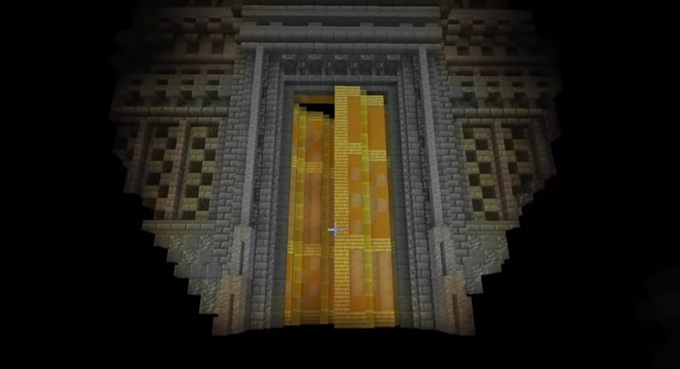
The yellow doors at the end of the “Searching For a World That Doesn’t Exist” ARG

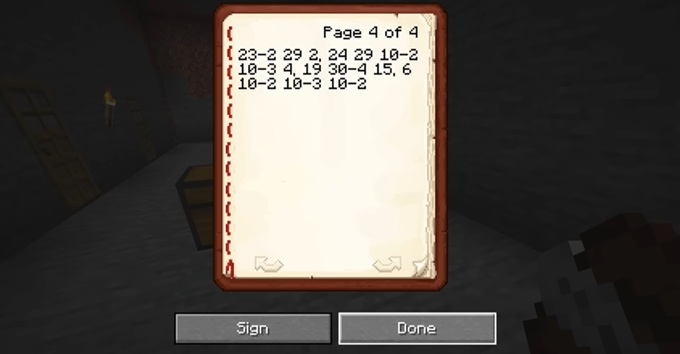
“Whatever you do, at the crossroads, don’t turn left. Don’t be fooled. It’s listening.” This is the strange message that a Minecrafter named AVeryLargeMayo (“Avery”) discovered inside a book in his Minecraft instance. At the end of the book, there’s a cryptic cipher that Avery doesn’t know how to solve. So, he makes a video asking the internet to help solve the mystery for him. All told, the video is less than four minutes long. Which makes the 40 minute long video the YouTuber the Minecraft YouTuber Wifies makes unpacking his discoveries exploring the Searching For a World That Doesn’t Exist ARG all the more impressive…even if he is secretly the game’s creator. And it’s that clever incorporation of the “ARG Explainer” video format as part of the ARG’s content that makes this Minecraft ARG so fascinating.

At least on the surface, this alternate reality game is handed to viewers as a fully-solved and crisply edited package, explaining (almost) everything and leaving little to the imagination. And yet, there is still considerable value in going to the “source material”, as none of the game’s three narrators are fully reliable.
Unlocking the First Layer: An Introduction to D3rlord3
The puzzle that Avery presents as the initial call to action in his video remains unsolved, at least at the beginning of the video: it doesn’t quite work as alphanumeric cipher, and similar attempts to treat it like a book cipher are quickly thwarted. Instead, Wifies falls down the rabbit hole by examining an inventory menu that flashes briefly onscreen during Avery’s video…a glitch in the system.

Wifies discovers that taking the first letter of each inventory item (and capitalizing the letters if there’s more than one of the item in the stack) spells out the location of a Google Drive link. So, the first image of a light block would be the number “1”, the three zombie heads in the second slot would become a capital “Z”, and the vine in the third slot would become the letter “v”.

When Wifies checks the URL, he finds the Google Drive link contains three files: two of these files are ~100 minutes of “raw” footage of someone playing Minecraft, and the final file is a PDF of an info doc from an anonymous Minecraft player, noting that the videos represent their “exploration into a strange tunnel I found in my minecraft world.” The rest of the video is Wifies’ account of what he uncovers through those video files from a user we’d later learn goes by the username D3rlord3.

Translating a Minecraft inventory into a website URL is infinitely easier when you made the puzzle

Notably, this is only a puzzle that works when explained in retrospect: the numbers could have just as easily represented indices into the words, and interpreting the blank space as underscore presumes that the solution will be a Google Drive link. But since this is a puzzle constructed to be presented as solved, none of that matters. The link wouldn’t even need to exist, since Wifies helpfully explains everything you’d need to know about its contents.

And yet, the Google Drive link does exist. You can watch the full 100 minutes of D3rlord3’s exploration. AveryLargeMayo’s channel also exists, so you can confirm the secret message is present, and watch him win at a game of SkyWars.

Continue reading

Stephen Sondheim Loved Puzzles More Than You

Image of the custom Ouija board from Midnight Madness 2025, photo by Chase Anderson

It’s Saturday evening. A team of six puzzlers have spent the past five hours traveling across New York City for a hunt, and just decoded a sequence of responses from a custom Ouija board: the answers to the thirteen questions they had just asked spelled out GPS coordinates to a nearby office complex. Upon arriving at their destination, they rush past the Alamo Drafthouse to reach their next destination: a non-profit filled with vibrantly decorated pianos, arranged in rings of four. Multicolored stickers adorn several keys on each piano, practically begging to be played. And identifying the songs they’re about to perform is only the first step.

This experiential snapshot was from the charity puzzle event Midnight Madness. Famed composer and playwright Stephen Sondheim was not directly involved in the creation of this hunt, and none of his songs were featured in the puzzle that unfurled as teams tickled the ivory. And yet, as Barry Joseph argues in his new book Matching Minds with Sondheim, that event (and many more like it) might never have happened had it not been for Sondheim’s passion for puzzling.

Joseph makes an incredibly compelling case, tracing Sondheim’s influence through everything from puzzle hunts and cryptic crosswords to escape rooms and even board games. The book highlights how the puzzles and games that Sondheim created as intimate gifts for friends, family, and colleagues shaped the modern puzzling landscape.

A copy of Matching Minds with Sondheim, along a puzzle bookmark mirroring a Sondheim puzzle

In Good Company: Sondheim’s Surprising Puzzling Cameos

Much of the thrill of Matching Minds with Sondheim comes from learning how deeply embedded Sondheim was across early puzzling communities. Fans of Sondheim’s musicals might be surprised to learn that he moonlit as New York magazine’s first puzzle editor, starting with the magazine’s launch in 1968. During that tenure, he helped popularize the cryptic crossword format to American audiences, simplifying elements to be more approachable. And while Broadway fans may have been familiar with his longtime friendship with fellow composer Leonard Bernstein, the fact that he created a series of three narratively linked board games known as The Great Conductor Hunt to celebrate the man’s 50th birthday is less publicized.

Even Sondheim’s Broadway casts were enlisted into his puzzling fun. For decades up until his death in 2021, cast members would receive puzzles as elaborate opening night gifts…from custom engraved beans bearing a message of thanks for Into the Woods, to jigsaw puzzles with the recipient’s initials etched into the pattern.

Whether your puzzling passion leads you into the realm of video games (he was an avid fan of games like Myst), puzzle boxes (he had an extensive collection) or game shows (Sondheim spent years trying to hunt down a clip from his highly successful appearance on the game show Password), Matching Minds showcases Sondheim’s deep and abiding love for play.

Each of these forays into puzzles and games showcases a man infatuated with the many ways puzzles and games can spark creativity and inspire passion. In terms of puzzling tomes, I turn to AJ Jacobs’ The Puzzler as a tour of passionate puzzling communities. But Matching Minds with Sondheim may be my new reference book for showcasing why someone might fall in love with puzzles in the first place. And that celebration shines brightest (especially for ARGNet readers) in Barry Joseph’s section on treasure hunts, and The Murder Game.

Continue reading