
Adam Henderson is a technical wizard. Growing up working and tinkering at his father’s computer repair shop located in the shadow of Microsoft meant Adam had access to the latest and greatest technology. By fifth grade, Adam was engaged in white-hat hacking, finding and reporting security holes to companies. By sixth grade, his attention focused on Trackers–spy devices cobbled together from video game controllers, cameras, joysticks, and even remote-controlled cars. Adam called upon three of his friends to test these Trackers, not knowing that the four would quickly get sucked into a world of crime obscured by layers of subterfuge and deceit. This is the world of Trackers, a multimedia book series by Patrick Carman that almost seamlessly weaves short cinematic sequences, puzzles, and video games into the reading experience. As with Carman’s previous books, these elements emerge organically from the narrative, playing an essential role in the story’s development.
The two books in the series, Trackers and Trackers: Shantorian, are framed as the transcript of an FBI interrogation conducted by special agent Gantz. As Adam recalls the events that led to his arrest, he periodically provides Gantz with codes to access multimedia files he prepared to support his story ranging from site rips of websites he encountered to video footage recorded using his team’s Tracker devices. Readers can enter these codes on the Trackers Interface or read the text transcripts Gantz entered as appendices to the FBI’s interview transcript, located at the back of the book. While this process may sound complicated, in practice reading Trackers is fairly straightforward: every time you see a code, either go online to watch the action unfold, or read the text transcript if you don’t have internet access.
I recently had the opportunity to discuss the series with Patrick Carman, who explained, “Kids will find a way to get to the material. Kids don’t have a problem with stopping and starting . . . that’s the way they’re wired.” This non-traditional reading experience appears to be resonating with young audiences. According to Carman, the online videos from Skeleton Creek, his previous multimedia book series, received over eight million views. Carman referenced receiving “…hundreds and hundreds of emails from educators, librarians . . . talking about how these kinds of formats are helping to bring readers that we had lost back to books.” Readers are becoming similarly entangled with the mini-games created for Trackers, competing to earn top scores. The scores have become so high, in fact, that the PC Studio team has been “trying to figure out over the past couple of months if there’s some way that [players are] hacking this thing so that they’re able to get these kind of scores, and we cannot figure out how that’s possible . . . the top three or four people are way beyond what we can do here at the studio.”
 On September 9th, 2008 Scholastic published The 39 Clues: The Maze of Bones by Rick Riordan, author of the Percy Jackson & the Olympians series. The book debuted at #1 on the New York Times bestseller list, and marked the beginning of Scholastic’s 10-book experiment in transmedia publishing. On February 2nd, Scholastic is releasing the seventh installment in the series, The 39 Clues: The Viper’s Nest by Peter Lerangis. February 2nd will also mark the premiere of The Viper’s Nest audio book and the corresponding set of collectible puzzle cards in Card Pack 3: The Rise of the Madrigals.
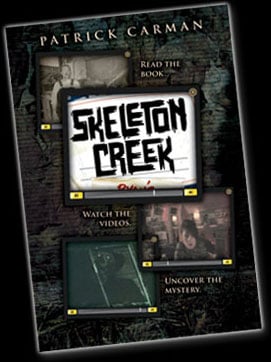 For those of you looking for a great cross-media spooky mystery comes
  Hot on the heels of the launch of the novel series The 39 Clues and its significant online experience aimed at young readers, Scholastic is working together with author M.G. Harris to create an extended experience for the second book in her series “The Joshua Files”, named ICE SHOCK.
 A
A  pendog creative
 black watchmen
 scp afterworld
 giggleland
 generation loss
 curators request