Category: Interviews (Page 4 of 6)

Interview with Cathy’s Book Co-Author Sean Stewart

Below is an interview that Michael Andersen conducted with Sean Stewart regarding the release of the Cathy’s Book app for the iPhone.  In addition to co-authoring the transmedia storytelling experiment Cathy’s Book, Stewart worked on ARGs including The Beast, i love bees, Last Call Poker and Year Zero.

MA: How did you and Jordan come up with the idea for Cathy’s Book?

SS: It was Jordan’s idea (things often are).  After the Beast we were talking about how fun it was, but how frustrating it was, too, that it was over: even if someone heard about how cool it was, they couldn’t DO it.  “Hey!  You’re a book guy,” Jordan said.  “We should do a book using the same kind of techniques!”

So we did.

We came up with the broad outlines of the story together.  We figured YA was a good place to start, and, to be honest, having written a fair number of somewhat dark sf/f novels, I wanted to write a book I thought my teenage daughters might like.  (They have a cameo in the first novel which Sharp Eyed Readers may spot…)

MA: How would you compare the writing process you used for Cathy’s Book, as opposed to what you used for traditional novels like Perfect Circle or full-blown ARGs like The Beast?

SS: We determined that the thing HAD to work as a book, first and foremost; if you never did any of the ancillary material, you still had to have an enjoyable, satisfying experience.  So I wrote Cathy’s story, if you will, much as I would a regular book.

We used the extra material to fill out the life of Cathy’s love-interest, Victor.  Readers looking through the extra evidence can eventually work out almost every detail of the Many Lives of Victor, from gold camp ragamuffin to WWI flying ace to mobster, and so forth.

Trying to fit together the various pieces of evidence was much more like the storytelling method of The Beast.  Over time, we also changed how we did that.  Cathy’s Book, like the Beast, has a ton of little pieces of stuff for players to link together.  In Cathy’s Key and Cathy’s Ring we moved increasingly to building “interactive arcs,” so that a reader might, for instance, send an email and go through a 3 or 4-step investigation to arrive at a satisfying endpoint.
Continue reading

PICNIC ’09: Peter Molyneux on Innovation in Entertainment

molyneux1In our previous coverage of day 2 of the PICNIC conference, I skipped over Peter Molyneux’s session called Innovation in Entertainment because it warranted additional attention. In case you’re unfamiliar with his work, Molyneux is a computer/video games mogul who has been working in the games industry for over 20 years now. His work pioneered several genres of video games through projects like Populous, Theme Park and Syndicate  for Bullfrog Production, now integrated into EA UK.

Molyneux later moved on to Lionhead Studios, where he created ground-breaking games including Black & White  and Fable. Molyneux is currently the head of Lionhead Studios, which was acquired by Microsoft Game Studios in 2006. Since June 2009, Molyneux has also been head of the European division of MS Game Studios.

Molyneux started his speech by showing his passion for games and the games industry. He declared that games are one of the most creative endeavours in existence because they take technology and use it to present a story in the most engaging and immersive way imaginable. For Populous, this involved using a 5×4 pixel grid for a characters face, making it rather hard to show emotions. Molyneux noted that the distance between the screen and the player is still huge: current resolutions are still far from reality. Moreover, games today mostly seem to be for one of only two categories: either for corporate use, or for the hardcore gamer. Games require a lot of manual dexterity, use complicated controllers and create other barriers that prevent players from having an enjoyable experience.

This is where Project NATAL comes in. You have probably heard of NATAL, the new technology allowing you to use your body as a controller, from Microsoft’s showcase of at the 2009 E3. NATAL is not just a motion detection technology, however. It also offers the possibility of facial and voice recognition. Molyneux and Lionhead have been working on taking these technologies and combining them with advanced versions of the AI and adaptive learning systems used in games like Black & White to create a whole new entertainment experience called Milo. Milo is a little boy that lives in your Xbox who interacts with the user in several very interesting ways. The best way to get an idea of what Milo can do is to watch Molyneux discuss the project.

Continue reading

Interview with Tom Salamon, Accomplice Co-Creator

Accomplice
Below is an interview that ARGNet’s own Michelle Senderhauf conducted with Tom Salamon, co-creator of Accomplice: New York, Accomplice: The Village, and Accomplice: Hollywood. You can find details on participating in Accomplice at AccomplicetheShow.com.

MS: What made you decide to do theatrical performances in the wild rather than in a traditional theatre setting?

TS: A lot of the inspiration came from just loving to people watch in NYC, and all the quirky, crazy people that you see on any given day.  We thought that if we could figure out a way to develop characters that would blend into the woodwork of the various neighborhoods, and have a way that our actors could identify our audience but not vice-versa, we could create an effect that felt like the city was filled with extras in our little story.  We were also watching a lot of the reality TV of the day, and were interested in the sociological aspects of it, and thought that we could emulate the feeling of being on one of those shows for our audience.  
 
MS: Where did the idea for Accomplice come from?

TS: My sister (co-creator Betsy Salamon-Sufott) and I were on a walking tour throughout lower Manhattan a few years ago.  While we were seeing all of these cool, out of the way spots, we found the tour guide boring, and thought that there might be a more exciting way to experience these locations.  We thought we could design a program where people would get dropped into the middle of an adventure throughout the city.  And while there were various gaming events that incorporated quick bits with actors, I don’t think anyone had really taken the time to structure a story and cast legit improv actors, and give them room to breathe and be funny and engaging, and have a narrative unfold that the audience would be in the middle of.  

MS: After signing up for an Accomplice performance, what should the customer expect?  Do you have any suggestions on how to get the most from the experience?

TS: Come to have fun and play along – the cast loves it when you participate.  You’re not role playing, you’re just being yourself, so have fun with it and get involved.  Also, a group of 10 is the best way to attend because you’re with all of your own people, but if you don’t have 10 it’s no problem – you’ll be paired with others – just work together!  

Continue reading

Mazda 33 Keys – The soul has been found

mazda33_03
On May 15th, 2009, over 60 participants in the Mazda 33 Keys ARG met in a Montreal warehouse, led by Pat Martin. Their goals: defeating the Unifos (the ARG’s bad guys), liberating Xira and, ultimately, to finally understand that the soul they were given the mission to recover by Reperio was none other than the Zoom Zoom of the new 2010 Mazda 3.

This ultimate stage in the interactive fiction (developed by Doner Canada and 1976 Productions on behalf of Mazda Canada) gathered all the players who had collected the keys — using various clues dispersed online, on television and radio broadcasts, on posters and in the field — to finally find out which of those keys would unlock the coveted car. Amélie Tremblay was the lucky owner of the winning key. Amélie and her famliy were very active players in the ARG and managed to find a total of seven keys!

It is obviously quite a satisfaction for the puppetmaster — as well as for the winner! — when that person worked really hard for the prize.

This ARG was developed exclusively for the French speaking market in the province of Quebec and was 1976 Productions’ first experience in the genre, and they got the bug! I met with Stéphane Raymond and Guillaume Bilodeau who told me the story behind the Mazda 33 Keys project.

Continue reading

CommanderVideo: We Barely Knew Ye

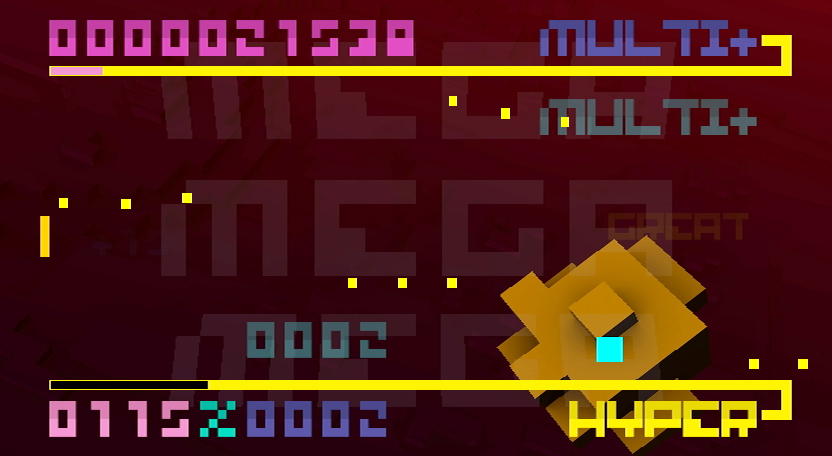
commandervideo_01Four days before Christmas, fans of alternate reality games got an early present. A member on the Unfiction forums noticed a strange new video and from there, it seemed that a new ARG had begun. The video, an eerie clip that showed a group of German explorers discovering and being attacked by a partially buried television, got the attention of the message board members who looked towards commandervideo.com for answers.

At the apparent trailhead web site, the rabbit hole wound further down as players began getting correspondence from a being named CommanderVideo, a professed alien life form approaching earth and in need of help. Just as it appeared that the puppet masters were prepared to reveal to gamers the reason for the viral campaign and the ARG that grew out of it, a player found a scan of a recently released Nintendo Power article that did the job for them.

While the Internet gives life to ARGs, it also has the power to take that life away, and the scanned article contributed to this game’s premature end. The Nintendo Power article killed the ARG as it exposed the game CommanderVideo was marketing, Bit.Trip: Beat, and this left players upset and frustrated. The players were not alone in their disappointment as Gaijin Games, the game’s creators, were also frustrated with the premature reveal. With the game effectively over, players questioned what went wrong.

Alex Neuse, the CEO of Gaijin Games, was kind enough to answer those questions and discus the promising ARG, its abrupt demise, and the upcoming release of Bit.Trip: Beat for ARGNet.

Continue reading

An Interview with JC Hutchins: Personal Effects

jc_hutchins.jpgEditor’s note: this is a companion interview for the article we ran yesterday on Personal Effects: Dark Art, the new transmedia novel written by JC Hutchins and produced by Smith and Tinker. Mr. Hutchins was kind enough to answer a few questions posed by Michael Andersen, and the responses are below. Picture courtesy of CC Chapman on Flickr.

MA: You’ve developed a strong core following through your work with The Ministry of Propaganda over the years — how will we see them utilized through the Personal Effects ARG?

JH: Thanks for mentioning the Ministry of Propaganda! I love connecting with my audience using the MOP, and giving them street team-style missions to perform. They’re amazing, generous people who volunteer their time to help spread the word about my work.

When it comes to Personal Effects: Dark Art, I’m certain I’ll ask them to evangelize the book’s release, as well as some special — and at present, secret — promotional stuff we’re cooking up. As always, the hundreds of MOP “agents” will be on the front lines, firing people up for the project. I’m lucky to have so many cool people in my life.

MA: A lot of the clues will be found with the book and its contents: how much can we expect to see from Personal Effects before the novel’s print release this Summer? And what can you say about your experience working with Smith & Tinker (and St Martin’s Press)?

JH: There’s already some content connected to the Personal Effects universe out in the wild, and I think it’s awfully cool. While longtime ARG players are accustomed to some of the stuff we’ve already released — fiction that’s being updated in real-time, in sync to when Dark Art’s events take place — the Personal Effects experience is ultimately designed for newcomers. We were careful to craft a tale that adult readers would really enjoy, and motivate them to pursue the transmedia experience on their own, solo-style.

That’s not to say we won’t have a “base of operations” forum available for players, or that we don’t welcome dedicated fans of ARG storytelling — we will, and we absolutely do. But we all know that most ARGs require what I call “bunches of brains” … lots of players … to unlock puzzles and push the story forward. Dark Art is different in that we’re aiming to allure folks who’ve never heard the word “ARG” to participate in this awesome breed of storytelling.

Speaking personally, it’s sometimes hard to remember just how remarkable and unique transmedia storytelling is … and how high its barrier for entry can be. The Personal Effects series is built to resonate with the individual reader. We absolutely hope — and totally encourage — longtime ARGers to read, play and share their experiences with the community, but we wanted to make the Personal Effects narrative to be a welcoming one for newbies.

Continue reading

« Older posts Newer posts »