Category: Game Launch (Page 3 of 47)

Sifting Through Field Studies Institute Records is Surprisingly Fun

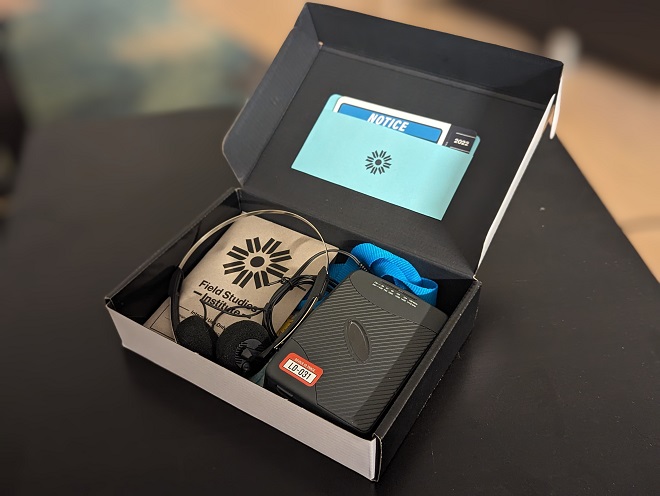
Last night, I received a package in the mail from the Field Studies Institute, containing a cassette tape that shouldn’t exist. Helpfully, the institute also provided a cassette player to help me listen to the tape that shouldn’t exist, along with instructions on how to use a cassette player to help me feel even older than I already do. But before we discuss the contents of the package, let’s talk a little about the Field Studies Institute, itself.

The Field Studies Institute: Finding a Narrative through Bureaucracy
The Field Studies Institute was founded in 1970, slightly after an incident occurred involving an object retrieved during the Apollo 12 mission. Eight Department of Defense researchers were charged with investigating the object, but something happened in the early hours of January 1st, 1970 that led to three of the researchers disappearing. The remaining members went on to found the Field Studies Institute, dedicated to investigating “transient objects” resulting from “Spacetime Deviations”.

According to a corporate training video, these transient objects provide glimpses into alternate timelines, both past and present. And that brings us to the heart of The Field Studies Institute‘s storytelling: much of what can be gleaned about the alternate reality game is told through pseudo-governmental paperwork, spanning decades.
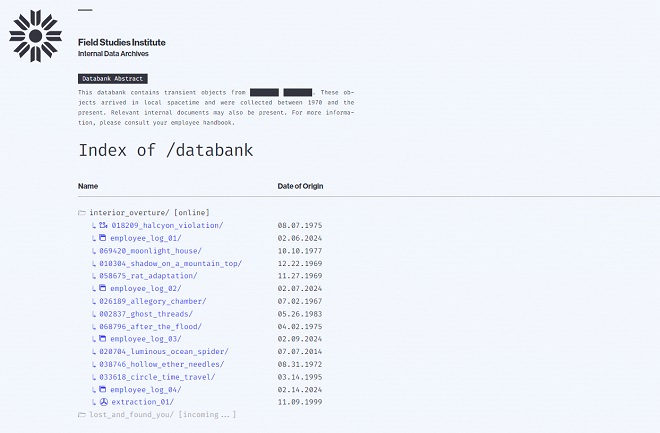
The Field Studies Institute website featuring internal emails, training manuals, and paperwork

And while poring over training manuals and research reports might sound a little dull, the documents are filled with personality. Take, for instance, the story of Filed Studies Institute staffer Casey Pennington (FC-081-A). Players are invited to peruse notes from his excursions tracking down anomalies, which takes careful notes of where he ate and how much he paid for the meal, for expensing purposes. After scrolling through his scrawled notes, an addendum to his file notes Mr. Pennington’s ultimate fate at the company:

After multiple complaints from the Archives Department, a thirty-day “Performance Improvement Plan” was created to help improve the legibility of Mr. Pennington’s hand-written notes in April of 1983. At the conclusion of the “Performance Improvement Plan”, no improvement was shown and Mr. Pennington was relieved of his duties.

Players didn’t just learn that the Field Studies Institute turned to Performance Improvement Plans to force employees out of the company for poor handwriting – they got to experience exactly what sort of bad handwriting would drive the Archives Department to force the institute’s hand.

While The Field Studies Institute is still relatively new, the records are littered with similar glimpses into the bureaucratic mess that powers the institute’s research. The employee handbook references the company’s generous policy of providing “five deviation-induced discomfort days” in addition to standard time off policies. Which sounds great, until a chat between two Archives Department employees notes that the head of their department up and vanished for a few months, only for him to return to work like he’d never been missing in the first place.

Documentation of the Surveyor 3’s discovery of the anomalous object, in 1969

The artifacts and records are meticulously designed, but it’s the personality that’s injected into them that makes poring through the files a genuine delight. While both organizations share a passion for paperwork, The Field Studies Institute is no SCP Foundation – they seem to at least care about maintaining the illusion of caring for their employees. They just need to make sure everything is documented with the proper forms, first.

Continue reading
BBC1 Presenters Play Hooky for “Great DJ Hunt”

BBC1 Radio’s Greg James has theories on where his fellow BBC presenters have gone in the Great DJ Hunt

When BBC1 Radio presenter Greg James went into work on Monday July 17th, thirty of his coworkers decided to play hooky, leaving him in charge of the station’s hosting duties for the foreseeable future. He was greeted by a message written in Comic Sans from a “sentient office printer” providing the following instructions written in Comic Sans:

Happy anniversary, Greg! This time last year, Radio 1 took your show away from you and you had to win it back by completing the Giant Jigsaw. You traveled the length of the country, swam with sharks, and jumped off a 10 meter diving board (sorry about that). This year, you don’t need to worry: you’ve not lost your show. But every other Radio 1 DJ has lost their show. You’re the only one left. You’re on your own until you work out where the others are.

All of Radio 1 is in your hands. You need to read every text. Play every song. Speak to every caller. This is your dream come true! Non-stop Greg…until you can find a DJ to replace you. Would you like to know how to find your fellow Radio 1 DJs? You’ll need to go and get the next piece of paper.

That next piece of paper laid out the rules of Radio 1’s Giant DJ Hunt: Greg (with more than a little help from his loyal listeners) has to track down clues to the location of his missing colleagues scattered across the internet, and confront them with a simple question: “are you a Radio 1 DJ?”

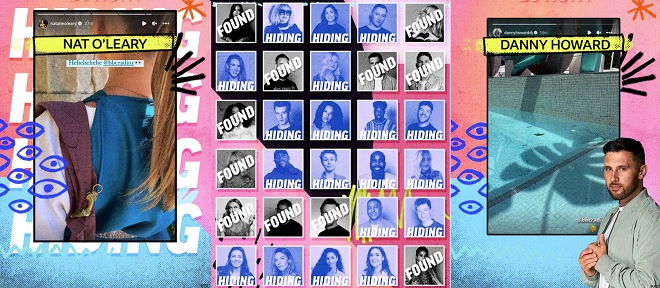
Status of the Giant Radio DJ Hunt at the end of Day 1, along with the clues that caught Danny and Nat

The Giant Radio DJ Hunt So Far: A Dash of Geoguessr, A Sprinkle of Puzzling
At the time of this article, 11 out of 30 presenters have been found, with listeners tracking down clues left by presenters across their social media at a rapid clip. Charlie Hedges was the first to be found at a Tayto’s crisp factory in Northern Ireland after sharing an Instagram Story of herself outside the building’s four distinctive turrets (along with a picture of some potatoes). Meanwhile, Danny Howard and Pete Tong were tracked down because fans knew he had a DJ set in Ibiza, making it easier to track down the poolside photo he shared. Nat O’Leary and Dean McCullough had the most puzzle-heavy clue so far, with Nat’s Roman toga combining with Dean’s rugby gear directing listeners to the Caerleon Roman Fortress and Baths in Wales.

So far, the Giant Radio DJ Hunt has followed a similar flow: Radio 1 presenters (either alone or in groups) drop cryptic clues to their location in Instagram Stories, and listeners track down the clues. What makes the Giant Radio DJ Hunt so special is how leads and false starts are being documented, live on the radio.

Greg James kindly gave up his WhatsApp number, allowing fans to message with updates on the leads they’re chasing and their progress through the hunt. Accordingly, that allows the show’s producers (who have not joined their fellow presenters on the run) to follow up and facilitate live interviews about the hunt’s progress. So when a listener traveled out to the Roman bath house in Bath, they were able to report that an employee at the bath house checked out the picture and recognized it as the bath in Carleon, live on air.

Highlights from the Hunt are being syndicated on Greg James’ All Day Breakfast podcast, and vicariously experiencing tales from the hunt make for scintillating listening even if you don’t dive into the hunt yourself.

Continue reading

Hidden Bats Returns Players to the World of AI: Somnium

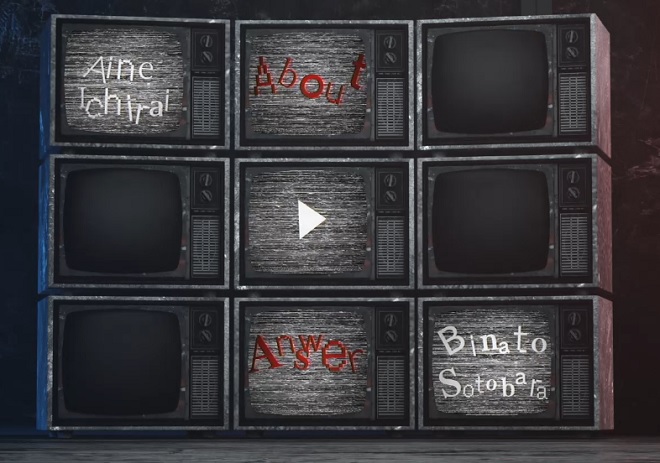
The Hidden Bats investigations hub

On May 6th, Saitama Prefecture students Aine Ichirai and Binato Sotobara were reported missing. At 10pm EST on May 7th, Aine’s Twitter account shared a chilling account: on her way home from cram school, she blacked out, and then woke up in a dark room with no windows. The only things of note in the room? A box with a series of numbered buttons, and a piece of paper saying “Solve the Puzzle”. Twenty minutes later, her account went silent. The same pattern repeated for Binato at 10pm EST on May 8th. After blacking out on his way home from college, he woke up in a room with a box with a number lock, a note instructing him to “Solve the Puzzle”, and a smartphone that only connects to the internet for 21 minutes, every other day. This is players’ introduction to Hidden Bats, an alternate reality game teasing Japanese game developer Spike Chunsoft’s upcoming game, AI: The Somnium Files – nirvanA Initiative.

A Brief Introduction to Hidden Bats’ Gameplay
During the game’s first week, the mechanics of the game have been relatively simple: as Spike Chunsoft explains in their press release, every day, the smartphone belonging to one of the two missing students will activate for 21 minutes, and they will share a note through their Twitter account. Players then have two days to decode the message, using the surreal images contained within a video called “Bats489” as a guide. Then, they would enter that “Nirvana Spell” into an online tool to generate the nine-digit combination allowing the students to move on.

Aine Ichirai’s first puzzle: a blue snake, a yellow penguin, a gray giraffe.

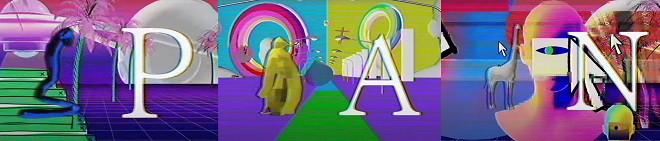
For instance, Aine Ichirai’s first note featured an image of a blue snake, a yellow penguin, and a gray giraffe. Each of these images appeared in the video, associated with letters spelling out the word “PAN”.

The animals from the first puzzle, appearing within the “Hidden Bats” video.

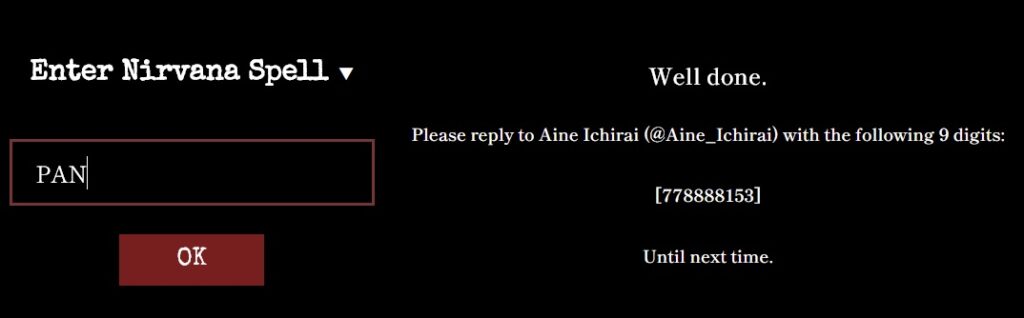
Entering that keyword into the Answer box on the Hidden Bats website as a “Nirvana Spell” triggers a congratulatory message, along with the first 9-digit code needed to proceed – [778888153]. Two days later, when Aine’s internet access was restored, she reported that the box opened up, exposing yet another layer to solve. Puzzles have gotten progressively complex over the past week as players progressed (requiring players to get more creative in identifying the referenced symbols and introducing shift ciphers), but the core mechanic has remained the same. Find the puzzle, get the word, transform the word into the necessary number sequence.

Entering the Nirvana spell

Hidden Bats‘ design made a somewhat novel choice for the alternate reality gaming space: the entire experience is delivered with near-simultaneous posting in both English and Japanese, across the game’s websites and social accounts. While other games like McDonalds’ The Lost Ring and Star Trek’s Alert Vulcan have integrated multiple languages into gameplay, those games typically turn global communication into a puzzle of its own, leaving it as an exercise for fans to translate the often expansive texts driving gameplay. By making the conscious choice to limit communications to 21 minutes a day, Hidden Bats manages to more seamlessly engage with English and Japanese speakers in tandem.

The daily scheduling (starting at 10pm EST and alternating between Aine and Binato) also introduces some welcome regularity in updates.

Continue reading

CyberFACED with the Future: Online Forums are Retro Now

In the year 2086, technology has advanced sufficiently to allow for the augmentation of humans. In what seems to be a tradition for emerging technologies, the market for “cyborgization” is dominated by NeuroGlory, whose proprietary technologies are on track to dominate 70% of the global market before the end of the century. Some members of society will still pursue open source solutions or even opt out of augmentation entirely, but for the most part, augmentation is synonymous with NeuroGlory.

This vision of the future is the setting for a new alternate reality game that primarily plays out across the fully functioning social network CyberFACED. The site as a whole was created to serve as a hub for retro nostalgia for the turn of this century, creating one of the rare safe places for open discourse between corporate cyborgs, open source cyborgs, and even conscientious objector “baseline humans”. The site will feel all too familiar to internet denizens who spent time involved in online communities in the early 2000s. Even the website’s artificial intelligence embraces the kitsch, as he’s programmed as a highly insecure Shiba Inu dog who moderates the site and worries that he’s not being a good enough boy.

InuBot the AI moderator is a good boy. A very good boy.

The narrative centers around a network of friends who grew up together as wards of NeuroGlory’s Kid House program, which legally adopted the children and put them on the fast track for augmentation. And like any social platform, the primary method of gameplay is untangling the messy friendships of these corporate siblings as they navigate college exams, conflicting politics, and potential side effects from the augmentation that I’m sure are perfectly harmless and nothing to worry about.

Opening up the CyberFACED trailhead, containing a tshirt and USB drive

Earlier this month, I received a trailhead package in the mail from Joey “Legit” Markham, one of the NeuroGlory loyalists of his Kid House cohort. Inside was a tshirt with the text OPEN SOURCE CYBORG printed on it, as well as a CyberFACED branded flash drive. After plugging the USB into a computer, a drive amusingly named “Legit Cat” (a remix of Joey’s Legit CyberFACED username with InuBot’s canine-centric branding) contained screencaps of posts and messages from the platform, along with a PDF letter from Joey.

Continue reading

Neurocracy Turns Wiki Wrangling Into a Murder Investigation

In 2048, Wikipedia was taken down by a series of spurious copyright claims. Within a year, a successor to the world’s largest crowdsourced collection of knowledge was replaced by Omnipedia, a more centralized online encyclopedia that relies on a select community of human and artificial intelligence contributors, with the backing of Chinese technology conglomerate Zhupao. On September 30th, 2049, Zhupao founder Xu Shaoyong’s helicopter was shot down by a missle fired from one of the airport’s security drones, killing the world’s wealthiest person, along with everyone else aboard. This is the central mystery of Neurocracy, a political thriller that plays out across edits to an online wiki from the future.

Neurocracy is a single-player, interactive narrative game created by Playthroughline, released serially on the Omnipedia.app website. The first chapter of the story (covering Omnipedia updates from September 28, 2049 – October 1, 2049) is freely available, with nine additional chapters released weekly for paid subscribers, with each week’s installment covering a single day of wiki edits and additions expanding the sci-fi universe’s footprint.

And while the assassination of Xu Shaoyong is the primary narrative skein to untangle, there are a number of fascinating side plots buried within the ever-expanding web of Omnipedia entries. Who was really responsible for the murder on season two of Are You For Real, a dating elimination show with a Turing test twist? Who is Adira, and what is their connection to the hacktivist collective Five of Swords? And why are peoples’ neural colloid implants glitching?

The Omnipedia Main Page, circa October 1, 2049

Wiki-Wrangling as Gameplay
Neurocracy‘s gameplay is deceptively simple. With every new episode, the Omnipedia Main Page is updated to highlight a featured article, along with a series of breaking news updates. Using these as a jumping off point, players can learn more about the world by hovering over tooltips, searching for key words or phrases in Omnipedia’s search bar, or clicking on in-line links within articles. Players can also dive deeper into individual articles by using Revision History navigation to see how articles have changed over time, with revisions conveniently highlighted.

By leveraging those features, players can dive into the central mysteries of the narrative, and try to assemble disparate pieces of evidence to figure out what really happened to Xu Shaoyong. Neurocracy is a game of theory-crafting, piecing together clues left behind in online breadcrumbs. Somewhat ironically, Neurocracy‘s gameplay is almost identical to the process of trying to piece together the events of an alternate reality game, after the fact.

Interested in piecing together the events of the Dungeons & Dragons ARG No Stone Unturned, leading up to the release of the Waterdeep: Dragon Heist module? Pore through the game’s wiki, and navigate through a series of pages to piece together the narrative. Interested in how a vampire dating site Tender led to a major Vampire: The Masquerade announcement? Another fan wiki will help guide you through the process. Parsing through wiki entries remains one of the primary way player communities track and document the often sprawling nature of alternate reality games: Neurocracy cuts through the middle-man and makes that navigational exercise a story in its own right.

It’s tempting to compare Neurocracy to other wiki-based storytelling projects like the SCP Foundation. But while the SCP foundation is an exercise in collective storytelling populated by largely stand-alone stories where multiple truths can coexist and contradict each other, Neurocracy is a more singular vision, unfolding in a non-traditional format.

Similarly, Neurocracy is also slightly distinct from alternate reality games, as the experience doesn’t even allow for the illusion of agency in gameplay. Players aren’t interacting with the story because they believe doing so might influence events. They’re interacting to try and piece together the narrative puzzle. That’s one of the reasons why the process of playing Neurocracy is so similar to that of consuming ARGs after they concluded: it’s ARGs, stripped of agency. This form of storytelling is often referred to under the umbrella term of ergodic literature, and focuses on the amount of effort taken to engage in the process of reading as its defining trait.

Continue reading

Cat Detective Mimo and the Case of the Increasingly Meta Bank Heist

In the mobile puzzle game Detective Mimo, the titular protagnoist is an anthropomorphic cat detective, sent to put a stop to the nefarious Cat Rogue’s crime spree at the Purrfect Bank. By solving a series of increasingly challenging challenges in the game’s point-and-click interface players get closer and closer to the bank’s vault, figuring out Cat Rogue’s true identity and motivation along the way. At least, that’s how the game starts. Before the game is over, Detective Mimo will have players practicing their command line coding skills, cracking open password-protected PowerPoint presentations, and deconstructing practically every playable element of the game to complete the narrative.

The First Round: A Point and Click Puzzle Adventure
Detective Mimo starts out as a relatively simple point-and-click adventure game, albeit one that leans heavily on puzzle tropes. At the Shrimp City police station, Mimo is briefed on her assignment, which doubles as a player tutorial on the game’s core mechanics. Clicking on certain objects of the game allows Mimo to interact with them: clicking on a computer monitor might prompt players to enter a password, while clicking on other objects might transfer them into the player’s inventory, where they can be used by dragging and dropping them onto other objects.

Early challenges in the game are structured around breaking through a series of locks. Find the key to unlock the drawer, then figure out the password to unlock the computer. Find the missing pieces to access the Purrfect Bank’s interior, and then peel back layer after layer of security before finally reaching the inner vault. Practically every lock works on different principles so the process stays fresh, but a comfortable formula is established. Along the way, Mimo will stumble across more narrative clues essential to solving the broader mystery, allowing a successful identification of the Cat Rogue. All the while, the game maintains a lighthearted, comedic tone. Security Guard Mr. Purr Job is obsessed with the pop idol Meowna, while the bank’s Branch Manager keeps a secret stash of catnip locked away in his office.

Second Time’s the Charm: An Evolving Playthrough Experience
It’s only after solving the game’s primary mission that things start to get weird. The game loops back and has players retread familiar ground…but things are different this time. The difficulty of puzzles ramps up considerably, and not all challenges can be resolved through the now-familiar point and click mechanics. In the game’s first cycle, players provided support to cat detective Mimo in her investigation. For the second cycle, you as the player take on a more active role. And this round of gameplay is where Detective Mimo excels, both in its narrative and puzzle design.

From the puzzling perspective, challenges take full advantage of the fact that this is a smartphone exclusive game to force players into thinking outside the box, providing creative solutions to familiar tasks. The narrative complexity also expands, as players have a choice of how to proceed resulting in two drastically different endings. There’s even a secret room in the game available in this stage, containing the most challenging puzzle trail of the game.

Continue reading
« Older posts Newer posts »