Year: 2025 (Page 1 of 3)

The King in Yellow as Found Footage Minecraft ARG

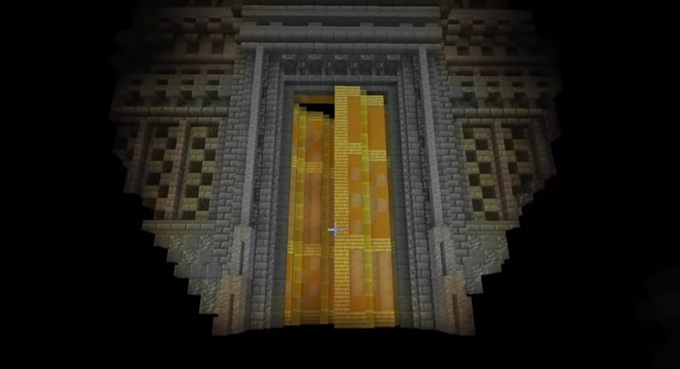
The yellow doors at the end of the “Searching For a World That Doesn’t Exist” ARG

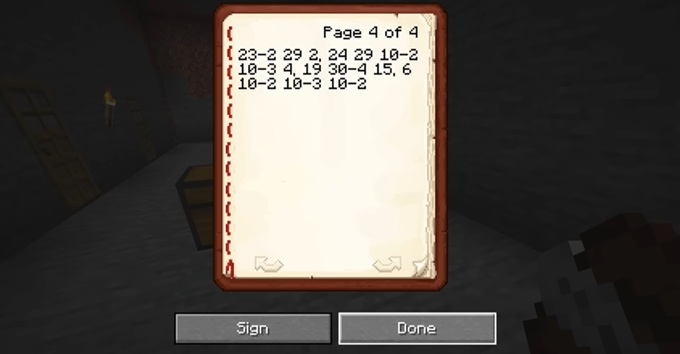
“Whatever you do, at the crossroads, don’t turn left. Don’t be fooled. It’s listening.” This is the strange message that a Minecrafter named AVeryLargeMayo (“Avery”) discovered inside a book in his Minecraft instance. At the end of the book, there’s a cryptic cipher that Avery doesn’t know how to solve. So, he makes a video asking the internet to help solve the mystery for him. All told, the video is less than four minutes long. Which makes the 40 minute long video the YouTuber the Minecraft YouTuber Wifies makes unpacking his discoveries exploring the Searching For a World That Doesn’t Exist ARG all the more impressive…even if he is secretly the game’s creator. And it’s that clever incorporation of the “ARG Explainer” video format as part of the ARG’s content that makes this Minecraft ARG so fascinating.

At least on the surface, this alternate reality game is handed to viewers as a fully-solved and crisply edited package, explaining (almost) everything and leaving little to the imagination. And yet, there is still considerable value in going to the “source material”, as none of the game’s three narrators are fully reliable.
Unlocking the First Layer: An Introduction to D3rlord3
The puzzle that Avery presents as the initial call to action in his video remains unsolved, at least at the beginning of the video: it doesn’t quite work as alphanumeric cipher, and similar attempts to treat it like a book cipher are quickly thwarted. Instead, Wifies falls down the rabbit hole by examining an inventory menu that flashes briefly onscreen during Avery’s video…a glitch in the system.

Wifies discovers that taking the first letter of each inventory item (and capitalizing the letters if there’s more than one of the item in the stack) spells out the location of a Google Drive link. So, the first image of a light block would be the number “1”, the three zombie heads in the second slot would become a capital “Z”, and the vine in the third slot would become the letter “v”.

When Wifies checks the URL, he finds the Google Drive link contains three files: two of these files are ~100 minutes of “raw” footage of someone playing Minecraft, and the final file is a PDF of an info doc from an anonymous Minecraft player, noting that the videos represent their “exploration into a strange tunnel I found in my minecraft world.” The rest of the video is Wifies’ account of what he uncovers through those video files from a user we’d later learn goes by the username D3rlord3.

Translating a Minecraft inventory into a website URL is infinitely easier when you made the puzzle

Notably, this is only a puzzle that works when explained in retrospect: the numbers could have just as easily represented indices into the words, and interpreting the blank space as underscore presumes that the solution will be a Google Drive link. But since this is a puzzle constructed to be presented as solved, none of that matters. The link wouldn’t even need to exist, since Wifies helpfully explains everything you’d need to know about its contents.

And yet, the Google Drive link does exist. You can watch the full 100 minutes of D3rlord3’s exploration. AveryLargeMayo’s channel also exists, so you can confirm the secret message is present, and watch him win at a game of SkyWars.

Continue reading

Stephen Sondheim Loved Puzzles More Than You

Image of the custom Ouija board from Midnight Madness 2025, photo by Chase Anderson

It’s Saturday evening. A team of six puzzlers have spent the past five hours traveling across New York City for a hunt, and just decoded a sequence of responses from a custom Ouija board: the answers to the thirteen questions they had just asked spelled out GPS coordinates to a nearby office complex. Upon arriving at their destination, they rush past the Alamo Drafthouse to reach their next destination: a non-profit filled with vibrantly decorated pianos, arranged in rings of four. Multicolored stickers adorn several keys on each piano, practically begging to be played. And identifying the songs they’re about to perform is only the first step.

This experiential snapshot was from the charity puzzle event Midnight Madness. Famed composer and playwright Stephen Sondheim was not directly involved in the creation of this hunt, and none of his songs were featured in the puzzle that unfurled as teams tickled the ivory. And yet, as Barry Joseph argues in his new book Matching Minds with Sondheim, that event (and many more like it) might never have happened had it not been for Sondheim’s passion for puzzling.

Joseph makes an incredibly compelling case, tracing Sondheim’s influence through everything from puzzle hunts and cryptic crosswords to escape rooms and even board games. The book highlights how the puzzles and games that Sondheim created as intimate gifts for friends, family, and colleagues shaped the modern puzzling landscape.

A copy of Matching Minds with Sondheim, along a puzzle bookmark mirroring a Sondheim puzzle

In Good Company: Sondheim’s Surprising Puzzling Cameos

Much of the thrill of Matching Minds with Sondheim comes from learning how deeply embedded Sondheim was across early puzzling communities. Fans of Sondheim’s musicals might be surprised to learn that he moonlit as New York magazine’s first puzzle editor, starting with the magazine’s launch in 1968. During that tenure, he helped popularize the cryptic crossword format to American audiences, simplifying elements to be more approachable. And while Broadway fans may have been familiar with his longtime friendship with fellow composer Leonard Bernstein, the fact that he created a series of three narratively linked board games known as The Great Conductor Hunt to celebrate the man’s 50th birthday is less publicized.

Even Sondheim’s Broadway casts were enlisted into his puzzling fun. For decades up until his death in 2021, cast members would receive puzzles as elaborate opening night gifts…from custom engraved beans bearing a message of thanks for Into the Woods, to jigsaw puzzles with the recipient’s initials etched into the pattern.

Whether your puzzling passion leads you into the realm of video games (he was an avid fan of games like Myst), puzzle boxes (he had an extensive collection) or game shows (Sondheim spent years trying to hunt down a clip from his highly successful appearance on the game show Password), Matching Minds showcases Sondheim’s deep and abiding love for play.

Each of these forays into puzzles and games showcases a man infatuated with the many ways puzzles and games can spark creativity and inspire passion. In terms of puzzling tomes, I turn to AJ Jacobs’ The Puzzler as a tour of passionate puzzling communities. But Matching Minds with Sondheim may be my new reference book for showcasing why someone might fall in love with puzzles in the first place. And that celebration shines brightest (especially for ARGNet readers) in Barry Joseph’s section on treasure hunts, and The Murder Game.

Continue reading

Ministry of Lost Things Delivers a Box of Puns with a Side of Puzzles

Ministry of Lost Things Lint Condition, next to the newest installment Finders Keypers

Last year, ARGNet reviewed the first installment in PostCurious’ episodic puzzle series, The Ministry of Lost Things: Lint Condition. The series of puzzle games center around the “Elusiverse”, a world filled with the lost and forgotten objects from our world enter when they’re misplaced. The crowdfunding campaign ultimately invited over 4,000 backers to join the Department of Returns as scouts, looking to return lost objects of sentimental value to their humans.

PostCurious is back crowdfunding for its second installment of the series, Ministry of Lost Things: Finders Keepers. The newest release is just as whimsical and lighthearted as the last, and packed full with so much wordplay, you could almost be excused for thinking the game’s dozen or so puzzles were just an excuse to inflict a series of tortured puns on players.

The gneesters, who happily rehome lost objects into the Elusiverse…even if means a lot to you

A Surprisingly Heartfelt Story for a Relatively Tiny Box
With the first installment of Ministry of Lost Things, finding out what object went missing was an element of the first puzzle. For Finders Keypers, things start out with a more explicit task: Cary the Carabiner ended up detached from her owner Jenna’s bag, and all of the keys she was securing became scattered. As a scout for the Department of Returns, it’s your job to traverse the Elusiverse collecting witness statements and solving puzzles to find the lost objects, learning along the way why they’re more than just keys to Jenna.

And every square inch of that heartfelt story is packed with more puns than you’re prepared to handle. One of the game’s early puzzles does a particularly good job of exemplifying this: starting off in The Keys (a location initially teased in the game’s first installment), Department of Returns scouts are tasked with tracing down the carabiner’s path through a series of islands that weaves through “Rock” and “Hard Place”, past “Key Largo” and its nearby counterpart “Key Smaller”, and past a series of islets like “Doss Isle, Grocery Isle, and Rept Isle”.

Early puzzle components from Ministry of Lost Things (some pieces omitted to prevent online solving)

If your reaction to that map is more of a chortle than a wince, this is the game for you since that’s the type of whimsy that saturates every part of the game, whether it contributes to the puzzle solving or not. There may be a dozen puzzles to this game, but there’s easily over a hundred literary flourishes, making this just as much a pun-laden successor to Piers Anthony’s Xanth novels as it is a puzzle game.

Continue reading

Masquerade: NYC’s New Immersive Musical Launched With a Secret ARG

Free cherry dipped ice cream from Masquerade was only the start of this particular adventure…

It’s the second night of Previews for Masquerade, and I’ve just finished seeing Andrew Lloyd Webber’s newest immersive musical take on Phantom of the Opera. While comparing notes with a friend from the NYC immersive community, a man dressed in black approaches. Leaning in conspiratorially, he quietly tells me: “You see? Everything I told you was true.”

The man who approached me was a ghost hunter named Sean Hunter, who was at the center of a months-long alternate reality game teasing the release of Masquerade. The musical just finished Previews with a gala event, last night. To celebrate, here’s an overview of how we got to the Masquerade.

Vignettes from the many Masquerade ARG popups that took over the city this past summer

The Masquerade ARG: A Popup Homage to New York City
At its core, Masquerade teased the show’s existence with a series of popup experiences, celebrating New York City. As ARGNet previously reported, it started with the immersive show’s historic venue itself: to prepare for the show’s transformation, the windows of Lee’s Art Shop were liberally covered with newspapers. Upon closer inspection, however, many of these papers were referencing the history of Phantom of the Opera in New York City. And scattered in between the real papers from the city were a few in-universe papers about L’Opera Populaire.

Shortly after fans noticed this detail, a series of masks started popping up at locations across the city, with luggage tags bearing MasqueradeNYC.com on one side, and the message “if found please call 212-505-5666”. Calling the number (now Masquerade‘s business line) would trigger a voicemail message featuring a music box playing the song Masquerade, slowly winding down before an ominous voice states “he’s back”. The following day, a series of mirrors with the Masquerade logo appeared across the city. Each time, the MasqueradeNYC Instagram would post a story with a picture of where to go, for those curious enough (and quick enough) to find it. A full accounting of these events is listed below.

Continue reading

It’s Been Here the Whole Time: The Boy Who Cried “Dropout ARG”

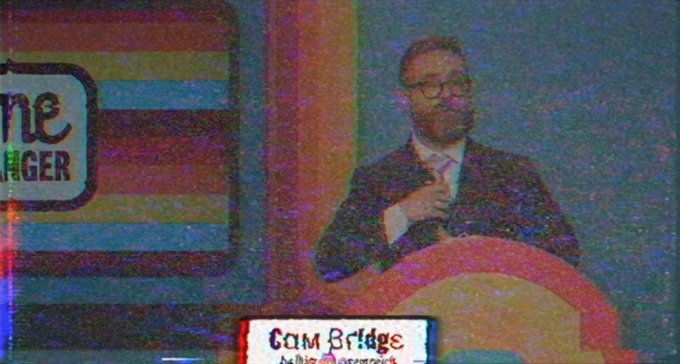
A highly degraded version of Sam Reich, showing where he’s from in this third loop of s6’s “Deja Vu”

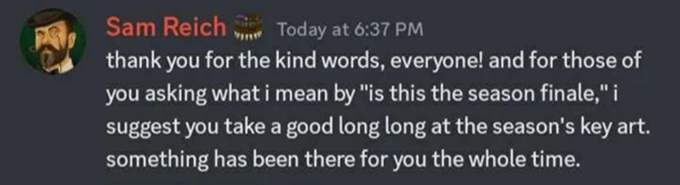
I think Dropout’s hit game show Game Changer is celebrating the end of its seventh season with an alternate reality game. Admittedly, when fans of the show posted to the streaming network’s subreddit, the show’s host Sam Reich clearly and repeatedly denied the claims, writing “NOTHING TO SEE HERE” and “THIS IS NOTHING, LOOK AWAY”. These denials were reinforced by the show’s co-executive producer Paul Robalino, who went even further with his statement:

There was nothing hidden at the end of the last episode. There’s no ARG. There are no QR codes. There is no secret to unlock. What is everyone talking about

Paul Robalino, on Twitter

Admittedly, I was convinced there was a Game Changer ARG two years ago, when the team teased there might be more to the season after the “final episode” of season 5. And then I did it all over again last year, when a particularly glitchy episode released during season 6.

But please, ignore my spotty personal track record for this and the team’s explicit and suspiciously specific denials: this time, I think Game Changer really is running an alternate reality game that gives its players a peek behind the fictional-curtain of the show, to help unlock the “real” ending for the season. But before going over that, I should probably own up to past missteps.

The poster for Dropout’s Game Changer: season 5, a season that did not have an ARG

Third Time’s the Charm? The Last Two Times We Suspected a Game Changer ARG
Admittedly, the Dropout fandom doesn’t have the best track record of finding ARGs in episodes of Game Changer. The first time we missed the mark was after the season 5 episode Escape the Greenroom. The episode introduced viewers to Samuel Dalton, Sam Reich’s great-grandfather and occultist. During the episode, Dalton kidnapped and replaced the real Sam Reich, subjecting the episode’s guests to a custom escape room designed by Stash House‘s Tommy Honton.

At the time, this episode was thought to be the ninth and final episode of the season. But immediately after it aired, Sam Reich posted a cryptic message to the Discord, hinting that there might be more to come.

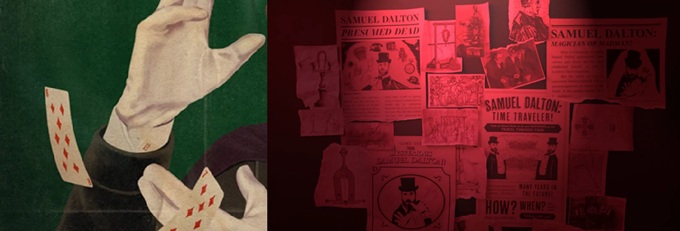
In retrospect, the solution to this was relatively straightforward: zoom into the series’ key, and Sam Reich had an extra “13” up his sleeve, hinting that the show would have not just one surprise episode, but four: a multi-part Battle Royale homage to the Survivor franchise that served as the true end of the season. That didn’t stop fans (myself included) from deconstructing every tidbit of occult lore shown as part of the escape room, suspecting we hadn’t seen the last of Samuel Dalton, time travelling magician and occultist.

The “13” (episodes) Sam actually had up his sleeve, versus Dalton lore from the ARG-that-wasn’t

The next year, suspicions of an alternate reality game started to really percolate after the season’s sixth episode, Deja Vu. The episode centered around contestants reliving the episode on a time loop, with the episode’s footage glitching out more and more after every loop – a theme familiar to fans of Ranboo’s Generation Loss ARG from the prior year. Ranboo would make their own Game Changer debut through a series of guest appearances culminating in the season finale.

This theme was also familiar to Game Changer fans still looking for Samuel Dalton to make an ARGish return. Was the time loop happening because Reich’s time travelling great-grandfather returned to torment a new batch of contestants in a neverending loop? The episode’s frequent glitches and nearly impossible challenges did task contestants with exploring external websites, like the FixItMan78 YouTube channel which provided helpful instructions on how to repair the ElectroBobbleWobble QZ.

Voice actor and YouTuber SungWon Cho (also known as ProZD) as FixItMan78, screaming into a gizmo

So, fans started poring through Deja Vu to interpret the glitches, and even started skimming through past episodes to see if there was a pattern in Sam Reich’s introductions that might reveal whether he’d been secretly replaced by his identical great-grandfather. Multiple promising leads emerged, but nothing that manifested into anything definitive.

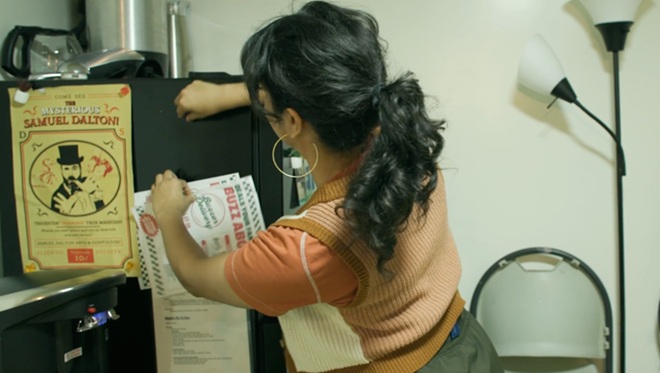
A very prominent poster for the Mysterious Samuel Dalton, during “Beat the Buzzer”

The next episode, Beat the Buzzer (which brought back Tommy Honton as a consultant) only fanned the flames of speculation by subjecting the show’s contestants to a number of challenges to earn the right to press dozens of buzzers hidden throughout the studio: this time, famed magician and time traveler Samuel Dalton even made a cameo on an advertisement for his show, next to a literal callback puzzle that challenged contestants to order a buzzer from a fake pizza company.

After the episode aired, some of those games (like Crack the CAPTCHA) were even made playable on Dropout’s site. But ultimately, in season 6 there wasn’t even a card up Sam’s sleeve – sometimes, a time loop episode is just a time loop episode.

Continue reading

KFC Launches Special Blend of 11 Secret Codes and Puzzles

KFC’s newest commercial, starring a secret QR code puzzle on celebrity chef Matty Matheson’s arm

Colonel Harlan Sanders was obsessed with fried chicken, even before he convinced a cafe owner to sell fried chicken with his special blend of 11 herbs and spices. Enough so, that KFC’s newest commercial is a 75 second homage to the obsession that gave birth to the Kentucky Fried Chicken brand.

With this focus on obsession front and center, it’s no wonder the commercial snuck a QR code on Matty Matheson’s tattoed arm, kicking off a deviously challenging series of 11 secret codes and puzzles to celebrate the herbs and spices that built an empire. The first person to solve each of the puzzles? They’re rewarded with 11 months of free KFC for their efforts.

The “(one of the) first to solve” message presented to prospective winners

KFC gets extremely creative with their advertising. Celebrity casting for commercials is fairly standard for major brands, but starting in 2015 KFC went out of its way to surprise fans by cycling through a full roster of celebrity Colonel impersonators. Darrell Hammond was the first to take over the finger-lickin’ mantle, but was quickly supplemented by everyone from beloved comedians like Norm MacDonald and Jason Alexander to more surprising picks like Reba McEntire and RoboCop. But it’s the company’s stunt marketing that truly shines: it’s been almost a decade since the release of the free romance novella Tender Wings of Desire to celebrate Mother’s Day, but I still keep a copy on my Kindle. The company doubled down on their thirst trap branding by releasing a free dating sim that’s still available on Steam.

The commonality between Tender Wings of Desire and I Love You Colonel Sanders! A Finger Lickin’ Good Dating Sim? They’re highly enjoyable experiences that recognize what makes the source materials work so well, and pay homage to it. And I am happy to announce that KFC’s puzzle hunt for the overly obsessive continues that tradition with a series of challenging yet creative puzzles. So, we’re going to do this article a little different. If you’d like to give the puzzles a try yourself, go to The11Secrets.com, and see what you can uncover. Keep on reading to be spoiled on a selection of those 11 puzzles and to learn why I’m so effusive in praise for them.

Again: what follows will be absolutely riddled with spoilers.

Continue reading
« Older posts