Return of the King in Yellow Minecraft ARG

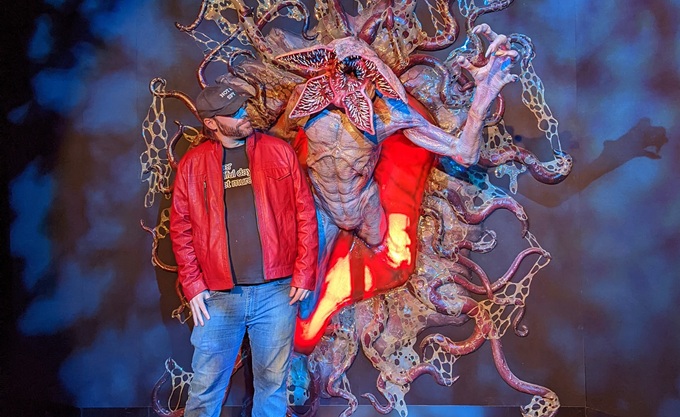
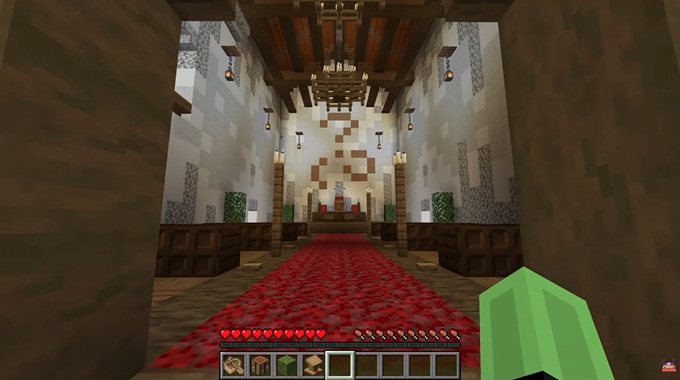
Avery enters a church and is confronted with the Yellow Sign, in Destroying A World That Doesn’t Exist

Back in November, ARGNet covered Searching for a World That Doesn’t Exist, a modern reinterpretation of Robert Chambers’ The King in Yellow through the lens of a Minecraft Let’s Play video. This reframing of the classic horror story is particularly fitting, as the titular King in Yellow isn’t a typical eldritch horror. Instead, it’s a play capable of driving those exposed to it mad, serving as an early instance of cognitohazards.

Searching for a World That Doesn’t Exist ended with the protagonist Derek (playing under the handle d3rlord3) encountering the King in Yellow offscreen, and offering one final warning to protect Avery (TheMostMayo) from repeating his mistakes. And for a few months, that was where the series creator Wifies left things. But earlier this month, Wifies released the second part of his duology, Destroying A World That Doesn’t Exist.

As with the prior installation, Wifies’ two hour long video offered a summary of a considerably longer source material – this time, a fifteen hour long upload to Avery’s YouTube channel. But while the prior video was primarily told through Derek’s perspective, the first half of Destroying A World That Doesn’t Exist is told from a considerably more naive perspective.
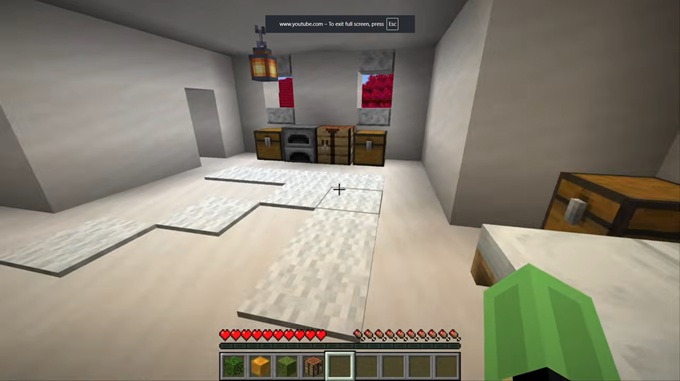
In one Minecraft world, giant arrows point Avery towards where to go next…not that he notices

Avery’s Perspective: Following in D3rlord3’s Footsteps

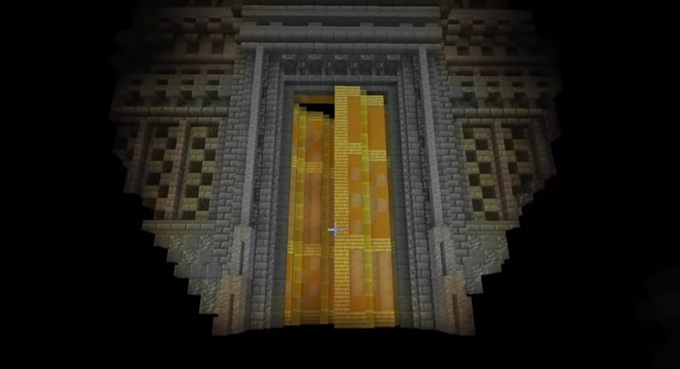
The first installment of Wifies’ King in Yellow reimagining starts with the warning, “whatever you do, at the crossroads, don’t turn left.” And as we finally begin to see Avery’s exploration of the world, he ignores these instructions and attempts to follow in D3rlord3’s footsteps. But when Avery crosses the threshold of the giant golden door, instead of being confronted with unseen horrors, he’s confronted by a single gold block…until turning around and finding himself in a room filled with doors.

Behind each door, Avery finds himself thrust into a different world, littered with signs of D3rlord3’s prior passage – items from his inventory appear like a trail of breadcrumbs, guiding Avery through puzzles he doesn’t quite understand. The first world he stumble across, for example, is a series of precarious mountain spires connected by wooden bridges. Upon crossing each bridge, mountains appear and disappear with no explanation. On one occasion, the only thing saving Avery from falling to his virtual death is a series of blocks previously placed by D3rlord3.
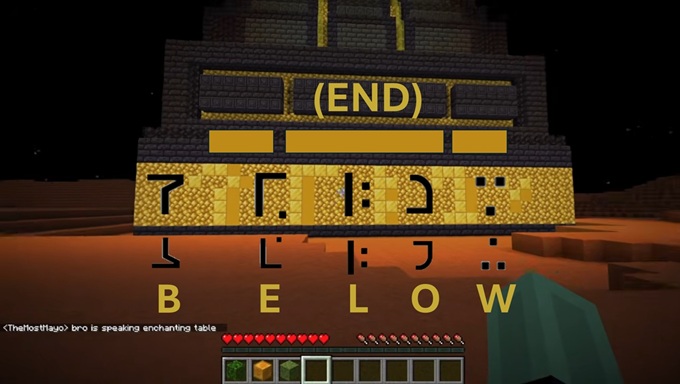
That is not to say that Avery isn’t engaging with his environment: in one world, he comes across a towering obelisk, with strange glyphs written on it, and recognizes the puzzle in place: “bro is speaking enchanting table”. And he’s right – the bricks spell out a message in Minecraft’s Galactic Alphabet, which often appears alongside the game’s enchantment table. The upper portion of the obelisk starts with – — – , the pattern used in the Galactic Alphabet for “end of sentence”. This provides a hint that the cigils need to be flipped upside down and reversed to be legible, resulting in the message “BELOW”.

Avery proceeds through many of these elaborately designed worlds and eventually finds the doorway leading to the next, guided by a trail of items. Sometimes, viewers can intuit the way forward themselves. In a world blanketed by a sea of red rolling hills, the landscape is broken up by a series of white houses. Avery focuses on the items inside the houses, missing the giant tiled arrows placed on the floor of each house, directing him where to go. Eventually it’s a crafting table in the distance that leads Avery to his next location. Only this table couldn’t have been placed by D3rlord3, since it appeared out of nowhere. There’s something else leaving a path of breadcrumbs for Avery to follow.

One particularly insidious world almost halts Avery’s journey entirely. Slightly over 2 hours into the raw footage, after navigating a series of underground canals, Avery stumbles across a cozy world occupied by a single church. A Yellow Sign often serving as harbinger of the King in Yellow hangs above the pew, and a book at the altar reassures Avery he’s safe here. And for the next twelve hours, Avery silently tends to the church. It’s only until he reads a sign left by D3rlord3 that he is broken from his reverie and proceeds onward.
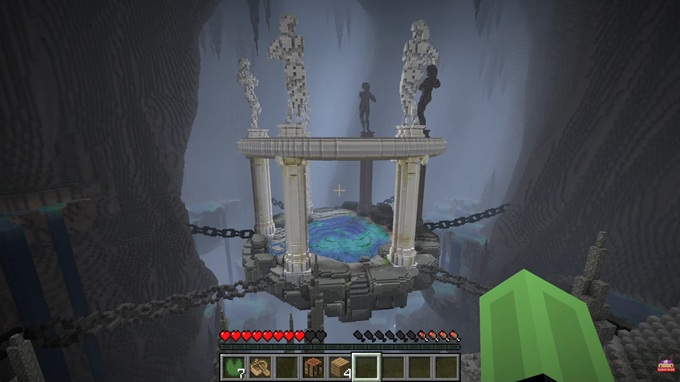
A puzzle at the center of the lake can be solved one of two ways – through wits, or by brute force

That is not to say that Avery has no personal agency in progressing forward: one particularly intricate puzzle appears in the center of a lake in between six statues. Avery “solves” the puzzle by spending four minutes breaking through the netherite block that acts as the lock, before typing “stupid puzzle” into chat. Finally, around halfway through the video, Avery encounters D3rlord3. And during that conversation, he’s provided a link to the events leading up to their encounter, from Derek’s perspective, although the video has since been “deleted”.

Continue reading

Gotta Catch ‘Em All: The MIT Mystery Hunt as Puzzle-Based Spectacle

MIT Mystery Hunt 2026’s mascot “The Child”, an extra-dimensional Puzzle Monster (PuzzMon)

It’s January 16th, and I’m sitting in a classroom on the MIT campus. Hours earlier, I joined thousands of puzzlers attending a paranormal research conference called CRYPTIC, where an intrepid researcher named Burnham proved that cryptids do exist…but in the process, opened up a rift to another world that threatened our very existence. The only way to close the rift and save the world: befriend that world’s puzzle monsters (PuzzMon) to save the world. This is the 2026 MIT Mystery Hunt, an annual puzzle event that attracted over 5,000 puzzlers to spend a long weekend tackling a series of wildly creative puzzles.

Shortly after the conference, the PuzzMon.world website went live. By the time the evening rolled around, our team had already solved a handful of puzzles. I had just come off working on a puzzle themed around fanfiction tropes and the Omegaverse, and took a break from puzzles to explore the world of PuzzMon through a fully playable 16-bit video game world to unlock more puzzles for our team.

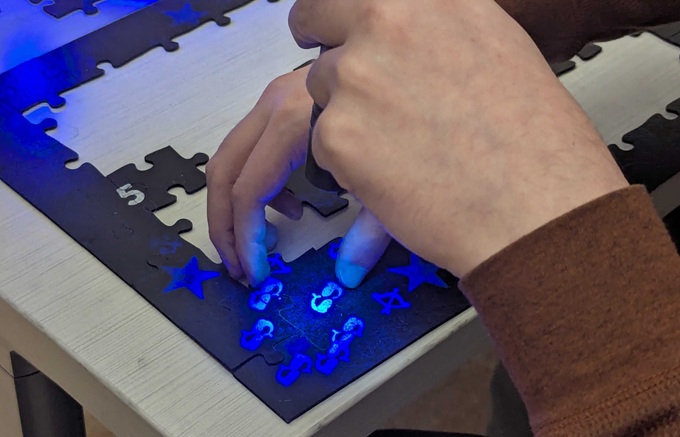
All of a sudden, two teammates settle down at my table and dump a box of black jigsaw puzzle pieces on the table, and start slowly matching pieces. I ask them what they’re working on: they explain it’s a puzzle called Starry Night. This is more interesting than what I was working on, so I drop everything and join them. Curious, I ask: “our team was given a set of two blacklights in our team’s welcome kit…do you think there’s secretly UV ink on the puzzle?”

Starry Night, under a blacklight – the otherwise black jigsaw is easier to assemble under the right light

My suspicion was correct: there was secretly UV ink on the puzzle pieces, and under the right lighting the puzzle is much easier to complete. In under an hour we have a fully assembled jigsaw puzzle, covered in ultraviolet stars and astrological signs. But that’s only the first step of the puzzle, and for the next hour or so we would try and figure out how to connect the dots to transform those hidden symbols into a word or phrase that is the final solution to the puzzle.

Puzzles at the MIT Mystery Hunt can take just about any form, so over the event’s 45 year history the teams running the event have used it as a platform to push the limits of what a puzzle can be. And because the prize for a team winning the MIT Mystery Hunt is the responsibility for running the next year’s hunt, every team has a slightly different answer to what that spectacle entails. For 2026, the puzzles themselves served as center for the spectacle. But be warned, as this article will spoil puzzle mechanics of a number of puzzles for those looking to solve after the fact.

Continue reading

Start Slacking Off with MrBeast’s Million Dollar Puzzle Hunt

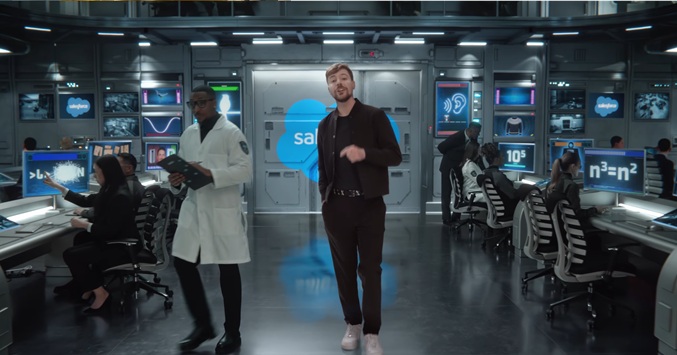
Salesforce’s Super Bowl commercial with a $1M prize – that’s a lot of potential puzzles

During the fourth quarter of the Super Bowl Salesforce released a TV spot promising a $1M prize to the first to solve a puzzle hunt in collaboration with Jimmy Donaldson, who runs the MrBeast YouTube channel and media empire. The commercial itself, centering around Slack’s “Slackbot” assistant, is a veritable whirlwind of codes and references, culminating in a bird’s eye view of a QR code driving to MrBeast.Salesforce.com. Luckily, early teaser content linked on the Million Dollar Puzzle page helps point prospective solvers to a few helpful starting points to help make sense of the seemingly herculean puzzling task.

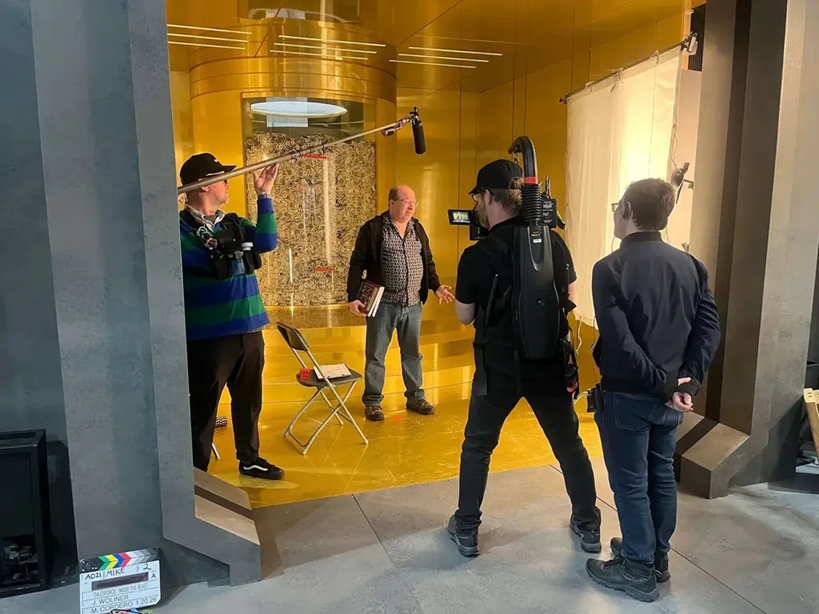
Behind the scenes with Lone Shark Games’ Mike Selinker, holding a book that’s likely Puzzlecraft

Lone Shark Games confirmed their involvement in helping design puzzles for the event. And while this is the company’s first Super Bowl commercial, they have developed a number of high profile, spectacle-laden puzzle experiences in the past. Wired enlisted them to help run a month long nationwide manhunt for one of their journalists. Cards Against Humanity turned to them for a puzzle hunt leading to a safe filled with hundreds of thousands of Sloth cards locked up on a remote island whimsically renamed “Hawaii 2”. The company even took over the third floor of Washington DC’s Planet Word Museum to create Lexicon Lane, a series of 26 separate puzzle adventures making use of the same space.

Luckily, the contest site implies MrBeast and Lone Shark Games’ penchant for spectacle should continue through this puzzle hunt, noting that “clues are everywhere: videos, websites, and the real world. Anytime you see MrBeast with Salesforce, assume there’s something there.”

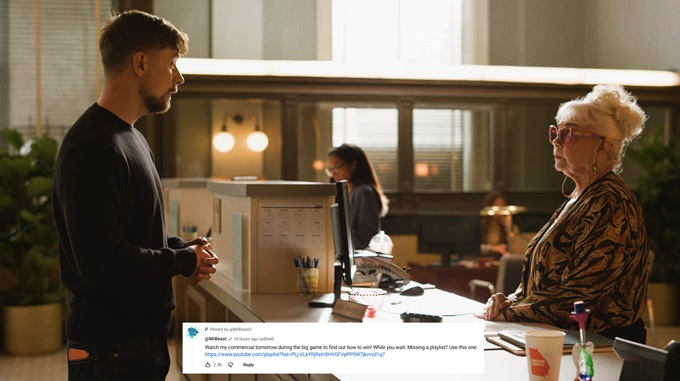
A scene from Salesforce’s teaser spot for the SuperBowl ad, with a playlist of videos in the comments

Road to the Big Game: Setting the Stage for a Puzzle Hunt

It all started with a tweet: back in December, Donaldson tweeted out a request: “I’ve been sitting on an amazing Super Bowl commercial idea for years. I know it’s random but someone please let me make your brand’s Super Bowl commercial so I can finally make this idea happen”. Shortly after, Salesforce CEO Marc Benioff replied, offering up their commercial. This kicked off a flurry of promotional teasers. Donaldson then shared a behind the scenes look at his pitch process. His employees discussed how they use Slack (a Salesforce product) as a pillar of their content production processes. Donaldson even made a Freleng Door Gag inspired video teasing the spectacle of the upcoming spot, as well as a teaser commercial themed around taking the $1M prize money out of the bank.

The $1M puzzle hunt may have only officially kicked off with Salesforce’s fourth quarter ad spot, but those videos contained more than a few clues to give astute puzzlers a head start on the solving. Some of these leads (including the name of Donaldson’s fictional bank) appear to be red herrings. An extended acrostic that flashes in one spot, for instance, teases solvers with the message “this means nothing I just wanted to waste your time lol”. But other moments seem considerably more intentional. Why is there a conspicuously placed barcode on the armored tank receiving a parking violation, during Donaldson’s bank visit? And why does the teller have a series of dates circled in red on all of her desk calendars?

The real entry point to the puzzling, however, is a pinned comment on the teaser video linking to a playlist of nine past MrBeast videos. The pinned comment on each of those videos now links to a series of variety puzzles.

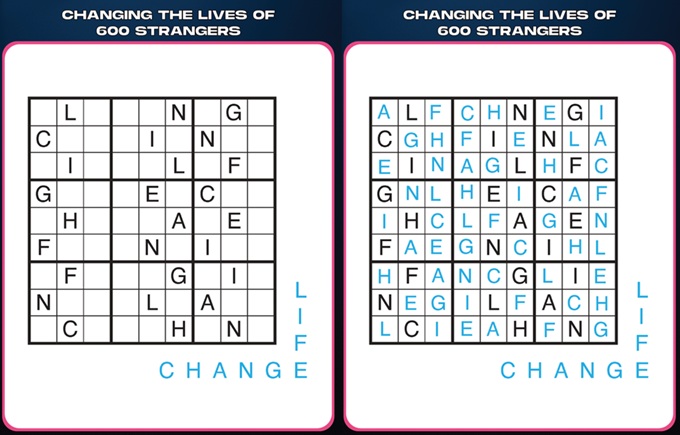
For example, a comment on Beast Philanthropy’s Changing the Lives of 600 Strangers video directs puzzlers to a Sudoku variant puzzle posted on Reddit, using the nine letters in LIF(E)CHANGE instead of numbers. Solving that grid on its own doesn’t lead to any additional instructions…but is there a different piece of information that can instruct solvers on which letters to pay attention to?

Filling the Reddit Sudoku variant grid alone doesn’t seem to be enough to solve this puzzle…

Solving the variety puzzle is only the first step of this particular puzzle. And while all the information to solve the puzzle could be provided in the initial image, information on which letters to select from the completed 9×9 grid might also emerge through other parts of the campaign. And that guidance could come from practically anywhere: supplemental videos, other puzzles, or even some as-yet-unrevealed real world spectacle.

As for the Super Bowl spot itself? It seems to be as much a guide for how to discover where to find the puzzles, as much as anything else.

Continue reading

The Immersive Side of Hawkins: From Scoops Ahoy to WSQK Radio

A photo-op at the Stranger Things Experience in NYC: an immersive activation by Fever

The final episode of Stranger Things dropped on Netflix on December 31st, allowing fans of the series to say goodbye to one of the platform’s biggest hits before ringing in the new year. But that wasn’t the final transmission from the franchise: for the past six weeks, the UK company Global had been operating the in-universe radio station WSQK: The Squawk as a live broadcast, and the station had one final broadcast to get through before going dark due to “transmission problems”.

Stranger Things leaned in to the story’s 80s nostalgia to engage in an aggressive list of brand partnerships over the years, and many of those partnerships took a decidedly immersive turn. So while it’s worth exploring what six weeks of radio broadcasting looked like for Stranger Things fans, this also marks an opportunity to reflect at the show’s immersive history.

WSQK The Squawk: Radio Hawkins with “Global” Reach

Partners in workplace crime Steve Harrington and Robin Buckley worked at quite a few jobs over the course of Stranger Things: they became friends at the mall ice cream shop Scoops Ahoy for season 3 before switching over to Family Video to enter the video rental business in season 4. The premiere of season 5 saw the pair taking over programming at Hawkins’ local radio station WSQK, completing the nostalgic career trifecta.

Leaning in on that nostalgia, the UK broadcaster Global partnered with Netflix to produce six weeks of content broadcast to coincide with the show’s release. Every few hours a radio bumper does remind listeners that WSQK was presented by Stranger Things, but for the most part the programming is presented as authentically as possible.

In an interview about the project, Global stressed to Rolling Stone how seriously they took getting the sound right, noting:

“Most music and sound-design elements came from genuine pre-Nineties libraries like Bruton; anything newly created was shaped to avoid anachronism. ReelWorld dissected classic American jingle packages and rebuilt them to sound as though they’d aired on a Midwestern station for decades. Modern analog-emulating plugins were used sparingly and intentionally, then remastered through a final signal chain before broadcast.

For true period accuracy, the on-air signal passes through a vintage Inovonics FM250 processor — the same model found in thousands of U.S. stations in the mid-Eighties.”

And while the focus of the broadcasts are solidly fixed on playing classic tunes, a number of interactive segments help the show come alive like Mindy Flare’s “Rewind at 9” segment that tested listeners with song identification challenges. “Talk With Tammy” invited listeners to ask for advice, while “Dial A Dedication” allowed listeners to send in messages to the show’s request line.

A Light Narrative, From an Alternate Version of Hawkins

There’s even a loose narrative that ties together the broadcasts of on air disc jockeys Vance Goodman and Mindy Flare, leading to the station’s eventual shuttering. In the lead-up to New Year’s Eve, news segments start mentioning the radio tower’s signal has started to cut out, providing updates on the station engineers’ efforts to fix it. On January 1st, realizing the station would be going offline for good, the pair offer a heartfelt farewell that manages to namecheck a frightening number of 80s hits.

Because of those engineering troubles the station is canonically offline now, but a fan archived the broadcasts, allowing for segment-by-segment replays on their website.

Continue reading

The King in Yellow as Found Footage Minecraft ARG

The yellow doors at the end of the “Searching For a World That Doesn’t Exist” ARG

“Whatever you do, at the crossroads, don’t turn left. Don’t be fooled. It’s listening.” This is the strange message that a Minecrafter named AVeryLargeMayo (“Avery”) discovered inside a book in his Minecraft instance. At the end of the book, there’s a cryptic cipher that Avery doesn’t know how to solve. So, he makes a video asking the internet to help solve the mystery for him. All told, the video is less than four minutes long. Which makes the 40 minute long video the YouTuber the Minecraft YouTuber Wifies makes unpacking his discoveries exploring the Searching For a World That Doesn’t Exist ARG all the more impressive…even if he is secretly the game’s creator. And it’s that clever incorporation of the “ARG Explainer” video format as part of the ARG’s content that makes this Minecraft ARG so fascinating.

At least on the surface, this alternate reality game is handed to viewers as a fully-solved and crisply edited package, explaining (almost) everything and leaving little to the imagination. And yet, there is still considerable value in going to the “source material”, as none of the game’s three narrators are fully reliable.

Unlocking the First Layer: An Introduction to D3rlord3
The puzzle that Avery presents as the initial call to action in his video remains unsolved, at least at the beginning of the video: it doesn’t quite work as alphanumeric cipher, and similar attempts to treat it like a book cipher are quickly thwarted. Instead, Wifies falls down the rabbit hole by examining an inventory menu that flashes briefly onscreen during Avery’s video…a glitch in the system.

Wifies discovers that taking the first letter of each inventory item (and capitalizing the letters if there’s more than one of the item in the stack) spells out the location of a Google Drive link. So, the first image of a light block would be the number “1”, the three zombie heads in the second slot would become a capital “Z”, and the vine in the third slot would become the letter “v”.

When Wifies checks the URL, he finds the Google Drive link contains three files: two of these files are ~100 minutes of “raw” footage of someone playing Minecraft, and the final file is a PDF of an info doc from an anonymous Minecraft player, noting that the videos represent their “exploration into a strange tunnel I found in my minecraft world.” The rest of the video is Wifies’ account of what he uncovers through those video files from a user we’d later learn goes by the username D3rlord3.

Translating a Minecraft inventory into a website URL is infinitely easier when you made the puzzle

Notably, this is only a puzzle that works when explained in retrospect: the numbers could have just as easily represented indices into the words, and interpreting the blank space as underscore presumes that the solution will be a Google Drive link. But since this is a puzzle constructed to be presented as solved, none of that matters. The link wouldn’t even need to exist, since Wifies helpfully explains everything you’d need to know about its contents.

And yet, the Google Drive link does exist. You can watch the full 100 minutes of D3rlord3’s exploration. AveryLargeMayo’s channel also exists, so you can confirm the secret message is present, and watch him win at a game of SkyWars.

Continue reading

Stephen Sondheim Loved Puzzles More Than You

Image of the custom Ouija board from Midnight Madness 2025, photo by Chase Anderson

It’s Saturday evening. A team of six puzzlers have spent the past five hours traveling across New York City for a hunt, and just decoded a sequence of responses from a custom Ouija board: the answers to the thirteen questions they had just asked spelled out GPS coordinates to a nearby office complex. Upon arriving at their destination, they rush past the Alamo Drafthouse to reach their next destination: a non-profit filled with vibrantly decorated pianos, arranged in rings of four. Multicolored stickers adorn several keys on each piano, practically begging to be played. And identifying the songs they’re about to perform is only the first step.

This experiential snapshot was from the charity puzzle event Midnight Madness. Famed composer and playwright Stephen Sondheim was not directly involved in the creation of this hunt, and none of his songs were featured in the puzzle that unfurled as teams tickled the ivory. And yet, as Barry Joseph argues in his new book Matching Minds with Sondheim, that event (and many more like it) might never have happened had it not been for Sondheim’s passion for puzzling.

Joseph makes an incredibly compelling case, tracing Sondheim’s influence through everything from puzzle hunts and cryptic crosswords to escape rooms and even board games. The book highlights how the puzzles and games that Sondheim created as intimate gifts for friends, family, and colleagues shaped the modern puzzling landscape.

A copy of Matching Minds with Sondheim, along a puzzle bookmark mirroring a Sondheim puzzle

In Good Company: Sondheim’s Surprising Puzzling Cameos

Much of the thrill of Matching Minds with Sondheim comes from learning how deeply embedded Sondheim was across early puzzling communities. Fans of Sondheim’s musicals might be surprised to learn that he moonlit as New York magazine’s first puzzle editor, starting with the magazine’s launch in 1968. During that tenure, he helped popularize the cryptic crossword format to American audiences, simplifying elements to be more approachable. And while Broadway fans may have been familiar with his longtime friendship with fellow composer Leonard Bernstein, the fact that he created a series of three narratively linked board games known as The Great Conductor Hunt to celebrate the man’s 50th birthday is less publicized.

Even Sondheim’s Broadway casts were enlisted into his puzzling fun. For decades up until his death in 2021, cast members would receive puzzles as elaborate opening night gifts…from custom engraved beans bearing a message of thanks for Into the Woods, to jigsaw puzzles with the recipient’s initials etched into the pattern.

Whether your puzzling passion leads you into the realm of video games (he was an avid fan of games like Myst), puzzle boxes (he had an extensive collection) or game shows (Sondheim spent years trying to hunt down a clip from his highly successful appearance on the game show Password), Matching Minds showcases Sondheim’s deep and abiding love for play.

Each of these forays into puzzles and games showcases a man infatuated with the many ways puzzles and games can spark creativity and inspire passion. In terms of puzzling tomes, I turn to AJ Jacobs’ The Puzzler as a tour of passionate puzzling communities. But Matching Minds with Sondheim may be my new reference book for showcasing why someone might fall in love with puzzles in the first place. And that celebration shines brightest (especially for ARGNet readers) in Barry Joseph’s section on treasure hunts, and The Murder Game.

Continue reading
« Older posts