Author: Daniël van Gool (Page 3 of 4)

Not Your Ordinary PICNIC: Turning Points, Part 2

PICNIC 02Onwards to part two of the first day of the PICNIC conference schedule–this section of three consecutive panels and presentations was all about the shifts in demographics: the role that race and ethnic background play in producing theatre on Broadway and in emerging online communities, and the role of a changing audience and the way that audience divides its attention on “traditional” media.

First off was a presentation by renowned producer David Binder, who talked us through his experience bringing Lorraine Hansberry’s 1959 play A Raisin in the Sun back to Broadway for a modern day revival. As  A Raisin in the Sun is a classic African-American play, Binder wanted to honor its roots, which to him meant that he had to find an African-American director. Broadway isn’t exactly brimming with diversity (of the 40 directors active on Broadway last season, 36 were men and only one person of color), so Binder had his work cut out for him.

What followed was a mildly interesting relay of his quest for a director (he ended up working with the then relatively unknown Kenny Leon) and cast (he managed to snag Sean Combs aka P Diddy for the lead role). I think my appreciation of Binder’s excited monologue was slightly hampered by the fact that my knowledge of all things Broadway is virtually nonexistent and the fact that as a European, I’m a lot less used to such a heavy emphasis being placed on race, so some of his points sounded (literally) rather foreign to me.

On a personal note, Binder gets a lot of credit from me for having the creative guts to bring The New Island Festival to New York City. The festival is based on two important Dutch theater festivals, Oerol and De Parade. From what I gathered from his talk, reviving a play like Raisin in the Sun took a lot more guts than that.
Continue reading

Not Your Ordinary PICNIC: Turning Points

PICNIC 01Not your ordinary PICNIC:  that’s the tagline I found plastered all over the Westergasfabriek terrain during PINIC ’09. And PICNIC indeed is something quite out of the ordinary. 

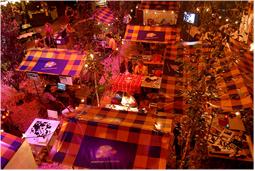
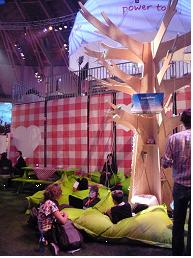
I arrived Wednesday around 11:00am, a few hours before the official opening of the conference part of PICNIC, which meant that I could take some time to explore the impressive central area of the festival, the PICNIC club. A place to meet, to eat, to tweet (there was a Twitter tree set up in the main area, with UTP cables hanging down its branches) and to look at all the interesting stuff that PICNIC’s official partners, including UPC and Microsoft, were showing off.

The area was brimming with activity. During the morning, several sessions of PICNIC Young had already started, which is a collection of workshops and seminars for teachers and students, exploring technology and creativity and their possible adaptation to school programs. PICNIC Young is only one of many “tracks” running alongside the main conference schedule of PICNIC, and if you wanted to cover all of it, you would need at least 5 or 6 people on the ground.

Other interesting events were also already going on at the various PICNIC Labs that were scattered among the conference area, like the Digital City Special, or the Augmented City Lab, exploring present and near-future adaptation of various mobile augmented reality technologies. I did not attend any of these sessions, but if you’re interested in what augmented reality can do today, check out the iPhone 3GS app that the folks at Layar have launched at PICNIC.

The main conference has a different theme for each of its three days. The first day’s theme was “Turning Points”, focusing on social changes that have their impact on society and social media, and kicked off with a familiar face: Israeli conductor Itay Talgam. I had heard Talgam speak at PICNIC last year and his ideas on leadership really stuck with me. The one-liner he kicked his talk off with this year: “In these times of insecurity and crisis, people are sick of leaders. It’s about communities now.”

Continue reading

PICNIC ’09: A Preview

PICNIC 2009Wednesday September 23rd is a day a lot of people in the creative industry have been looking forward to, as tomorrow the fourth installment of PICNIC will kick off in sunny Amsterdam.  Previous incarnations of this intangibly sparkly conference were self-defined as a “crossmedia conference” but this year, the organization of PICNIC didn’t even try to put a tagline on the event.
And I can understand why they didn’t: it’s hard enough to describe what PICNIC is really about, let alone catch its essence in a one-liner. The past three installments were a melting pot of creativity, attended by major and minor names from everywhere in media, art , the digital world and several other industries.

I’m really looking forward to attending again this year and reporting on the event for ARGNet. I just received notice from the people at PICNIC that the conference event is completely sold out, and the lineup of speakers is probably one of the reasons for that. I wanted to give you a short preview of things I’m looking forward to at PICNIC this year:

Continue reading

PICNIC ’08, part six: From Crowdsourcing to Collaborative Creation

argnetpicnic2008.jpgEditor’s Note: Daniël van Gool, an administrator at the Unfiction forums, was on the scene at PICNIC ’08 on behalf of ARGNet. We were impressed with Daniël’s work covering PICNIC ’07 and, as media partners of the annual cross-media festival, were invited to a number of special events in addition to the speaker sessions. This is the sixth and final part of Daniël’s comprehensive look at this year’s event in which he outlines the highlights of day three of PICNIC ’08. All pictures are courtesy of Daniël as well.

I arrived at PICNIC early on Friday the 26th. When I arrived, the main conference hall was mostly empty, but it was filled with the ambient noises one would expect at a picnic — crickets, a flowing creek, and the occasional buzzing fly. This is why I love PICNIC so much! The smell of fresh coffee slowly filled the building, even though PICNIC’s Espresso Factory was closed for the morning, and life was good.

The focus of day 3 of PICNIC ’08 was on the collaboration within the creative industry, which mean that there would be a ton of showcases by different entrepreneurs that are developing several innovative concepts that provide means for creativity and/or collaboration. Before this ‘parade’ of mostly very ingenious commercial concepts, Matt Costello gave a speech presenting his thoughts and ideas on creativity in games in a highly entertaining form. Costello is mostly known as a games-designer, having worked on The 7th Guest and Doom 3, and on several novels and games for TV (PBS, BCC, the SciFi channel). He introduced himself as somewhat of a cross media schizophrenic.

He started out by talking for a bit about the concept of Story, by telling a tale about a personal encounter with a shark that he had while diving. He then read a passage from a novel he co-wrote that used that personal experience to base the storyline upon and engaged the audience in a conversation about the differences.

He stated that the audience often knows something that the protagonist in a story doesn’t know, a point he illustrated by bringing two members of the audience on stage. His point was that a good story creates the illusion that something is going to happen, but then causes something else to happen, making the audience the surprised party instead of the protagonist. The unexpected and the unknown are two important factors in storytelling, interactivity and games.

Costello went on to demonstrate a lot of his other points by having members of the audience perform several tasks. Again, it is very hard to convey his points by merely describing what happened. During his address, I was chatting with people on IRC following along through PICNIC’s live feed, and I said the following:

<Gisk> yeah, Matt Costello is a fun guy
<Gisk> very good points he made about storytelling and gameplay
<Gisk> unfortunately, almost impossible to write up… you need to see his interaction with the audience and the creation of illusion to convey what he was talking about
<Gisk> which is exactly his point
<Gisk> so, figures 🙂

I guess this is the best summary I can give, so I’m afraid it’ll have to do.

Continue reading

PICNIC ’08, part five: Virtual things in a virtual world are so passé!

argnetpicnic2008.jpgEditor’s Note: Daniël van Gool, an administrator at the Unfiction forums, was on the scene at PICNIC ’08 on behalf of ARGNet. We were impressed with Daniël’s work covering PICNIC ’07 and, as media partners of the annual cross-media festival, were invited to a number of special events in addition to the speaker sessions. This is the fifth part of Daniël’s comprehensive look at this year’s event, a continuation of his analysis of day two of the event. All pictures are courtesy of Daniël as well.

Another very interesting talk followed, titled Commercial Collaborations: Tools, Things and Toys by Michael Tchao from Nike. This talk expanded some more on the theme of connecting the physical and online worlds and even a little bit on data visualization by addressing one of Nike’s most successful ventures of the past years: Nike+.

In short, Nike was looking for a way to connect the physical activity of running to a digital community, creating a buzz around their brand by creating indispensable tools that connect consumers to each other and the Nike brand.

Looking at runners, there’s only a small group of people that is actually self-motivated. A lot of runners need motivation though, and this is where Nike+ proved to be a valuable addition to the concept of running: digital technology can now provide data, such as distance ran, pace, and calories burned.

Another trend is that music is growing rapidly as an important factor when it comes to running. Forty percent of people say they would not run without music and participation by people who run with music shifted from 25% to 75% in a few years time. Also, fifty percent of iPod owners say that they use their devices in some form or other for sports. This is why Nike teamed up with Apple to develop Nike+, which builds a digital set of information around the iPod functionality: a website that collects statistics and has you set goals for yourself. In short, it provides motivation.

Upon request from its users, a Challenge function was implemented, so people could challenge themselves or others to reach certain goals and keep track of progress. People have met through this community, challenging each other online, but also making friends in real life. The community has taken on the challenge ability to make very interesting challenges (for example, Europe vs Japan, Cat lovers vs. Dog Lovers, Simpsons fans vs. South Park fans, etc.)

Expansion of the community element is still going on: Nike launched a web store, which sold selected T-shirts, available only for people who reached a certain milestone — the 100 Mile Club, for example. Also, you can now create an avatar that you can plug into Facebook to communicate your running progress to your friend and that will motivate you to run if you didn’t.

All in all, Nike+ is a great example of a very successful way of using a community in a commercial setting, which should tell other companies something about possibilities.

Continue reading

PICNIC ’08, part four: Clay Shirkey – Here Comes Everybody

argnetpicnic2008.jpgEditor’s Note: Daniël van Gool, an administrator at the Unfiction forums, was on the scene at PICNIC ’08 on behalf of ARGNet. We were impressed with Daniël’s work covering PICNIC ’07 and, as media partners of the annual cross-media festival, were invited to a number of special events in addition to the speaker sessions. This is the fourth part of Daniël’s comprehensive look at this year’s event, a look at the beginning of day two of the event. All pictures are courtesy of Daniël as well.

Kicking off the second day of the conference was a hugely interesting keynote address by Clay Shirky, famed author of Here Comes Everybody, a highly recommended read documenting the way society is rapidly being changed by emerging social tools.

The theme of Here Comes Everybody is “Group Action Just Became Easier” and Shirky gives 4½ examples of this:

1. The social dynamics behind Flickr

Not too long ago, a Flickr pool on high-dynamic range photography (HDR) was created. What followed was a conversation in the photos’ comments about who uses what software to create HDR material. People found out that it was possible to insert pictures into the comments and kept exchanging ideas on how to improve techniques. The stream of comments slowly turned into a “lecture” on HDR photography, making it a “social object” that attracted a community. It is the process of a social gathering in reverse: instead of starting by getting people with the same interests together into a large group, the social object acts as a catalyst which slowly gathers interested people around itself.

In the past, this would have taken years: a photo shows up, people document it in magazines, it gets picked up by amateurs, people get together in meetings discussing the topic, etc. The HDR on Flickr phenomenon happened within three months and became a vital part of the rapid progression of HDR photography techniques — much faster than would have ever been possible in the past.

There’s was another example illustrated which shows the downside of the same mechanic and it’s also Flickr-based. A separate photo pool exists called the Black & White Maniacs. The name is pretty self-explanatory, and the pool has rules on posting and commenting on black and white photos. The most important rule is that in order to post a picture, you had to comment on the previous two pictures in the pool. It turned out that people either ignored the rule, or found ways around it by just leaving a simple, non-descriptive comment like “nice.” This lead to an expansion of the rule set that was meant to be really simple, which prompted some big fights between moderators and users who just wanted to show the world their pictures.

The bottomline: Flickr has introduced a service of sharing photos, but creates a whole new dilemma on the social dynamics behind the actual sharing. Shirky’s firm statement was that you cannot solve such a dilemma, you can only optimize it. The new design challenge seems to be in how the social organization takes place.

Continue reading

« Older posts Newer posts »