Page 35 of 198

Robot Heart Stories Sends Kids on Cross-Country Trek Fueled by Imagination


Image by Mike Hedge and Tiffani Bearup

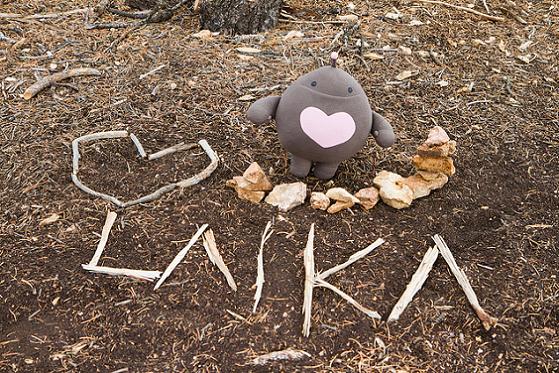
Lance Weiler’s most recent project began with a simple yet provocative question: can a robot reboot education? To answer that question, Weiler collaborated with fellow Workbook Project contributor Janine Saunders in creating Robot Heart Stories with a team of more than 50 creative professionals.

For the project, students in a Los Angeles elementary school class and a Montreal media workshop teamed up to send Laika, a small female robot scientist, from Canada to California. As a team of award-winning photographers drove the robot across country, the 42 students fueled Laika’s journey with stories, videos and letters. Photographers and other artists brought the children’s work to life and, in turn, uploaded their work to the website.

While this ambitious project focused on the two groups of students, aspects of the campaign were open to the world. Anyone could create a heartpack, origami robots that could be painted, colored or photographed in different settings. Those images were also uploaded to the Robot Heart Stories website. Other classes used the project for experiential learning projects. This collaboration had virtual and real world implications. The website notes that “everything you submit helps the robot’s heart meter reach full strength, AND it helps raise money for underpriveledged [sic] students.”

Continue reading

Dark Score Stories Hides King’s Secrets in Bag of Bones Photo Essay


Image courtesy of Campfire

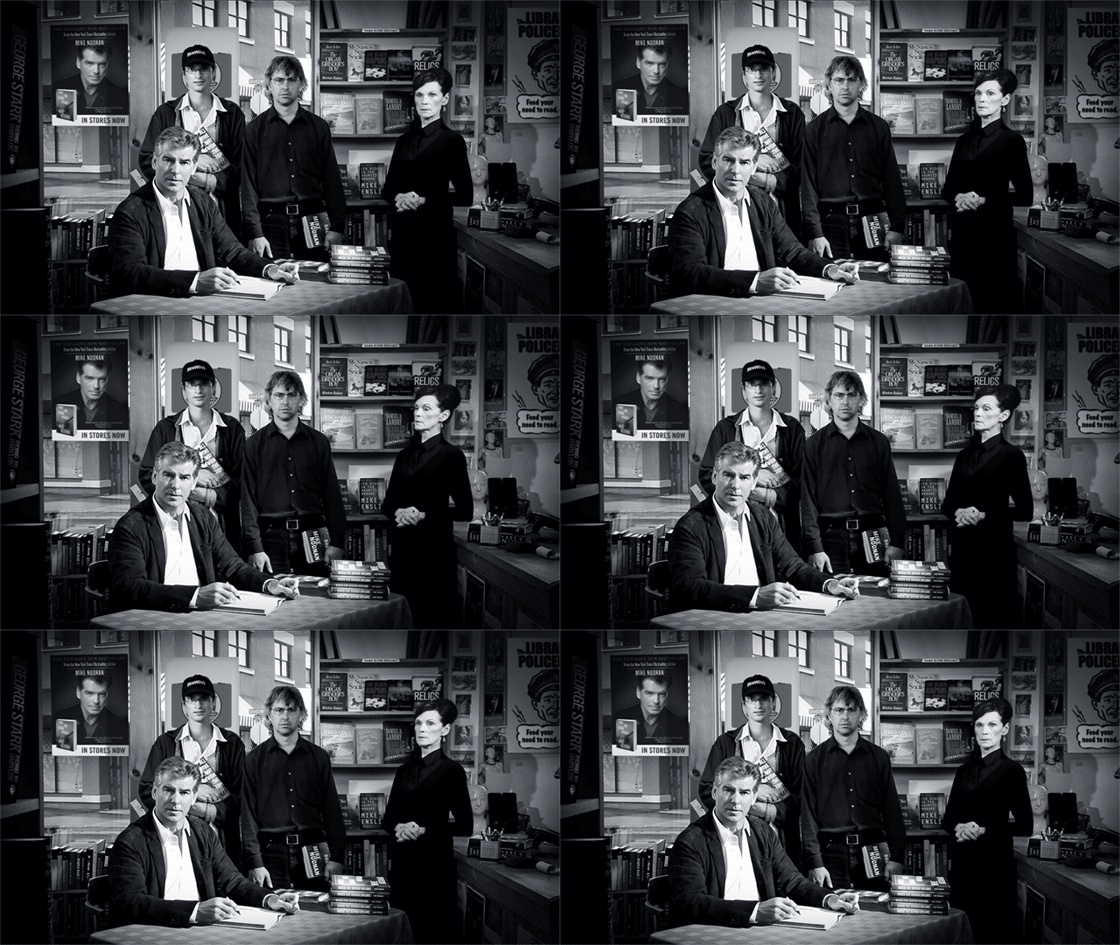
In anticipation of A&E’s upcoming adaptation of King’s novel Bag of Bones airing December 11th and 12th, Campfire created Dark Score Stories, a deceptively simplistic photo essay that provides a glimpse at life in the unincorporated township of TR-90. High fidelity black-and-white images shot by award-winning photojournalist Joachim Ladefoged provide artful glimpses into life at Dark Score Lake, complemented by audio interviews with the local townsfolk featured in seven separate sections of the site. Scratch the surface, however, and an entirely new experience inundated with King-themed puzzles and easter eggs emerges.

The first indication that something might be amiss with an otherwise straightforward photo essay comes from the headline images featured at the beginning of each of the seven sections. In her lighthouse studio, Jo Noonan’s smile is briefly wiped clean. Gerald Lean’s face is twisted by a grimacing smile at his shop of curios. And Lance Devore’s hands shift from a protective embrace of his daughter Kyra to a much more threatening grip. These changes are all the more startling for their subtlety, adding a new dimension to the audio commentaries.

Puzzles are integrated into the experience through messages hidden within each photo essay. Bold letters in the website’s introductory message instruct readers to “go down left side” for clues to seven increasingly difficult challenges. Solving each clue leads to a new exclusive preview of A&E’s upcoming miniseries as well as seven GetGlue stickers. The real challenge, however, lies in the photographs themselves.

Continue reading

“Vanished” Teaches Children to Save the Future with Science

Images courtesy of the MIT Education Arcade

Scientists from the future reached out to present day scientists as part of Project Phoenix to investigate a natural disaster that wiped out the historical record as part of Vanished, an alternate reality game designed exclusively for children. The game was a collaboration between the MIT Education Arcade and the Smithsonian Institution, and sought to engage kids and teens in the role of scientific detectives and inspire scientific learning through an epic story. Prior to the game’s launch, ARGNet provided a sneak peek at the upcoming campaign. Now that the game has come to a conclusion, I followed up with Caitlin Feeley and Dana Tenneson of MIT’s Education Arcade to take a post-mortem look at the game.

The true heroes of Vanished were the players, who uncovered the mystery by making scientific progress week by week. The game was also populated by a full cast of characters; the most prominent was Lovelace, an artificial intelligence who traveled back in time to assist in the investigation. Moderators had in-game personas, like Storm and Megawatt, who played the roles of guardians and guides. The journey also involved interacting with real-world scientists from a variety of fields, and players even encountered a few villainous trolls and hackers among their own ranks before reaching the end.

Continue reading

Six to Start and BBC Bring Codebreaking Back to Bletchley Park

Image courtesy of the BBC

On September 10, 2011, Pete Ryland cracked The Code and took home the coveted prize, a unique bronze and silver mathematical sculpture by Bathsheba Grossman. The lead-up to the tense finale was a collaborative transmedia treasure hunt centred around the three-part BBC2 show The Code, presented by Marcus du Sautoy. The game was designed by Six to Start, working with the BBC from the beginning to integrate clues and puzzles seamlessly within the broadcasts.

Before the first airing of The Code on July 27, about 700 postcards were sent out with an image and a code. Collaborating on Facebook, participants in this first stage soon discovered that each postcard image was a thin horizontal slice of a three-dimensional Platonic solid. Several of these “perfect” shapes then had to be combined and arranged into three concentric spherical shells – revealing the complicated nested sculpture that would be the grand prize.

Now the hunt could begin in earnest. The main stage of the game was intricately connected with the three episodes of the show: Numbers, Shapes, and Prediction. For each episode, participants discovered three clues: one by watching the program, one clue by playing related Flash games on the website, and one clue by solving a puzzle described on the blog. They also had to complete the Prime Number Challenge as a group, which involved uploading photos of all 305 prime numbers from 2 to 2011 to collectively receive the sixth clue for each episode. The six clues were then entered into a codebreaker to reveal three passwords, which granted access to the next stage of the game: The Ultimate Challenge.

Continue reading

Fourth Wall Studios Showcases Revamped RIDES Platform with Spooky Short Story “Home”

Earlier this week, Fourth Wall Studios relaunched its website with a preview of things to come for the company and its first new experience on the company’s proprietary RIDES platform in over two years. The experience, Home: A Ghost Story, provides a proof-of-concept for storytelling that organically weaves video content with other media like email, text messages, and even telephone calls. In the spirit of the season, Home follows two sisters who return to their mother’s home to stage an intervention for her obsessive hoarding, only to learn that their mother wants to add one final piece to her collection.

Home: A Ghost Story starts out with a landing page that lets audience members choose the level of immersion for the experience. The Lite Experience plays out like a television pilot for a new season of The Twilight Zone, with 5 chapters of video content playing out over the course of 20 minutes, punctuated by texts, emails, and online chats between characters that appear directly to the right of the video at regular intervals. The Full Experience mirrors the content found in the Lite Experience but delivers the messages directly to your mobile device. During the registration process, visitors are asked to opt-in to their preferred level of involvement by providing contact information for emails, phone calls, and/or texts. This assures that when a character receives a phone call, the viewer’s phone rings and the action pauses until the call is answered. When the story calls for an email, an email is delivered straight to the viewer’s inbox. While most of the story’s content is delivered directly, visitors will have to actively seek out an additional piece of content featuring a cameo from a voice quite familiar to veterans of I Love Bees.

Continue reading

2011 Year in Review: The Year in Three Quarters, Nickels, and Dimes

In the past three months, players have demonstrated their willingness to pay for alternate reality games.

Taken in isolation, players reaching into their pocketbooks to pay money for alternate reality games is not news. Ever since the genre’s inception, opportunities to pay money for ARGs have emerged. Majestic, Electronic Arts’ venture into the world of alternate reality games, reportedly convinced about 15,000 players to pay $9.95 a month (or $40 for the CD) for access to its content. Studio Cypher adopted a similar model for its month-long multiplayer novels, which offered custom content to “Wakeful Agents” willing to pay $9.99 for a more immersive experience. Games like Perplex City tied gameplay to collectible puzzle cards that collectively unlocked additional content for approximately $5 per pack, while local interactive experiences like those produced by Accomplice, 5-Wits, and Ravenchase Adventures charge admission to their real-world adventures and hunts.

Having said that, the past few months have seen a resurgence of campaigns seeking players willing to pay for their alternate reality games, with more options of game experiences to buy into than ever before. The past quarter has been a busy one for alternate reality games with experiments in new storytelling platforms and additional institutional assistance for developers. This article will offer a taste of some of the campaigns that have caught my attention since my last broad look at the industry in April.

Continue reading

« Older posts Newer posts »