Month: March 2008 (Page 1 of 2)

The Sky Remains

skyremains.jpgThe Licorice Film team, creators of 2007’s popular MeiGeist game, has a finger on the launch button for their newest project, The Sky Remains, due to begin in April. In partnership with HP Labs, The Sky Remains combines interactive ARG elements with GPS technology and the thrill of geocaching and treasure hunting using mscape (short for “mediascape”), HP Labs’ experimental mobile gaming platform. A list of compatible hardware for mscape is provided on the mscaper site. The game’s FAQ section states that players do not need these devices to participate.

Players of MeiGeist may have spotted some familiar faces in the trailer for The Sky Remains. (ARGNet also has a brief cameo!) The main story arc centers around the “6th Dimension Detective Agency” – with the players taking on the role of the 6th Dimension Agents, of course! The game breaks away from the one-time ARG experience by introducing a “re-playable” narrative. It also offers players the option to follow some parts of the story as a single player. However, collaboration and cooperation among players will be necessary to “discover the deeper subplots,” according to the FAQ. The Sky Remains also invites user-generated content, and the game’s website will serve as a social networking site for players to create and publish their own case files and stories after the initial case file has been solved and closed.

We Tell Stories: Six Stories, Six Authors, Six Weeks, and then Six to Start

We Tell StoriesLast Tuesday, the UK branch of Penguin Books launched We Tell Stories, a series of six stories based on classic novels. Each story is written by a different author and is retold through a different medium. Last week, Charles Cumming retold John Buchan’s classic tale The Thirty-nine Steps by walking visitors through the tale on Google Maps. Cumming’s rendition, “The 21 Steps”, provided a novel look at the book’s plot as well as the features of Google Maps.

Over the next four days, Toby Litt will retell M.R. James’ Haunted Dolls’ House and Other Ghost Stories in “Slice”. This week’s story plays out through Slice’s blog, as well as her parents’ blog.

The story also includes a Flickr account, a MySpace page, two twitter accounts, and an email address. Amusingly enough, clicking on the email address automatically fills out the email for you with the following.

Subject: I’ve come to save you from the boredom

Dear Slice,

My life is now totally worthless without you in it because…

While these stories are well constructed so far, the real purpose they serve is to whet the viewer’s appetites for the original texts. I know I’ll be heading over to my local library to check out a few of these tales — but if I lived in the UK, I would enter the weekly Author Prize Drawings — you can also win the Penguin Complete Classics Collection, valued at over £13,000.

Underpinning the six stories is a seventh tale. Clicking on the white rabbit on the bottom left corner of the main page leads to Treacle and Ink, a blog written by Alice. This underlying story fits within the alternate reality gaming framework, and has already led chelec on a hunt through St Pancras Station. You can read about that experience here or check her bliptv account for videos.

Click Here to check out the stories
Click Here for the thread at unfiction

Aporia Agathon Sends a Mask: It Fit Jim Carrey Better

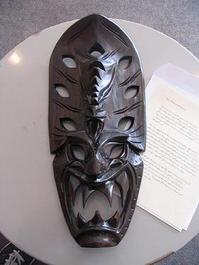
aporia2.jpgI got a package in the mail today with a mask inside, and like any sane, rational individual, my first reaction to receiving a mysterious tribal mask in the mail was to attempt to put it on. Sadly, my id didn’t go on an uncontrollable rampage, and my skin is most decidedly not green. However, I did receive a few more clues about Aporia Cross-Media Entertainment’s upcoming alternate reality game, codenamed the Aporia Agathon project.

Shortly after Aporia CME launched a puzzle trail for LagTV, the show’s hosts released a video on YouTube asking for players to post YouTube videos about the Aporia Agathon Project. Along with a few others, I submitted a video. Yesterday, I received a rather large package in the mail containing a Philippine “dragon mask” and a letter from the puppetmasters. The letter noted that “[t]his game’s development began in mid to late July of 2007 with a large portion of the development time dedicated to creating a back story as a basis for our narrative. We are trying to take familiar elements of stories and create a unique approach for our audience to enjoy.” The letter finished with the poem We Wear the Mask by Paul Laurence Dunbar.

If you’re kicking yourself for not submitting a video, it’s not too late — according to ACME’s blog, there is still time to enter, and while you may not receive a mask, “the message of appreciation will remain the same.” If you’re interested in receiving an innocuous mailing around the time of the game’s launch, you can submit your contact information to Aporia’s submission form. So keep your eyes peeled for completely normal looking mail, submit a video with your guesses, and be on the lookout for easter eggs. S…er, that is, the Aporia Agathon Project, is coming this summer.

Click Here for a Flickr pool of the package.
Click Here to view the Aporia CME video challenge

Harvey Dent campaign swag!

dent_03.jpgIt wasn’t long after the latest stage in the Dark Knight alternate reality game went live that we began noticing reports of cool swag delivery — staff writer Michelle Senderhauf got one in the mail, as did our associate editor, Marie Lamb, and a friend of the site, Brian Enigma. I received the ARGNet package a few days ago, and in the package was a T-shirt and a folder which contained postcards, bumper stickers, buttons and a letter. It’s always a treat to receive treats from game developers, so I thank those out there who are responsible for sending the package up to Canadia. So, um… does this mean that the campaign will be heading above the 49th parallel sometime soon? Inquiring canucks want to know!

dent_01.jpg  dent_05.jpg

dent_02.jpg  dent_04.jpg

I Was Blind… so they sent me broken headphones?

headphones_01.jpgA note from FedEx on Monday alerted me to a delivery attempt during a time when I wasn’t available to receive packages. After some careful thinking, I figured that the package was one of the Harvey Dent press packages that some others have been receiving. The next day, as I arrived home, I saw not one but two packages waiting to be opened. It was like my birthday, except without all of the feeling old and stuff. And while one of the packages was, indeed, a Harvey Dent swag explosion (more on that tomorrow), it was the other that has me scratching my head. For you see, unlike the tidy folder that held the Dark Knight promo material, the other package contained… broken headphones. Broken headphones wrapped in a single sheet from Monday’s “The Guardian”.

For a few more pictures, and the rest of the details, read on. Maybe you can help us figure out this mystery!

Continue reading

Video Games and ARGs – What Can they Learn from Each Other?

Note: This article covers two SXSW Interactive 2008 events: Cross-Media Cross-Pollination: Mashing Up Video Games and ARGs (Saturday, March 8th, 3:30-4:30 p.m.), and its follow-up, Core Conversation: What Can the Video Games Industry Learn From Alternate Reality Games? (Monday, March 10th, 3:30-4:30 p.m.).

A last-minute change in programming on Saturday, March 8th, at SXSW Interactive 2008 brought together familiar faces from the Alternate Reality Games development community: Dan Hon of Six to Start, Tony Walsh of Phantom Compass, and Dee Cook, a freelance writer and designer who has written and developed content for games such as “The 4400” Extended Reality, World Without Oil, Unnatural Selection, and many others. Hon, Walsh, and Cook presented the panel “Cross-Media Pollination: What Video Games can Learn from ARGs”. The follow-up conversation on Monday afternoon with Steve Peters from 42 Entertainment, and input from Jane McGonigal, Ken Eklund, Hazel Grian, and others, rounded out Saturday’s panel.

Currently one of the most popular past-times world-wide, video games have an audience both extensive and diverse. Gamers are consistently asking for more from game designers – better AI, more content, more interaction, more story and narrative, more immersion. What can Alternate Reality Game designers learn from video game design and the needs of video game players (many of whom also play ARGs), and what elements of ARGs might video game designers consider when making games for gamers in a world of rapidly-evolving technology and techno-culture?

The panel opened with the question: what elements of ARGs might interest and engage video gamers? “I Love Bees”, a well-known ARG, tapped into the fan base of Bungie’s Halo video game by providing a glimpse into Halo’s (and its predecessor, Marathon’s) detailed backstory. Many Halo players enjoyed ILB because of the opportunity to explore more of that game’s mythology. The puppetmasters presented a Halo story that the players could interact with in a different way, affecting the game not by moving the controller but by problem-solving with other players, answering payphones, emailing the Sleeping Princess, and convincing an AI that they were, in fact, human, and one of her crew.

Perhaps, Steve Peters pointed out in Monday’s follow-up conversation, cross-media is one answer to a demand for more interaction and individualized response. A player’s progress through a game could be tracked, with content delivered not only through the console but also through SMS, phone calls, or even the post office! Similarly, Tony Walsh raised the idea that ubiquitous computing, the imperceptible integration of computing systems and functions into every day life, might indeed be the next game platform, heralding the end of the “couch-potato” gamer.

Continue reading

« Older posts