Category: Info (Page 9 of 16)

Interview with Cathy’s Book Co-Author Sean Stewart

Below is an interview that Michael Andersen conducted with Sean Stewart regarding the release of the Cathy’s Book app for the iPhone.  In addition to co-authoring the transmedia storytelling experiment Cathy’s Book, Stewart worked on ARGs including The Beast, i love bees, Last Call Poker and Year Zero.

MA: How did you and Jordan come up with the idea for Cathy’s Book?

SS: It was Jordan’s idea (things often are).  After the Beast we were talking about how fun it was, but how frustrating it was, too, that it was over: even if someone heard about how cool it was, they couldn’t DO it.  “Hey!  You’re a book guy,” Jordan said.  “We should do a book using the same kind of techniques!”

So we did.

We came up with the broad outlines of the story together.  We figured YA was a good place to start, and, to be honest, having written a fair number of somewhat dark sf/f novels, I wanted to write a book I thought my teenage daughters might like.  (They have a cameo in the first novel which Sharp Eyed Readers may spot…)

MA: How would you compare the writing process you used for Cathy’s Book, as opposed to what you used for traditional novels like Perfect Circle or full-blown ARGs like The Beast?

SS: We determined that the thing HAD to work as a book, first and foremost; if you never did any of the ancillary material, you still had to have an enjoyable, satisfying experience.  So I wrote Cathy’s story, if you will, much as I would a regular book.

We used the extra material to fill out the life of Cathy’s love-interest, Victor.  Readers looking through the extra evidence can eventually work out almost every detail of the Many Lives of Victor, from gold camp ragamuffin to WWI flying ace to mobster, and so forth.

Trying to fit together the various pieces of evidence was much more like the storytelling method of The Beast.  Over time, we also changed how we did that.  Cathy’s Book, like the Beast, has a ton of little pieces of stuff for players to link together.  In Cathy’s Key and Cathy’s Ring we moved increasingly to building “interactive arcs,” so that a reader might, for instance, send an email and go through a 3 or 4-step investigation to arrive at a satisfying endpoint.
Continue reading

Looking Back at Scholastic’s Transmedia Efforts for 39 Clues

39cluesbooksOn September 9th, 2008 Scholastic published The 39 Clues: The Maze of Bones by Rick Riordan, author of the Percy Jackson & the Olympians series. The book debuted at #1 on the New York Times bestseller list, and marked the beginning of Scholastic’s 10-book experiment in transmedia publishing. On February 2nd, Scholastic is releasing the seventh installment in the series, The 39 Clues: The Viper’s Nest by Peter Lerangis. February 2nd will also mark the premiere of The Viper’s Nest audio book and the corresponding set of collectible puzzle cards in Card Pack 3: The Rise of the Madrigals.

39 Clues tells the story of two children, Amy and Dan Cahill, who are thrust into a global hunt for clues that will reveal the secret to the Cahill family’s power. The series is a cross between The Westing Game and The Amazing Race as the two children compete against members of four branches of the Cahill family to uncover the secret histories of famous Cahills including Benjamin Franklin, Anastasia Romanov, and Amelia Earhart. Although the series initially portrays their competition as cutthroat caricatures of their respective family houses, the series gradually reveals the complex motives of their fellow competitors.

While the story is primarily told through the books, each novel serves as a launching pad for further exploration, as a number of clues are hidden within each book’s pages. For instance, in The Maze of Bones, a series of apparently misnumbered pages spells out a secret message that aids the reader in solving a puzzle on one of the six collectible cards that came with the book. By going to the 39 Clues website, the reader can complete a puzzlesolving mission culminating in an online game that explains the message. Alternatively, by buying and solving puzzle cards expansion packs from the series, players can discover the 39 clues for themselves and reveal more of the Cahill family history. The story also branches through products ranging from a board game to Madrigal Maze, an iPhone application. Continue reading

The Game’s Afoot

holmes_iconThe new Sherlock Holmes movie comes out Christmas Day, but before then, fans of the Great Detective have a chance to try out their own sleuthing skills with a slick game promotion put out by AKQA and Hide & Seek in the UK, called 221B.

While I wouldn’t go as far as calling 221B an alternate reality game, it is very entertaining, when it actually works.  The game is trying out new space by tethering itself to Facebook. To play, you can sign up as either Watson or Holmes and then invite a friend to play along in the other role. Some people have reported problems with the Facebook interface, but there is also an option to play the game by yourself, switching back and forth between the roles to get all the clues. There is also a special, free version of TweetDeck you can install which gives out hints for the weekly games and allows you to follow some of the characters from the movie.

After you sign up on the web site and link the game to your Facebook login, you can dive into the first chapter.  Each story begins with a video of a character explaining what’s going on and what they need you to do.  Materials are presented for you to click on and read–photographs, documents, etc.  The best thing about this game are the graphics–each item is beautifully designed and rendered to look like an authentic 19th century artifact.  After you examine each piece of evidence it’s added to your notebook and you can proceed to the next step.  Each action you take in the game provides experience points which are available for use later in the game.

Continue reading

Puzzles for the Apocalypse

kinginyellowA little birdie recently pointed me in the direction of a puzzle trail called Third Realm. The site has a labyrinth of puzzles and an apocalyptic countdown ending on November 2nd. The players’ goal is to free the Yellow King with the help of a self-proclaimed “Prophet in the Wild” through his twitter account, thirdrealm. The Prophet has been dropping cryptic clues, and there is a possible London deaddrop that has yet to be investigated.

If you’re in the mood to flex your puzzle solving muscles before the November 2nd apocalypse, head on over to the unfiction thread here.

Prank Marketing and the Toyota Matrix: How Far Is Too Far?

yourotheryouIn 2008, Toyota Motors paired up with Saatchi & Saatchi Los Angeles to release Your Other You, an advertising campaign promoting the Toyota Matrix. Targeting male twentysomethings, the campaign crafted an elaborate transmedia prank experience to overcome the demographic’s strong aversion to advertising and corporations. Saatchi’s creative director told OMMA Magazine that the campaign was all about “empowering the customer…we wanted them to be involved and to feel like they were part of the process.”
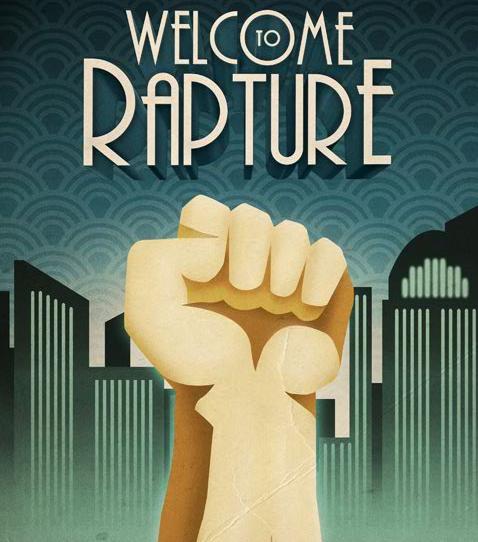
According to a complaint filed in the Los Angeles Superior Court on September 28 of this year, Amber Duick did not feel empowered after experiencing the campaign firsthand. The complaint accuses Toyota, Saatchi & Saatchi, and fifty individuals associated with the campaign of: (1) intentional infliction of emotional distress; (2) negligent infliction of emotional distress; (3) negligence; (4) unfair, unlawful, and deceptive trade practices, (5) false, deceptive, and/or misleading advertising; (6) violation of the Consumer Legal Remedies Act; (7) fraud; and (8) negligent misrepresentation. Duick is seeking $10 million in compensatory damages.

Starting in February 2008, print, outdoor and banner ads drove traffic to yourotheryou.com. There, users were encouraged to prank a friend by providing personal information about them including their address, phone number, and alma mater. According to Nicholas Tepper, Ms. Duick’s attorney, the prank’s target would receive an email with a “personality test” containing a link to an “indecipherable” consent form. For the next five days, one of five maniacs would contact the target with personalized texts, emails, phone calls, and videos. The user could track the prank’s evolution through a dashboard indicating which messages their target received over the course of the campaign.

Continue reading

Is There Something in the Sea?

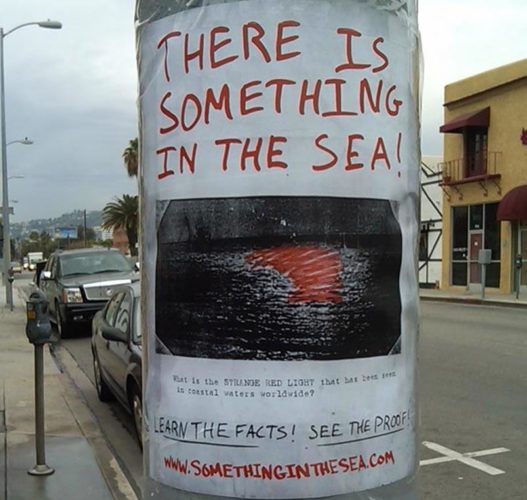
Something In the SeaIn March of this year posters began showing up on the east coast warning of an undersea threat. The posters ended with a URL that led the curious to Something in the Sea: and for the past six months, the rabbit hole has wound deeper and deeper.

While the website originally only displayed a map detailing an unseen researcher’s efforts to track seemingly random kidnapping cases from around the world, the site has since evolved. Players have found themselves silent observers to Mark Meltzer’s search for his missing daughter Cindy. Mark’s very research into the missing girls led to his own daughter’s kidnapping and the collapse of his marriage, causing his obsession to take on a more personal nature as he searches frantically for any information that might lead him to his daughter.

As time has gone on and Mark’s search has become more desperate, he has even reached out to players for help. Those who have been willing to write to Mark and offer their assistance have found themselves receiving strange packages in the mail containing children’s drawings or vinyl records that hint at strange monsters and unknown cities. Earlier this month, players around the world who ventured out to specific beaches that Mark indicated would hold a clue to his search discovered champagne bottles full of propaganda from that same mysterious city, buried in the sand as the sun rose on the adventurers who attended the event.

Continue reading

« Older posts Newer posts »