Category: News (Page 2 of 183)

It’s Been Here the Whole Time: The Boy Who Cried “Dropout ARG”

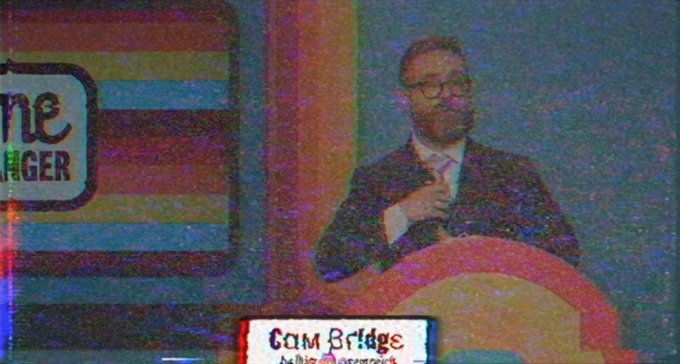
A highly degraded version of Sam Reich, showing where he’s from in this third loop of s6’s “Deja Vu”

I think Dropout’s hit game show Game Changer is celebrating the end of its seventh season with an alternate reality game. Admittedly, when fans of the show posted to the streaming network’s subreddit, the show’s host Sam Reich clearly and repeatedly denied the claims, writing “NOTHING TO SEE HERE” and “THIS IS NOTHING, LOOK AWAY”. These denials were reinforced by the show’s co-executive producer Paul Robalino, who went even further with his statement:

There was nothing hidden at the end of the last episode. There’s no ARG. There are no QR codes. There is no secret to unlock. What is everyone talking about

Paul Robalino, on Twitter

Admittedly, I was convinced there was a Game Changer ARG two years ago, when the team teased there might be more to the season after the “final episode” of season 5. And then I did it all over again last year, when a particularly glitchy episode released during season 6.

But please, ignore my spotty personal track record for this and the team’s explicit and suspiciously specific denials: this time, I think Game Changer really is running an alternate reality game that gives its players a peek behind the fictional-curtain of the show, to help unlock the “real” ending for the season. But before going over that, I should probably own up to past missteps.

The poster for Dropout’s Game Changer: season 5, a season that did not have an ARG

Third Time’s the Charm? The Last Two Times We Suspected a Game Changer ARG
Admittedly, the Dropout fandom doesn’t have the best track record of finding ARGs in episodes of Game Changer. The first time we missed the mark was after the season 5 episode Escape the Greenroom. The episode introduced viewers to Samuel Dalton, Sam Reich’s great-grandfather and occultist. During the episode, Dalton kidnapped and replaced the real Sam Reich, subjecting the episode’s guests to a custom escape room designed by Stash House‘s Tommy Honton.

At the time, this episode was thought to be the ninth and final episode of the season. But immediately after it aired, Sam Reich posted a cryptic message to the Discord, hinting that there might be more to come.
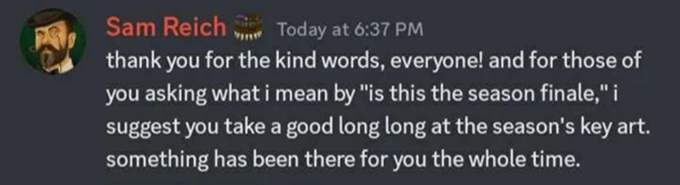
In retrospect, the solution to this was relatively straightforward: zoom into the series’ key, and Sam Reich had an extra “13” up his sleeve, hinting that the show would have not just one surprise episode, but four: a multi-part Battle Royale homage to the Survivor franchise that served as the true end of the season. That didn’t stop fans (myself included) from deconstructing every tidbit of occult lore shown as part of the escape room, suspecting we hadn’t seen the last of Samuel Dalton, time travelling magician and occultist.
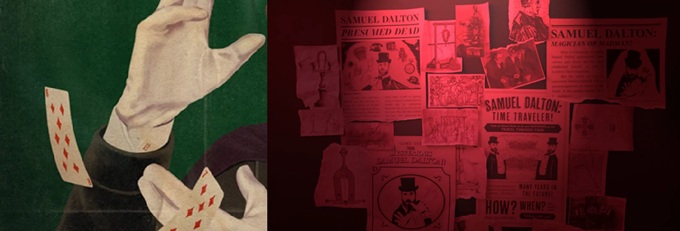
The “13” (episodes) Sam actually had up his sleeve, versus Dalton lore from the ARG-that-wasn’t

The next year, suspicions of an alternate reality game started to really percolate after the season’s sixth episode, Deja Vu. The episode centered around contestants reliving the episode on a time loop, with the episode’s footage glitching out more and more after every loop – a theme familiar to fans of Ranboo’s Generation Loss ARG from the prior year. Ranboo would make their own Game Changer debut through a series of guest appearances culminating in the season finale.

This theme was also familiar to Game Changer fans still looking for Samuel Dalton to make an ARGish return. Was the time loop happening because Reich’s time travelling great-grandfather returned to torment a new batch of contestants in a neverending loop? The episode’s frequent glitches and nearly impossible challenges did task contestants with exploring external websites, like the FixItMan78 YouTube channel which provided helpful instructions on how to repair the ElectroBobbleWobble QZ.

Voice actor and YouTuber SungWon Cho (also known as ProZD) as FixItMan78, screaming into a gizmo

So, fans started poring through Deja Vu to interpret the glitches, and even started skimming through past episodes to see if there was a pattern in Sam Reich’s introductions that might reveal whether he’d been secretly replaced by his identical great-grandfather. Multiple promising leads emerged, but nothing that manifested into anything definitive.
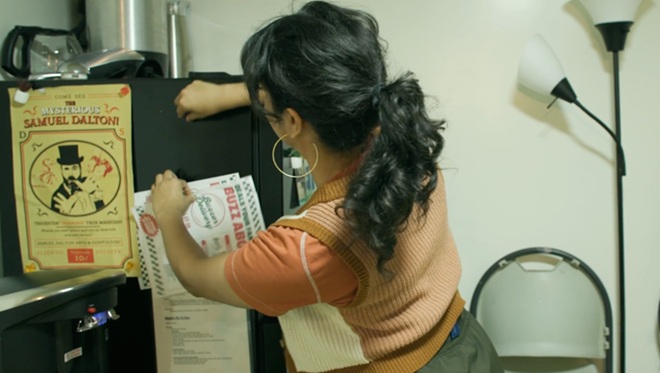
A very prominent poster for the Mysterious Samuel Dalton, during “Beat the Buzzer”

The next episode, Beat the Buzzer (which brought back Tommy Honton as a consultant) only fanned the flames of speculation by subjecting the show’s contestants to a number of challenges to earn the right to press dozens of buzzers hidden throughout the studio: this time, famed magician and time traveler Samuel Dalton even made a cameo on an advertisement for his show, next to a literal callback puzzle that challenged contestants to order a buzzer from a fake pizza company.

After the episode aired, some of those games (like Crack the CAPTCHA) were even made playable on Dropout’s site. But ultimately, in season 6 there wasn’t even a card up Sam’s sleeve – sometimes, a time loop episode is just a time loop episode.

Continue reading

KFC Launches Special Blend of 11 Secret Codes and Puzzles

KFC’s newest commercial, starring a secret QR code puzzle on celebrity chef Matty Matheson’s arm

Colonel Harlan Sanders was obsessed with fried chicken, even before he convinced a cafe owner to sell fried chicken with his special blend of 11 herbs and spices. Enough so, that KFC’s newest commercial is a 75 second homage to the obsession that gave birth to the Kentucky Fried Chicken brand.

With this focus on obsession front and center, it’s no wonder the commercial snuck a QR code on Matty Matheson’s tattoed arm, kicking off a deviously challenging series of 11 secret codes and puzzles to celebrate the herbs and spices that built an empire. The first person to solve each of the puzzles? They’re rewarded with 11 months of free KFC for their efforts.

The “(one of the) first to solve” message presented to prospective winners

KFC gets extremely creative with their advertising. Celebrity casting for commercials is fairly standard for major brands, but starting in 2015 KFC went out of its way to surprise fans by cycling through a full roster of celebrity Colonel impersonators. Darrell Hammond was the first to take over the finger-lickin’ mantle, but was quickly supplemented by everyone from beloved comedians like Norm MacDonald and Jason Alexander to more surprising picks like Reba McEntire and RoboCop. But it’s the company’s stunt marketing that truly shines: it’s been almost a decade since the release of the free romance novella Tender Wings of Desire to celebrate Mother’s Day, but I still keep a copy on my Kindle. The company doubled down on their thirst trap branding by releasing a free dating sim that’s still available on Steam.

The commonality between Tender Wings of Desire and I Love You Colonel Sanders! A Finger Lickin’ Good Dating Sim? They’re highly enjoyable experiences that recognize what makes the source materials work so well, and pay homage to it. And I am happy to announce that KFC’s puzzle hunt for the overly obsessive continues that tradition with a series of challenging yet creative puzzles. So, we’re going to do this article a little different. If you’d like to give the puzzles a try yourself, go to The11Secrets.com, and see what you can uncover. Keep on reading to be spoiled on a selection of those 11 puzzles and to learn why I’m so effusive in praise for them.

Again: what follows will be absolutely riddled with spoilers.

Continue reading

I’m Obsessed with Emerald Echoes’ Narrative Hint System

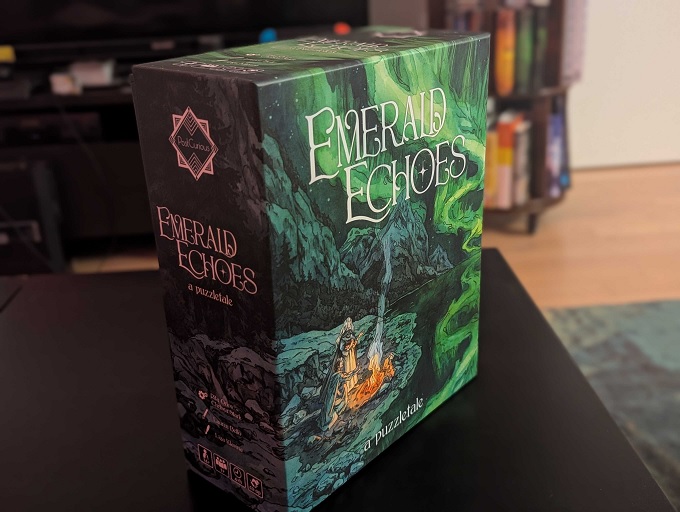
PostCurious’ newest narrative puzzletale Emerald Echoes, on Kickstarter through August 2025

PostCurious has a new narrative puzzle adventure called Emerald Echoes crowdfunding on Kickstarter, with the campaign running through August 14th. In many ways, it’s a classic PostCurious game: a series of moderately difficult puzzles strung together to tell a heartfelt story, drawing upon thoughtfully constructed game components designed to draw you into the narrative.

But the reason I’m currently obsessed with Emerald Echoes is how the game reinvents PostCurious’ already strong hint systems, taking the game fully offline in a surprisingly satisfying manner.

Three of the four chapters from Emerald Echoes, delivered in narratively relevant envelopes

Emerald Echoes Finds Puzzlers Returning to the World of The Emerald Flame
Emerald Echoes is framed as a sequel to one of PostCurious’ earliest games, The Emerald Flame. The first game in the series followed Marketa’s research into an alchemical elixir and the often strained relationship that blossomed with Hannah, as told from the player’s perspective as a Koschei Historical Society researcher poring over letters and artifacts from the time in the modern day.

Emerald Echoes picks up where Emerald Flame left off, as people who have come to care for Marketa try and retrace her steps and find her after the events of the first game: a story that is once more told through the perspective of researchers investigating archaeological findings.

Notably, this is a standalone sequel: I played this with a friend who had never played the first installment, and the story still made sense without context from Hannah and Marketa’s prior adventures, although there are the occasional light nods to prior events.

Continue reading

Return of the Duck Cult: A Doors of Divergence ARG?

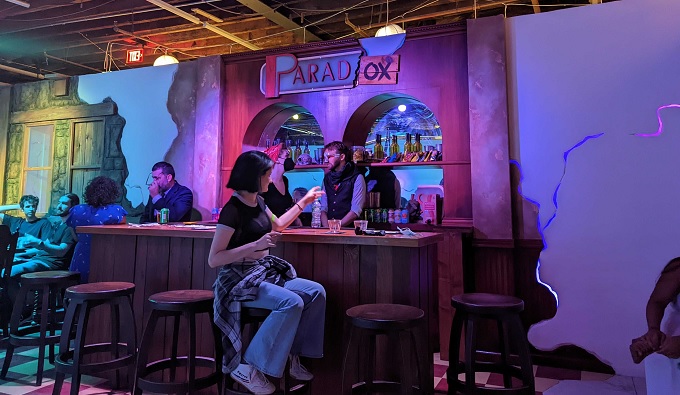
The Paradox Bar: Doors of Divergence’s in-universe lobby (that also doubles as a functioning bar)

On my first visit to the Paradox Bar I received a free drink ticket from myself, welcoming me back to the timeless venue. A handful of colorful characters slipped out of time, and found themselves at an old bar from the 1950’s. As another version of me explained in a letter, “it’s kind of a watering hole for those of us trying to repair reality – a place to meet, talk about our efforts, and compare notes while we try to find the right set of choices that will fix this rift once and for all.”

A free drink ticket, from myself – not your typical pub experience

The Paradox Bar acts as in-universe lobby for a trilogy of escape rooms collectively referred to as The Paradox Cycle, although players often referred to the games by the company’s name: Doors of Divergence. The rooms had a relatively short run in New York City: the game’s first chapter, Heresy 1897 opened in June 2022. This was quickly followed by the release of its second chapter, Madness 1917, in September. Just over a year later, Doors of Divergence closed its doors with an in-universe farewell party in October 2023.

During those 16 months, I took seven trips through the rifts at the Paradox Bar, because the team designed an experience that meant every single visit was a completely different one, leading me through different puzzles and even rooms, despite nominally playing the same game multiple times. Luckily, an online alternate reality game seems to be implying that Doors of Divergence has found a new home, giving me an excuse to talk about what remains my favorite escape room due to the depth of its experience and the vaguely terrifying scope of its ambition.

The stage at the Paradox Bar.

Into the Rift: Beyond Choose Your Own Adventure
The Doors of Divergence experience starts at the Paradox Bar, where a welcoming bartender introduces teams to the space between times they have fallen into, and introduces a few of the colorful characters who have fallen into the rift with them. One might come across an engineer, an astronaut, or even a scout leader milling about the bar. Idle conversation might even trigger a special request for the pending journey through time: bring back a couple of gears to help fix a clock, perhaps.

My first night, the Paradox Bar even had some special programming planned, and the surprisingly spacious room’s stage was used for a variety show, complete with aerialist performance. Once it’s your group’s time to proceed into the rift, a member of the staff would pull you and your group to the side, and introduce the mission. But instead of dryly reading off a list of rules and regulations, players would be encouraged to pull a series of tarot cards, offering divinations of events to come (and the corresponding rules to help navigate those situations).

As players’ first interaction with the Rift, Heresy 1897 leads players into the past as they enter Edmond Cavanaugh’s study, where they encounter the game’s Proctor. Teams are challenged with a question that determines which of two completely different escape rooms to play, within that space.

One of the puzzles from Heresy 1897, that is only seen by half the teams navigating the escape room

That means that Heresy 1897 is technically two completely different escape rooms, that just so happens to occupy the same space. There’s an entire room of Heresy that is unique to that initial binary choice, and there’s nothing about the in-game experience that would even hint at that secret. Teams are also presented with a moral quandary at the end of every room, meaning Heresy 1897 has four different endings, even if teams complete the room.

To help players track these choices, post-game debriefs include handing out a series of cards to commemorate key decisions and actions from the escape room. Entering those codes into an online portal tracks your progress and choices through the game – not just for those key moments at the beginning and end of the experience, but for some of the smaller choices, rewarding players who push the edges of the experience. Did you get sticky fingers at an opportune time, or linger for a moment longer than you should have?

Madness 1917 is where you start to really see the impact of those choices, with at least four different narrative and puzzle experiences: every escape room team enters an insane asylum during the Great War, but the reason for being there is changed, and interactions with the sequel experience’s two actors starts taking a much more theatrical turn, although it is still an escape room experience at its core.

Continue reading

MIT Mystery Hunt and the Case of the Shadow Diamond

The custom-built radio was one of many centerpieces of the MIT Mystery Hunt in 2025

It’s late on a Friday night, and our team of investigators have tracked down a lead while investigating the theft of the Shadow Diamond. We’re instructed to send a core group of aspiring detectives to the gala to try and track down the thief. Once our group assembles at the gala event, a helpful bartender tunes our radio to the proper channel, and set us off on a narrative scavenger hunt that weaved across over a dozen buildings on the MIT campus, tracking down the locations of eleven blue paw prints. The twist: since this was a noir detective adventure, our audio helper only saw things in black and white, so many of the colorful signposts along the way were described in shades of gray – fifty, to be exact.

Eventually, our team realized that the film noir world of MITropolis we traced layered perfectly over a map of the MIT campus itself, and that cross-referencing the clues we discovered along the way paired with the locations of those Blue Clues spelled out the identity of the thief.

A map of Downtown MITropolis, used in conjunction with the results of a real world audio adventure

Armed with a name, our full team went up to the gala to confront the thief…only to discover that the culprit was murdered, and the diamond near the body was a fake, covered in scuff marks. Luckily, we were recognized for our efforts and upgraded to trainee detective status.

The MIT Mystery Hunt Means Something Different Every Year
At this point, the MIT Mystery Hunt might be the most covered immersive experience on ARGNet, with articles discussing the hunts in 2011, 2012, 2016, 2018, 2021, 2022, and 2023. And while the site skipped coverage of the annual event in 2024, that was because I was part of the team running that year’s hunt.

Some things have been constant about the MIT Mystery Hunt over that time. Hundreds of extremely smart puzzlers gather at MIT (either in person or virtually) over MLK Day weekend to push the boundaries of what a puzzle can be – both as puzzle constructors, and as solvers. There’s a narrative tying that experience together, structured around “feeder” puzzles, and meta-puzzles that use the answers of those feeder puzzles as inputs into a broader puzzle challenge. Teams have a long weekend in January to make it through the puzzles. And the reward for finishing the hunt first is a coin-like object, paired with the responsibility for running the next year’s Mystery Hunt.

Beyond that, the Mystery Hunt becomes an aspirational exercise in what the event can be, presented by teams that are excited about the event for very different reasons. And one of the most compelling questions asked by Death & Mayhem with their 2025 Mystery Hunt The Case of the Shadow Diamond was what it means to be a puzzle hunt community, in the first place.

Continue reading

SCXR Academy: A New ARG Fashion Line?

Teaser images from the Office of Admissions at SCXR Academy

SCXR (pronounced “Scar”) is a new fashion brand. Its first line of products are slated to release at the end of May, and in the brand’s announcement video its creator Sugar (also known as Angelina Zhang) described its vision by explaining: “I have a hard time explaining what my dream style is. But if I had to choose a word, it’d be fictional.” And while that comment was intended to reference the brand’s aesthetic inspirations like the fashion featured in Bratz, Monster High, and My Little Pony, the “fictional” inspiration seems to go beyond that, moving into alternate reality gaming territory.

The SCXR website is currently fairly minimal, with retail features grayed out. However, registering for updates triggers an in-universe email from SCXR Academy’s Dean of Admissions Lilith Aranea welcoming new students to the academy with the somewhat ominous welcome message, “we can’t wait to see you on campus…The Academy is always watching“.

SCXR’s main character Scarlet, potentially providing a sneak peek at some of the featured fashion

In the project’s launch video, Zhang explains that the SCXR line takes place within the fictional world of SCXR Academy, and centers around Scarlet as the protagonist in a story that should appeal to fans of stories that touch on coming-of-age stories, dystopic thrillers, and mystery / ARG narratives.

While Zhang is still a University of Toronto student, she also built a massive presence as a Canadian online influencer, with almost 6 million followers on Douyin and TikTok alone. Her content leans towards musical covers with a healthy dose of fashion and cosplay thrown into the mix, although she was also one of the more vocal figures explaining Chinese social media platforms like Douyin and Xiaohongshu (“RedNote”) to US audiences worried about a potential TikTok ban.

In an interview with Gary Guo that touched on the project in January, Zhang explains, “it’s kind of a unique clothing concept because I have a lot of reoccurring character personas in my videos. I have a red haired girl, I have a black haired girl, and they’re very different. And my clothing brand is going to be something similar to using these characters to reflect their styles, versus using me as Sugar to reflect their styles…it’s going to be a virtual influencer brand.”

And it doesn’t seem like that earlier reference to ARGs is hyperbolic: this virtual influencer brand looks like it has some secrets to uncover.

Continue reading
« Older posts Newer posts »